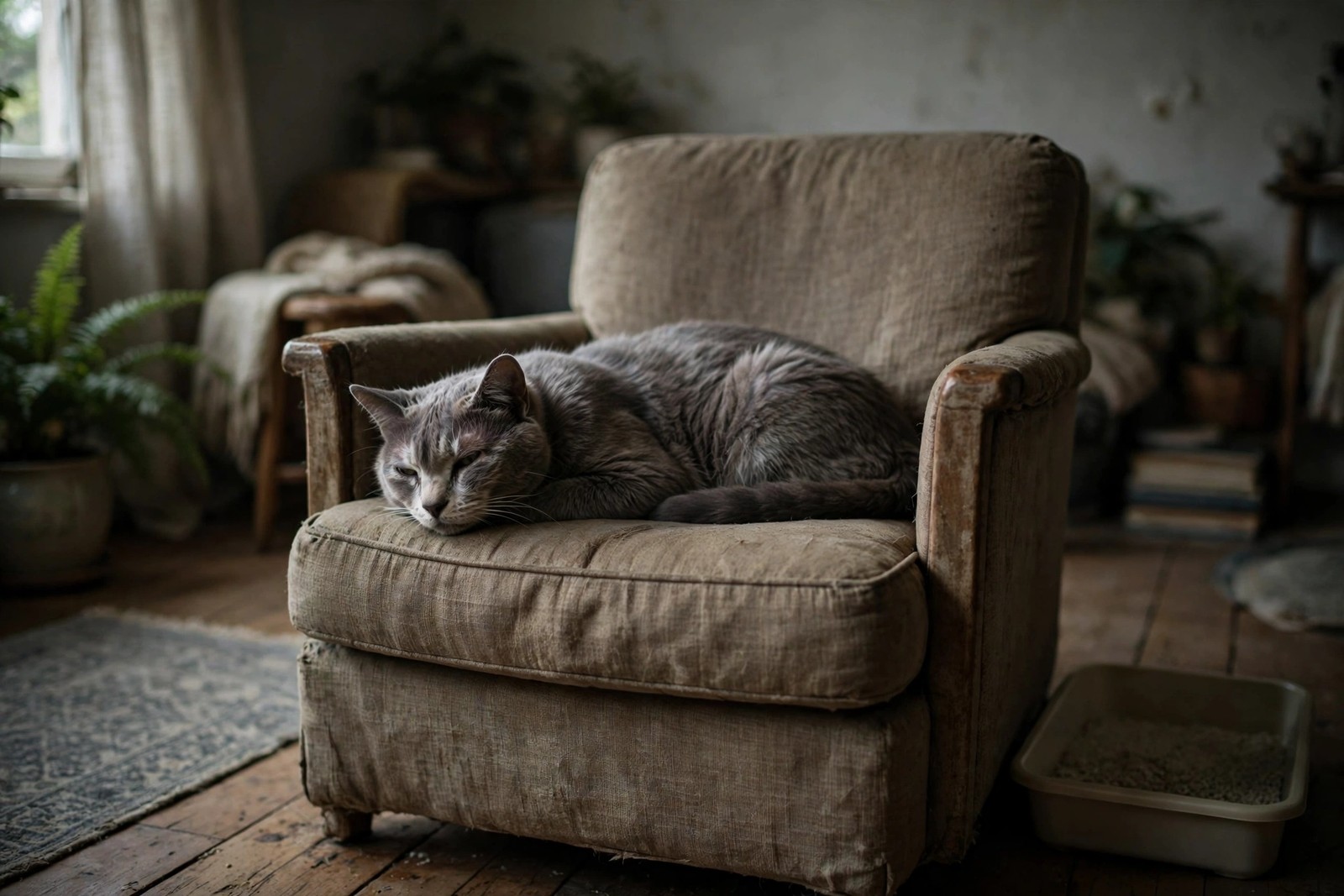
Feline cognitive dysfunction — the cat equivalent of dementia — rarely announces itself with one dramatic symptom. It accumulates as a cluster of small strangenesses in a senior cat, and vets group the recognised signs into five areas: disorientation, changed interaction, altered sleep-wake cycles, house soiling, and changed activity levels. Knowing the cluster matters, because a single one of these signs has many possible causes, while several arriving together in an older cat tells a more specific story.
The Five Sign Groups, in Real Life
Disorientation looks like a cat standing in a familiar hallway as if she has forgotten where she was going, getting stuck in corners or behind doors, staring at walls, or failing to find a food bowl that has not moved in years. Changed interaction runs in both directions: a formerly aloof cat who suddenly demands company at all hours, or a sociable cat who withdraws, sleeps in unusual hiding places, and stops greeting people she has greeted for a decade.
Sleep-wake change is often the sign owners describe in detail. The cat sleeps through the day in longer, deeper stretches, then wanders at night — and vocalises. The night yowling of a cognitively impaired cat is typically loud, repetitive, and oddly purposeless, delivered to an empty room at three in the morning by a cat who was quiet at night for her whole life. House soiling means a reliably clean cat beginning to miss the tray, use it inconsistently, or seem to forget where it is, sometimes urinating just beside it. Changed activity includes aimless pacing, repetitive behaviour such as pacing the same route or licking one spot, and reduced interest in play and grooming, so the coat of a fastidious cat slowly turns unkempt.
What Must Be Ruled Out First
None of these signs proves dementia, and treating them as proof is the mistake to avoid. Arthritis pain makes cats miss high-sided trays, pace at night because lying hurts, and withdraw from handling. High blood pressure, which is common in older cats, can cause sudden yowling, staring, and apparent confusion, and it can damage the eyes, so a cat who seems disoriented may in fact be newly unable to see well. An overactive thyroid produces restlessness, night vocalising, weight loss, and changed behaviour that mimics cognitive decline closely. Kidney disease, diabetes, hearing loss, and dental pain each imitate parts of the cluster too.
So the first step is a senior vet check, with the blood pressure measured and blood work discussed, before dementia is settled on as the explanation. Cognitive dysfunction is what remains when the treatable imitations have been looked for, and several of those imitations are very treatable indeed.
Living Well With a Cognitively Impaired Cat
If the diagnosis lands, comfort comes from stability. Keep food, water, trays, and beds exactly where they have always been, favour low-sided trays in more than one quiet spot, and leave a dim night light burning on her night route so the three-in-the-morning wander is less bewildering. Keep routines predictable, add gentle play and company in the evening so night feels less empty, and avoid rearranging furniture or introducing big household changes where you can. Note new signs with dates as they appear; the pace of change is itself important information for your vet at each review.
KinsLe Pet Passport supports that record-keeping directly, because you can keep dated notes on sleep, soiling, appetite, and interaction alongside blood results and visit summaries in one portable packet, and hand the vet the trend rather than a worried summary.