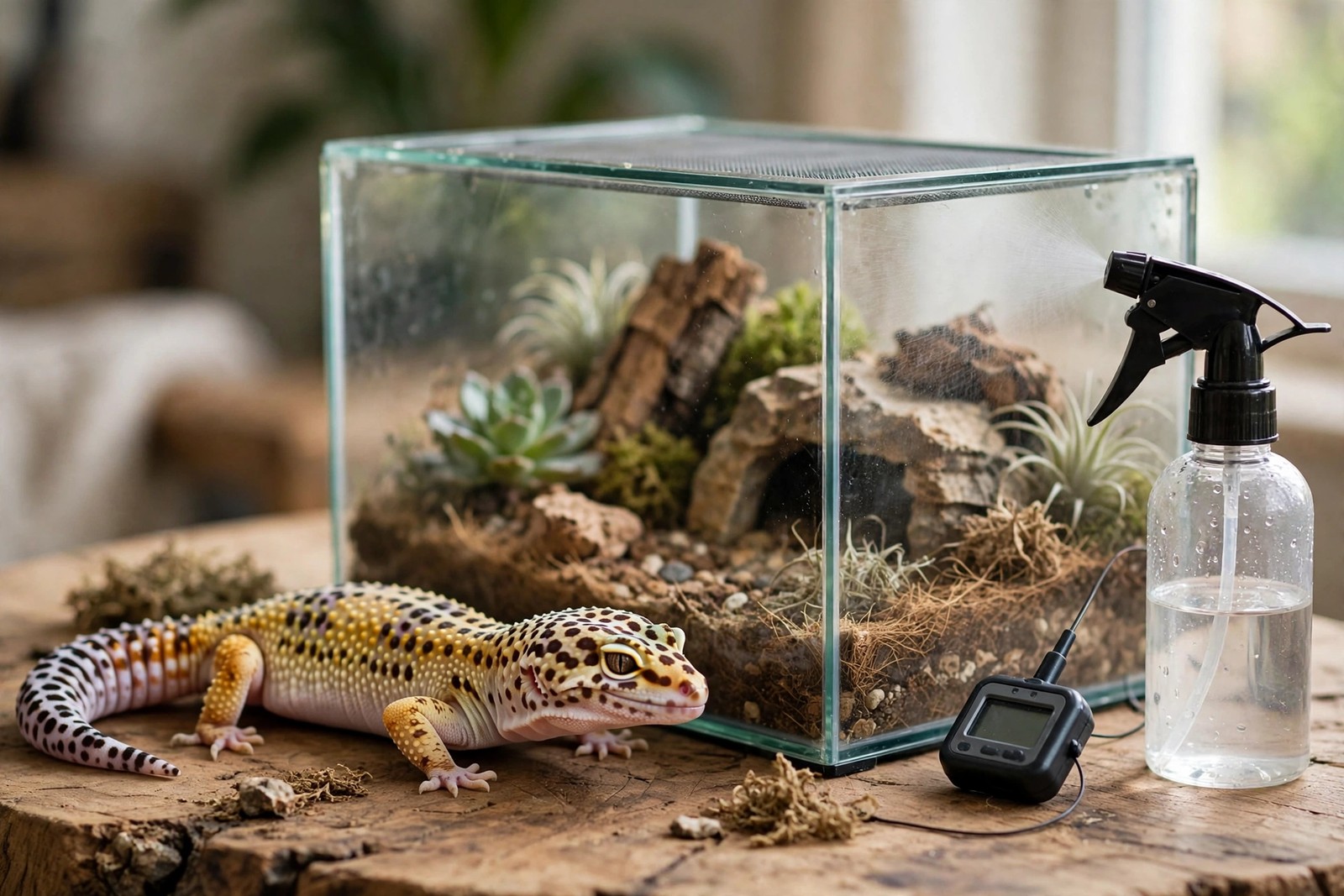
Leopard geckos tend to run into a short, familiar set of troubles, and each one leaves a clue keepers can learn to read. Retained shed clings to toes and the tail tip and can cut off circulation when humidity stays low and no humid hide is offered. Metabolic bone disease softens bones and can bring tremors or a deformed jaw when calcium and vitamin D3 fall short. Impaction blocks the gut and is linked to loose substrate, oversized prey, dehydration or low temperatures, while mouth rot shows as red, sore gums with cheesy material. Parasites complete the list, including Cryptosporidium, which thins the tail steadily even while the gecko keeps eating, alongside egg-related problems in females and eye infections tied to stuck shed or low vitamin A.
Prevention Is Mostly Setup and Supplements
A humid hide maintained properly, a warm side at the right floor temperature (around 31–33°C), solid or vet-approved substrate, prey of appropriate size, gut-loaded and dusted with calcium (with D3 as appropriate for a nocturnal species) and a separate calcium dish many keepers provide — these habits prevent most of the list. Weigh weekly: leopard geckos should hold a plump tail, and gradual thinning is the earliest flag for parasites and several other problems. Quarantine new geckos away from existing ones for at least several weeks — crypto is exactly why — and wash hands between animals.
Working With Your Vet
When a gecko thins, stops eating or keeps shed stuck across two cycles, bring the vet a record rather than a recollection. Note the date the change began, the warm-side floor temperature you measured, what prey was offered and refused, and whether the tail has narrowed in photographs taken from above. A fresh faecal sample matters here in a way it does not for many pets, because Cryptosporidium and other parasites are found in droppings, not on examination alone.
Set the weekly weights from your prevention routine beside shed dates and appetite in the same log. A plump tail that holds its width tells a different story from one losing a gram or two each week, and dated weights give an exotics vet a starting point that a worried summary cannot. Book promptly for tremors, a soft or deformed jaw, mouth sores, diarrhoea, or shed that stays stuck after humidity and a lukewarm soak.
Those weight and shed notes belong in the Pet Passport in KinsLe, where they form a single dated history the exotics vet can read at a glance.