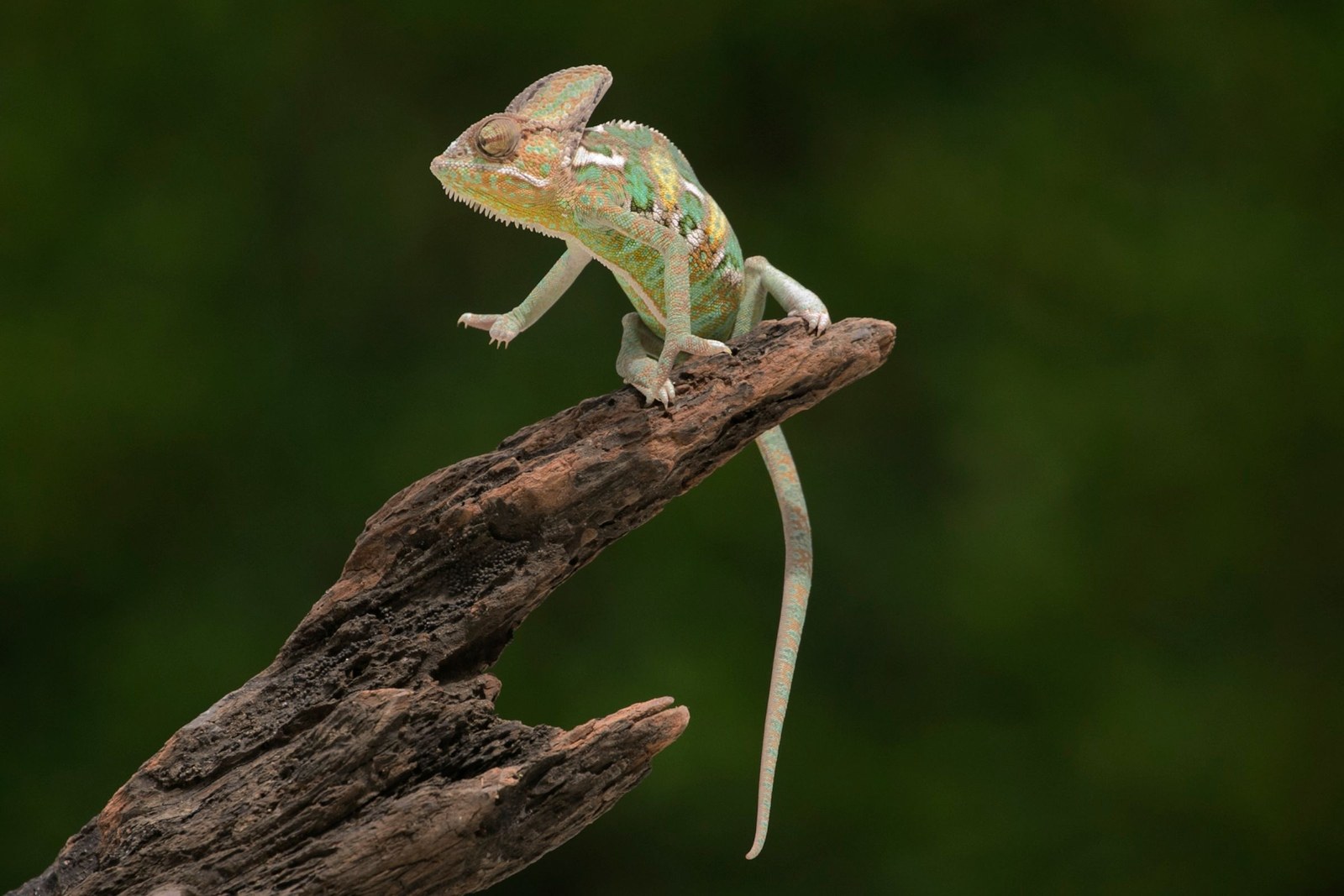
A chameleon that keeps its eyes closed during the day is signaling that something is off, and it warrants a prompt call to a reptile veterinarian. Healthy chameleons are alert in daylight, with eyes open, rounded, and actively scanning. Closed eyes combined with sitting low in the enclosure, gripping weakly, not eating, or staying dull in color is especially concerning. Lighting, humidity, hydration, and nutrition can all play a role, but only an in-person exam can sort out what is happening with your individual animal.
Why Closed Eyes Matter So Much in Chameleons
Chameleons are visual hunters. They locate dripping water and prey insects by sight, judge branches by sight, and monitor their surroundings constantly. When the eyes close in daytime, feeding and drinking quickly suffer as well, which can make a fragile animal decline faster. Sometimes the issue involves the eyes themselves — irritation, retained shed, or debris — and sometimes closed eyes are a general sign the chameleon feels unwell for another reason entirely.
Context helps, but it does not give you a diagnosis. A chameleon that briefly closes its eyes during misting is different from one that keeps them shut for hours, sits near the bottom, and does not respond normally to movement nearby. Sleeping during the day is not normal rest for a diurnal chameleon; it is a flag to act on.
Review the Setup — Carefully and Honestly
Your vet will ask detailed questions about husbandry, so prepare real numbers and specifics rather than estimates:
- UVB type, age of the bulb, and distance from the main basking perch
- Basking and ambient temperatures, and how you measure them
- Humidity levels and how you provide water — misting, dripper, or both
- Diet in the last week: feeder types, gut-loading, and supplement schedule
- Recent changes: new enclosure, new plants, relocation, or a missed supplement routine
Chameleons are sensitive to small errors accumulating — a UVB bulb a few months overdue, supplements skipped during a busy month, or a dripper that stopped working unnoticed. Checking these is useful preparation, not a reason to delay the call while you experiment for a week. Do not start extra vitamins, eye drops, or force water or food unless a vet directs you to; well-meant additions can complicate assessment.
Safe Steps Before the Appointment
Keep handling to a minimum, as chameleons stress easily. Maintain gentle, species-appropriate warmth and normal water provision, and make sure the enclosure is not in harsh direct sun through glass, which can overheat quickly. Do not pry the eyes open to inspect them, and do not try to flush them with home solutions.
If your chameleon is sitting low, provide an easy low branch or soft support so a weak grip does not cause a fall, and seek veterinary advice the same day. Bring your setup notes and clear photos of the enclosure to the visit — for chameleons, the habitat is part of the medical history.
Sharing Setup Details Ahead With Care Pass
Vets can work faster when they see the full picture before you arrive. With KinsLe's Care Pass, you can share your chameleon's setup, diet, and supplement details through a temporary scoped link — the recipient needs no account or app to view what you have shared for that visit. That means the clinic gets temperatures, lighting, and feeding history in an organized form instead of a rushed summary in the waiting room. For this one visit, send a Care Pass through KinsLe to the reptile veterinarian examining your chameleon, listing the UVB bulb's age and perch distance, basking and ambient temperatures, humidity readings, and the feeder and supplement schedule from the past week.