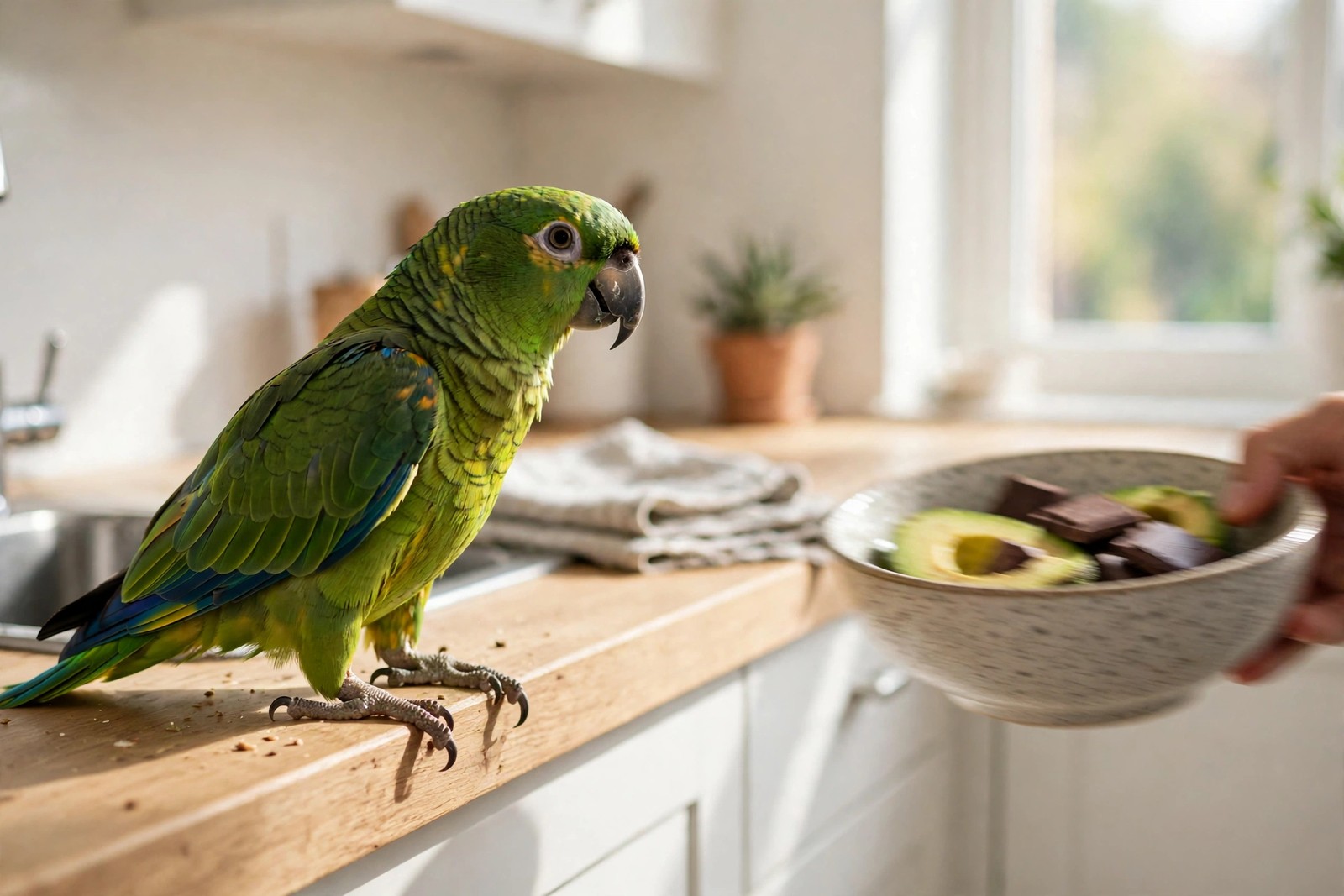
Keep your bird away from avocado, chocolate, caffeine, alcohol, and salty or sugary human snacks — and be just as careful about what is in the air, because scented candles, air fresheners, and spray cleaners can overwhelm a bird's sensitive respiratory system. When in doubt about any food or product, check with an avian veterinarian before offering it or using it near your bird.
Foods That Are Dangerous for Birds
Birds process substances very differently from us, and portions are tiny — a crumb-sized amount of the wrong thing is a large dose for a 40-gram budgie. Foods to keep strictly away include:
- Avocado — contains persin, which is toxic to many birds.
- Chocolate — theobromine and caffeine are both dangerous.
- Caffeine and alcohol — coffee, tea, energy drinks, and any alcoholic drink, even in small sips.
- Onion, garlic, and related seasonings in concentrated form, plus heavily salted, fatty, or sugary snacks like chips and candy.
- Fruit pits and apple seeds, and uncooked dried beans, which can be harmful.
Also be careful at the table generally. A parrot that learns to raid plates will eventually meet something unsafe, and human saliva carries bacteria birds do not handle well — share the mealtime company, not the mouthful. Safe treats exist in plenty: small pieces of many vegetables, leafy greens, cooked plain grains, and species-appropriate fruit in moderation. Introduce new safe foods gradually and confirm with your avian vet if you are unsure.
The Air Your Bird Breathes
A bird's respiratory system is far more efficient — and far more vulnerable — than ours. Air sacs move air through the body in a way that extracts more of everything in it, including fumes. Products that merely smell strong to you can be dangerous in a room with a bird:
- Scented candles, wax melts, incense, and plug-in or spray air fresheners
- Aerosol cleaners, oven cleaners, and strong solvents or paints
- Cigarette and vape smoke
- Overheated non-stick cookware, which can release fumes that are rapidly fatal to birds — use such pans with great caution, never let them overheat empty, and ideally keep birds out of the kitchen entirely while cooking
Ventilate well, move your bird to a clean-air room before deep cleaning, and only bring them back when smells have fully cleared. Prefer unscented, bird-safer cleaning routines around the cage — plain hot water and elbow grease handle most daily messes.
Medicines, Plants, and Small Hazards
Human medications are among the most dangerous items a roaming bird can nibble, and even a single tablet can be a massive overdose at bird scale. Keep all medicines in closed cabinets, never on counters where a bird lands. Many common houseplants are also unsafe if chewed; keep plants out of flight rooms unless you have confirmed the species is bird-safe with a reliable source or your vet.
If Your Bird Eats or Breathes Something Unsafe
Do not wait for symptoms. Move your bird to fresh air if fumes are involved, keep them warm and calm, and call an avian veterinarian or animal poison service immediately with the product name and packaging in hand. Do not try home remedies or induce anything unless a professional directs you. Time matters far more than observation in these cases.
Keeping the Knowledge Where Everyone Can Find It
Every bird has individual sensitivities on top of the general list, and those details matter most to sitters and vets in an emergency. KinsLe's Pet Passport is the records packet for your bird — vaccines, medications, allergies, and documents in one place, shareable with vets and sitters — making it a good home for your bird's allergy and sensitivity notes alongside its health records.
Keep the household never-expose list current inside the Pet Passport record on KinsLe, so an avian veterinarian reviewing that record sees each sensitivity alongside medication history before advising you.