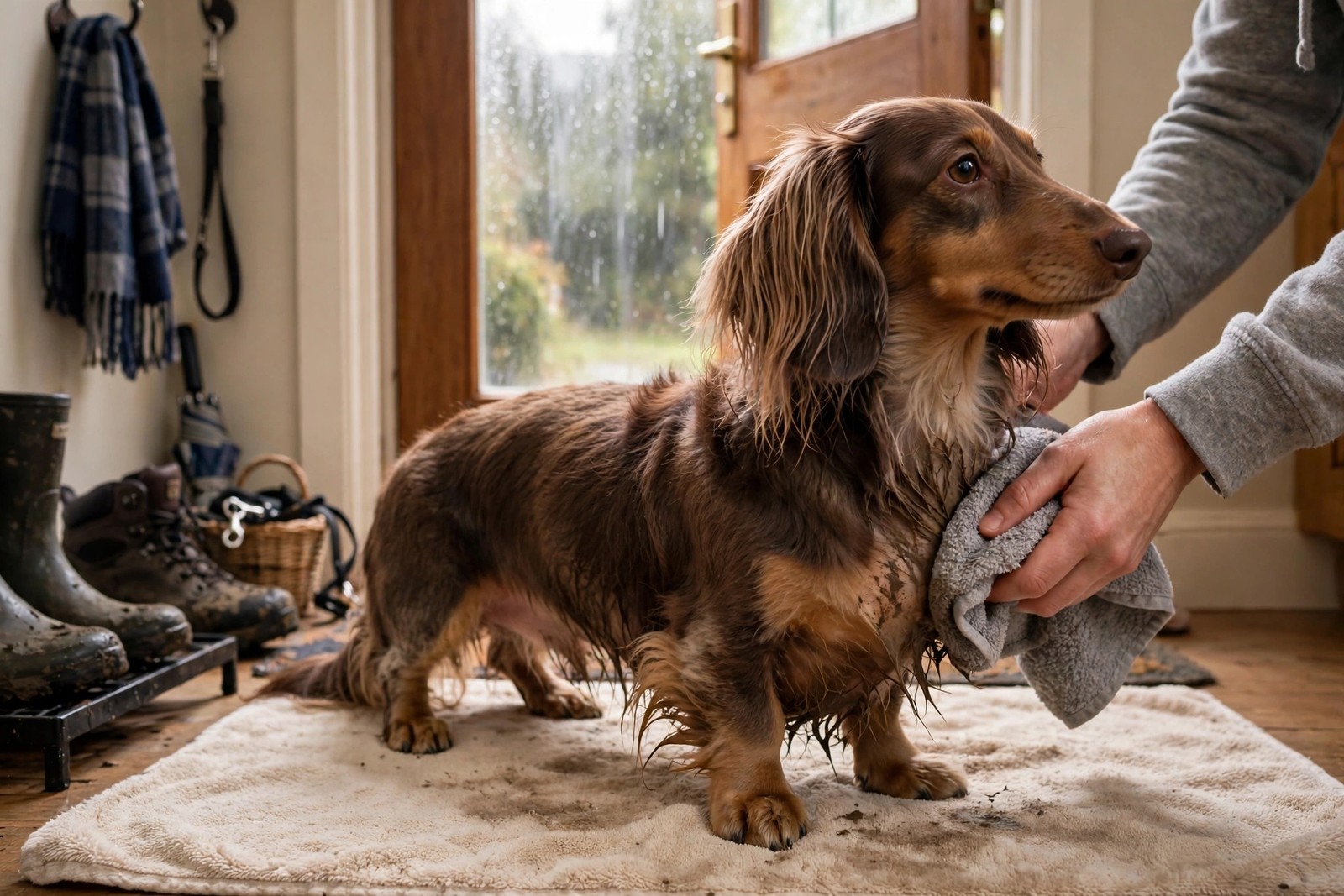
A long-haired Dachshund is built low, and wet weather exploits that shape mercilessly. The chest, belly and leg feathering travel inches above wet ground, sweeping through puddles, mud and soaked grass that a taller dog's coat never touches. The after-walk routine is therefore aimed almost entirely at the underside, and five thorough minutes on return prevents the matted belly and sour, damp coat that otherwise build up across a wet season.
Rinse or Wipe the Low-Slung Parts
Start as soon as you are through the door, before the dog shakes mud across the room or settles into bedding with a filthy underside. Rinse the chest, belly and leg feathering with plain warm water when the mud is heavy, or wipe those areas down with a damp cloth after a cleaner walk; shampoo is rarely needed for a daily rinse and using it daily would dry the coat. Work grit out of the feathering with your fingers as you rinse, since grit left in long hair grinds against skin and mats the hair around itself as it dries. Check the paws in the same pass, clearing mud from between the toes and pads. A shallow tray of water by the door that the dog can stand in makes the paw-and-belly rinse a quick habit rather than a bath-time event, and a light coat in truly filthy weather can cut the cleanup considerably.
Dry Thoroughly Before Anything Else
Drying is the step owners shorten, and it is the one that matters. Towel the underside and feathering properly, then finish with a dryer on a gentle setting if your dog accepts one, because a long coat left to dry slowly on a low belly stays damp against the skin for hours, tangles as it dries and starts to smell stale. Pay attention to the thickest feathering on the chest and behind the front legs, which holds water longest. A dog that comes in soaked and cold should be dried and settled somewhere warm straight away; small, low dogs lose heat through that wet underside faster than their size suggests. Only move on to combing once the coat is dry, since combing wet, clumped feathering pulls and breaks hair.
Comb the Feathering Once Dry
With the coat dry, comb the feathering through, working gently from the ends toward the skin so you ease tangles apart rather than dragging them tight. The daily pass keeps small knots from becoming the solid mats that otherwise form unnoticed under the belly, where nobody looks until the groomer finds them. Keep two specific areas tangle-free every day: behind the ears, where the fine long hair knots silently, and under the elbows, where feathering rubs with every stride and felts against the skin. Use the comb as the check: if it passes through the feathering smoothly, the area is clear. A quick daily comb-through also means the full groom stays a tidy-up instead of a detangling session, and the dog stays comfortable in a coat that moves freely.
Burrs, Seeds and a Final Look
Wet walks through parks and field edges load a low coat with hitchhikers, so finish with a hands-on sweep for burrs and grass seeds in the feathering, between the toes and around the ears, removing what you find while it is still on the surface rather than worked in. Grass seeds deserve particular respect in summer: a seed that disappears into the coat or between the toes can work into the skin, and a dog that starts licking one paw persistently, or shaking its head after a field walk, should be checked closely and seen by a vet if you suspect a seed has gone in. Wipe or check inside the ear flaps too, since low ears trail close to wet ground. In KinsLe, Care Teams keeps this whole return-home sequence with the person who took the walk, so the rinse never depends on someone else assuming it happened.