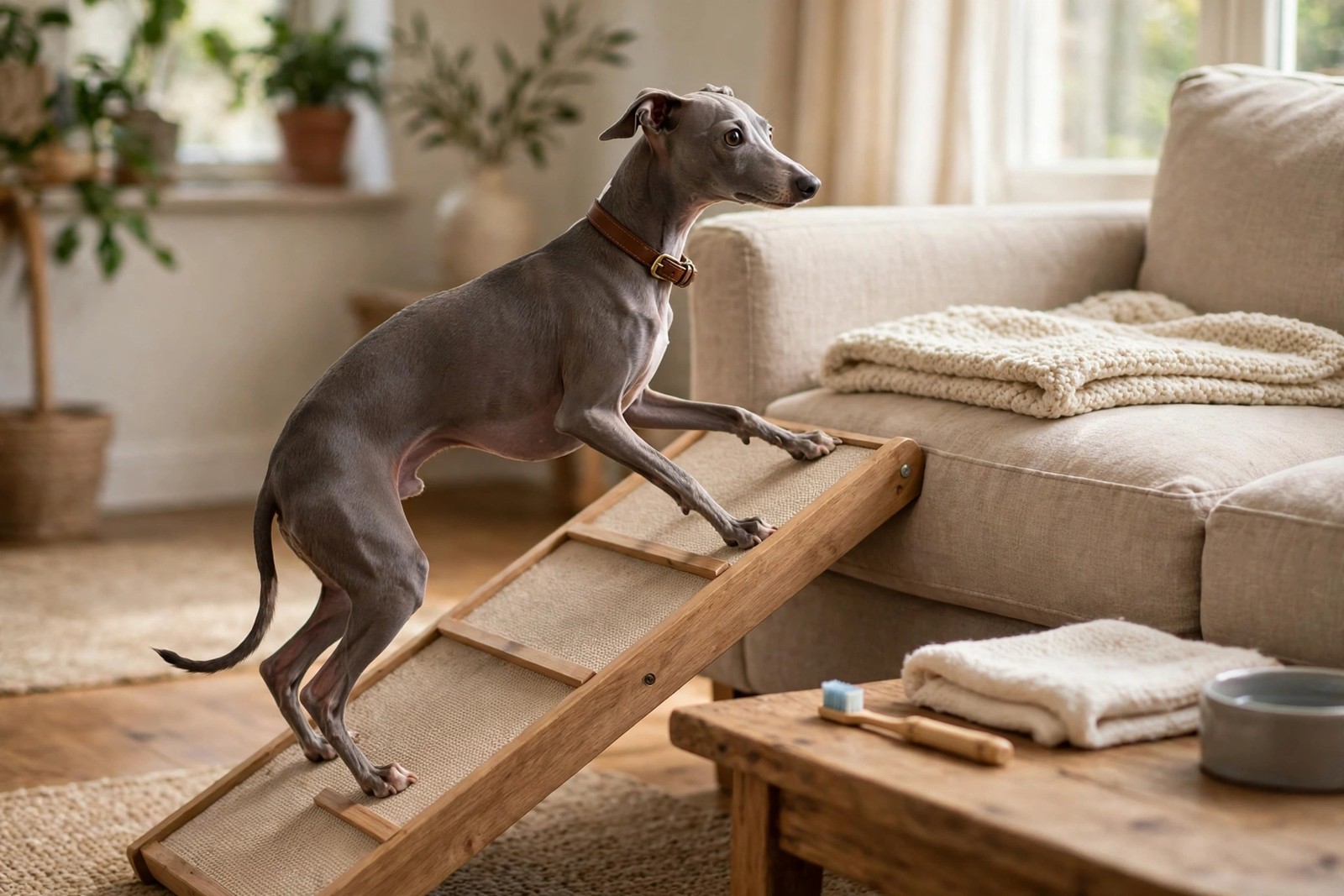
Two predictable costs shape an Italian Greyhound budget, and neither is bad luck. The mouth is a maintenance cost that recurs across the dog's life, and the legs are an emergency cost that arrives without warning. A buyer who plans for both, in numbers, will find this delicate breed far easier to afford than a buyer who treats each bill as a surprise.
Teeth: crowded mouths and recurring cleans
An Italian Greyhound fits a full set of teeth into a very small, narrow jaw, and crowding leaves tight contacts where plaque collects and gums inflame early. Ask any breeder or rescue what the parents' teeth are like, because dental tendency runs in families, and expect professional cleaning under anaesthesia to be needed more than once in a lifetime. As a planning range, one dental episode typically runs to $600 to $1,150, made up of a pre-anaesthetic examination and blood tests at $150 to $250, the anaesthesia and cleaning itself at $350 to $550, and possible extractions at $100 to $350. Daily tooth care from puppyhood, with a small brush the dog accepts and tooth cleaning built into the evening routine, is the one habit that can lengthen the gaps between those episodes, and your vet can show you a technique your dog will tolerate.
Legs: fragility rather than disease
The leg risk is mechanical. Italian Greyhound bones are fine for the dog's size, and fractures typically follow falls and bad landings: a leap from a sofa back, a tumble down stairs, a jump from arms, or a collision during a high-speed game with a larger dog. Puppies and adolescents are at higher risk while bones are still maturing and judgment is absent. Prevention is therefore household design rather than medicine: ramps or steps to favoured furniture, a rule that the dog is lifted down rather than allowed to launch itself, non-slip rugs on hard floors along running routes, and supervised play with bigger dogs. Budget for the home changes once, and they protect the dog every day afterwards.
What a fracture costs when prevention fails
As a planning range, repairing a leg fracture typically runs to $3,000 to $5,500, made up of emergency examination and imaging at $400 to $700, the surgery itself at $2,200 to $4,000, and follow-up visits, repeat imaging, and rehabilitation at $400 to $800. Those figures explain the insurance advice for this breed: choose cover that includes accidents from puppyhood, check whether dental illness is included or excluded, and keep an emergency fund alongside insurance because deposits are often due before a claim is settled. Ask your vet, at the first puppy visit, to talk through the breed's leg and dental outlook for your individual dog, since build and family history refine these general ranges.
Smaller recurring items to include
Add the breed's supporting costs to the same budget page: a well-fitted harness that spares a delicate neck, coats for cold weather because the breed carries almost no insulation, and dental chews or water additives only where your vet advises them for your dog. Include nail care too, because light, indoor-leaning dogs wear their nails down slowly and overlong nails change how a fine leg lands. None of these items is large alone; together they are the difference between a budget that holds and one that leaks.
Questions to ask before you commit
Ask the breeder or rescue about dental history in the parents, any leg injuries in the lines, and what home setup they require for puppies. Ask your prospective vet for their own dental and fracture figures, since local prices refine any general range. Then decide with the numbers in front of you, because an Italian Greyhound bought with open eyes is a long-lived, devoted companion rather than a series of financial shocks. Recording every dental clean, anaesthetic note, and injury in KinsLe's Pet Passport gives each treating vet the history that good decisions depend on.