
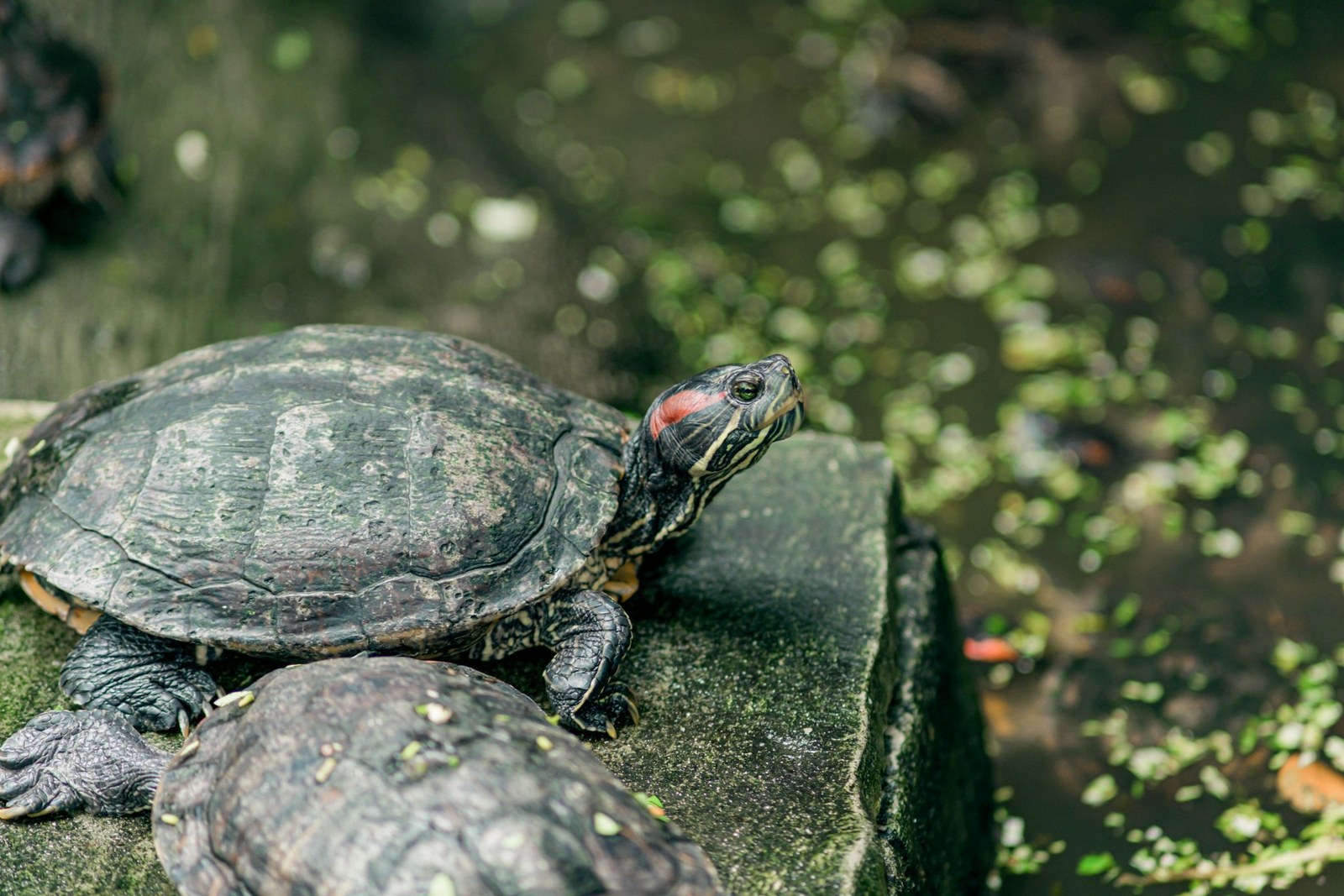
Baby aquatic turtles eat like little predators: a quality commercial aquatic turtle pellet as the daily staple, plus protein foods such as earthworms, small feeder insects, and occasional shrimp, offered every day in portions they finish within a few minutes.
Why Babies Need More Protein Than Adults
A hatchling red-eared slider, painted turtle, or cooter is building shell, bone, and muscle at speed, and in the wild juveniles hunt insects, worms, snails, and small aquatic creatures far more than they graze. Captive diets mirror that pattern. As the turtle matures, the balance shifts toward plants, but a baby fed mostly lettuce will grow slowly and poorly, while a baby fed nothing but rich protein is not balanced either. Think of pellets as the nutritional backbone — they are formulated with protein, calcium, and vitamins together — and whole foods as the valuable supporting cast.
A Practical Daily Menu
Offer food once a day, in the water, since aquatic turtles swallow underwater. A simple rotation might look like:
- Most days: commercial juvenile aquatic turtle pellets, roughly the volume of the turtle's head
- Several times a week: a live or thawed earthworm, blackworms, or small crickets and dubia roaches sized for the turtle
- Occasionally: a small piece of shrimp or feeder fish from a trusted source, as a treat rather than a staple
- Always available to nibble: a leaf of romaine or dandelion green or a piece of aquatic plant, building the habit of eating greens early
Remove uneaten food after a few minutes. Decaying food in warm water fouls a small tank remarkably fast, and babies are sensitive to dirty water.
Calcium, UVB, and the Feeding Connection
Growing shell needs calcium and the vitamin D that UVB light over the basking dock helps a turtle produce. Dusting occasional feeder insects with a reptile calcium supplement is a common keeper practice, and a cuttlebone floating in the tank lets many turtles self-serve calcium by nibbling. Follow product directions and your veterinarian's guidance on supplements rather than layering several products at once — more is not automatically better.
Feeding Mistakes That Catch New Keepers
Wild-caught worms from a sprayed lawn, insects caught near pesticides, and feeder fish from crowded, unhealthy tanks can all carry risks into your aquarium. Buy feeders from reputable sources. Avoid feeding in a bare separate container if it stresses your hatchling into refusing food; many keepers do use a feeding tub to keep the main tank clean, but a baby that will not eat there should simply be fed at home. Finally, resist hand-feeding rich treats daily — a juvenile that holds out for shrimp and refuses pellets is a habit you create, not a picky personality.
Staying Consistent With KinsLe
Daily feeding is easy to intend and easy to disrupt, especially when several people share a household. When a feeding question comes up — whether a hatchling that skipped pellets should still get a worm, or how small a shrimp piece should be for its mouth — bring it to Kinny in KinsLe and talk it through, so everyone feeding the turtle works from the same thinking. Kinny on KinsLe answers follow-up questions about baby turtle pellets and protein foods, with replies drawn from the KinsLe Answers library.