
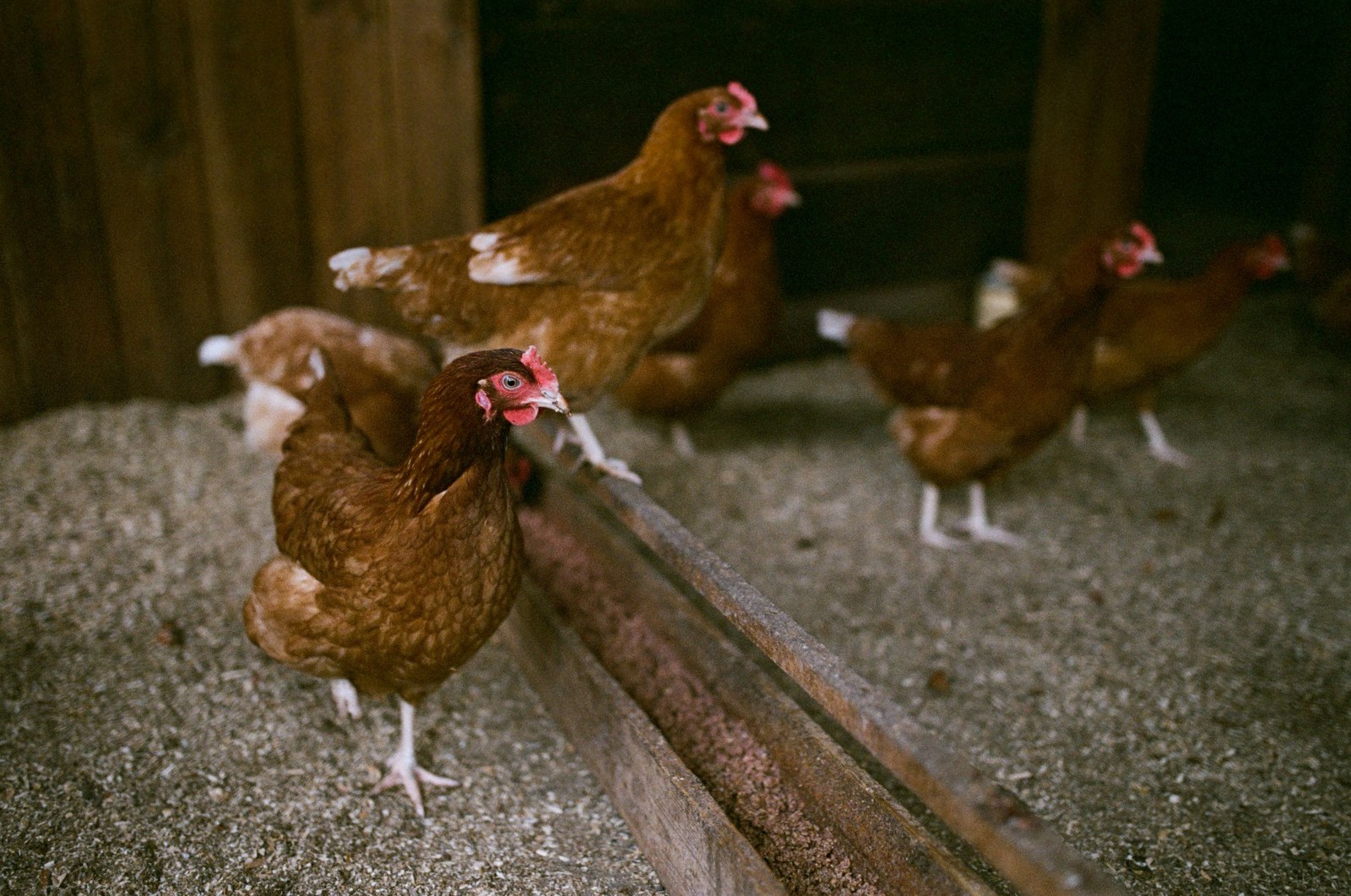
Backyard chickens need a complete layer feed available every day if they are laying, plus constant fresh water, free-choice calcium such as oyster shell, and grit. That simple routine covers almost everything a healthy hen needs to keep laying well, maintain strong bones, and form hard shells. Scratch, mealworms, and kitchen greens are extras, not the foundation.
The Daily Basics for Laying Hens
A quality layer feed, usually around 16 percent protein, is formulated to match what a laying hen loses making an egg each day. Keep it in a clean, dry feeder she can reach all day, rather than rationing it in one small morning scoop. Hens self-regulate surprisingly well on complete feed.
Pullets who are not laying yet, roosters, and growing chicks need different formulas, so do not feed layer feed to the whole mixed flock without thinking. Layer feed has extra calcium meant only for birds actively laying. If you keep a mixed-age flock, many keepers feed an all-flock or grower feed to everyone and put the calcium on the side.
Alongside the feeder, keep these available separately:
- Oyster shell or limestone grit in its own small dish for calcium
- Insoluble grit — tiny stones hens use in the gizzard to grind food
- Fresh water, refilled daily and scrubbed when it looks slimy
Hens will take exactly as much oyster shell as they need. Do not mix it into the feed, because non-laying birds do not need it and laying hens need to choose their own amount.
Treats, Scraps, and Free-Ranging
Treats should stay to roughly a tablespoon or two per hen per day — about 10 percent of the diet. Too much scratch, corn, bread, or table scraps dilutes protein and calcium, and egg production and shell quality are usually the first things to slip.
Safe favorites in moderation include leafy greens, chopped squash, berries, cooked peas, and a small handful of mealworms on a cold morning.
Skip moldy food, raw dried beans, avocado skins and pits, chocolate, and very salty leftovers. If you would not eat it because it has spoiled, do not pass it to the flock.
Water and Seasonal Adjustments
A laying hen drinks roughly twice as much water as she eats feed, and more in heat. Even a short gap in water can pause laying and stress the flock.
Watch the flock for clues: thin or soft shells suggest calcium or overall nutrition needs a look, a sudden drop in eggs often traces back to water, heat, light, or a treat-heavy diet, and pale, lethargic birds deserve a closer health check and a call to a poultry-savvy veterinarian if it continues.
Keeping Flock Feeding on Track With KinsLe
On busy farms, the routine fails not because anyone does not care, but because everyone assumed someone else topped up the feeder. KinsLe Care Teams let you assign daily flock feeding and watering duties to family members or helpers, and each task is marked complete with a timestamp. That means you can see at a glance whether the layer feed, oyster shell, and water were checked this morning, even if you left before dawn.
Set the recurring jobs once — feeder check, water refresh, egg collection — and the responsibility stops living only in your head. New helpers can see exactly what the flock gets, so a substitute does not accidentally fill the feeder with scratch alone. Care Teams on KinsLe hold the written flock rotation — who checks layer feed, oyster shell, and water each morning — with each finished task marked complete so nothing rests on memory alone.