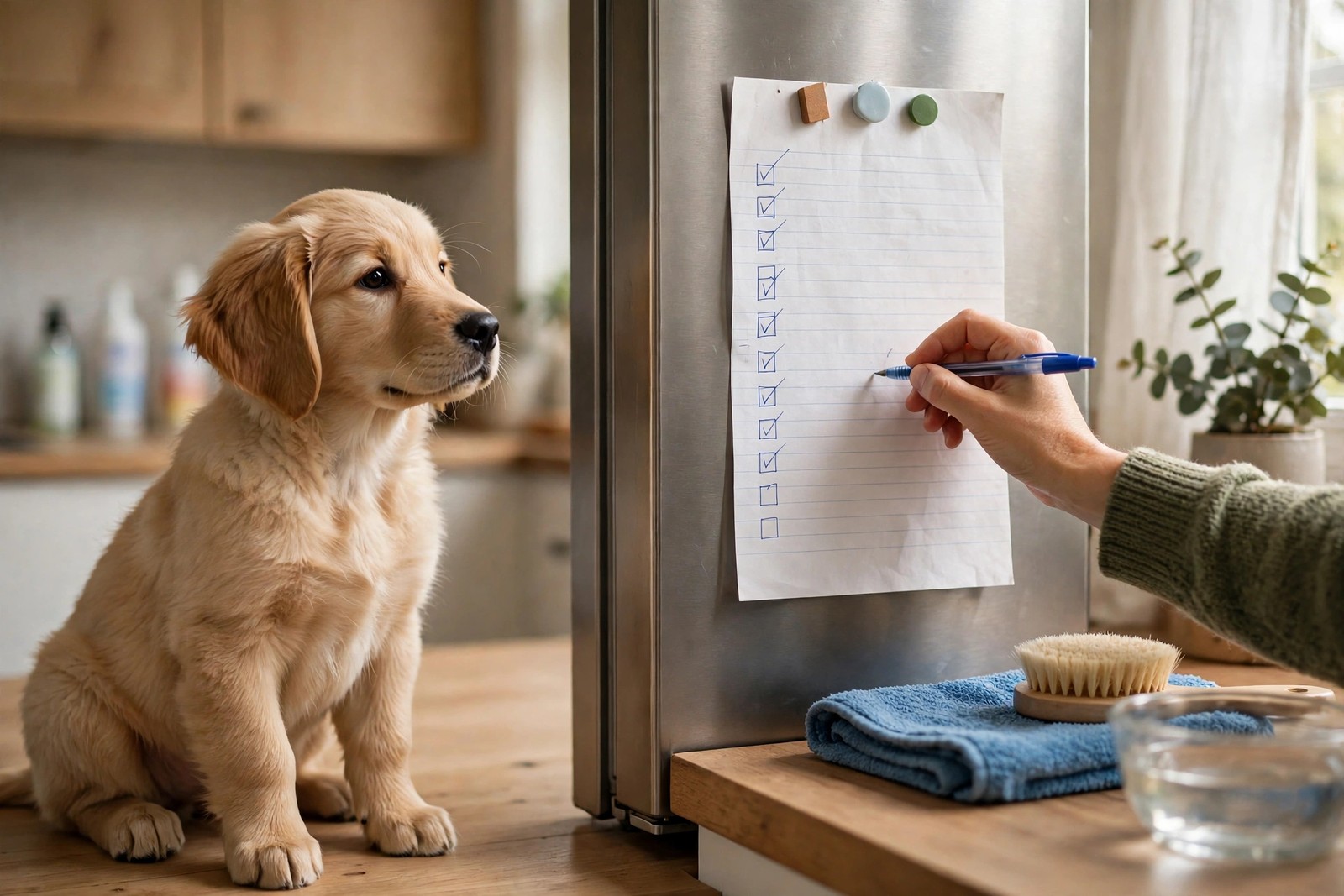
A first-year checklist works because it is short enough to complete on a tired weekday and complete enough that nothing developmental slips. Hers has six daily lines and one weekly line, and each line earns its place by what it prevents or builds during the months when she is growing quickly.
The Six Daily Lines
Feeding comes first: measured meals at set times, using the ration guidance for her age and weight, with the bowl lifted after a short window so grazing never blurs her appetite signal. Fresh water is checked and refilled through the day, and the bowl is washed rather than merely topped up. The toilet rhythm is the line new owners underestimate: regular trips outside on waking, after meals, after play and before bed, with calm praise the moment she toilets in the right place, because frequency and timing are what build housetraining. Exercise and play follow, scaled to a growing body: short walks, garden games and sniffing time rather than long forced marches, ending while she is still enjoying herself. Training takes only a few minutes at a time, several times a day: her name, a recall game, settling on a mat, walking without pulling, practised inside ordinary moments. The final daily line is a grooming touch, a minute or two of handling her coat, ears, paws and mouth gently, so being examined becomes normal long before she needs it to be.
The Weekly Line That Catches Problems Early
Once a week, the brief daily touches become a proper check. Look inside her ears for redness, dark wax or a sour smell. Lift her lip and look at her teeth and gums, noting any retained baby tooth sitting beside an adult one. Run hands through her coat down to the skin, feeling for ticks, lumps, dry patches and the start of tangles behind her ears and under her collar. Check her nails, including any dewclaw, and trim or file a small amount rather than waiting until they are long. Weigh her on the same day if you can, because a steady growth curve is reassuring and a sudden change is information a vet will want. This weekly pass takes ten quiet minutes and is the household's early-warning system for the whole first year.
How the Balance Shifts Across the Year
The checklist stays the same shape while its contents mature. In the early months the toilet line dominates: trips outside are frequent, nights may still be broken, and feeding runs to more meals per day in smaller portions. Training minutes are tiny and constant, and exercise stays short because her joints are still forming. As she moves through the middle of the year, toilet trips space out and hold longer, meals usually consolidate, and her walks lengthen gradually as her body allows. Training shifts from foundation games toward reliability around distractions, and adolescence may temporarily make cues she knew well seem negotiable, which calls for patience and shorter sessions rather than louder ones. By the end of the first year the grooming touch and weekly check have usually become the lines that matter longest, because they carry unchanged into adult life while toilet frequency and meal counts settle into the background.
Keeping the Checklist Alive in a Busy Household
Write the checklist where the day happens, on the fridge or the phone everyone already checks, and review it monthly against her growth, the season and her changing exercise needs. Splitting duties helps the checklist survive work and school, but the split serves the list rather than replacing it: whoever feeds her still works through the same six lines. Households sharing her care through KinsLe find the rhythm easier to hold, because Care Teams assigns each duty to a named person and marks completion with a timestamp, so her evening training minutes and weekly ear check are visibly done rather than hopefully assumed.