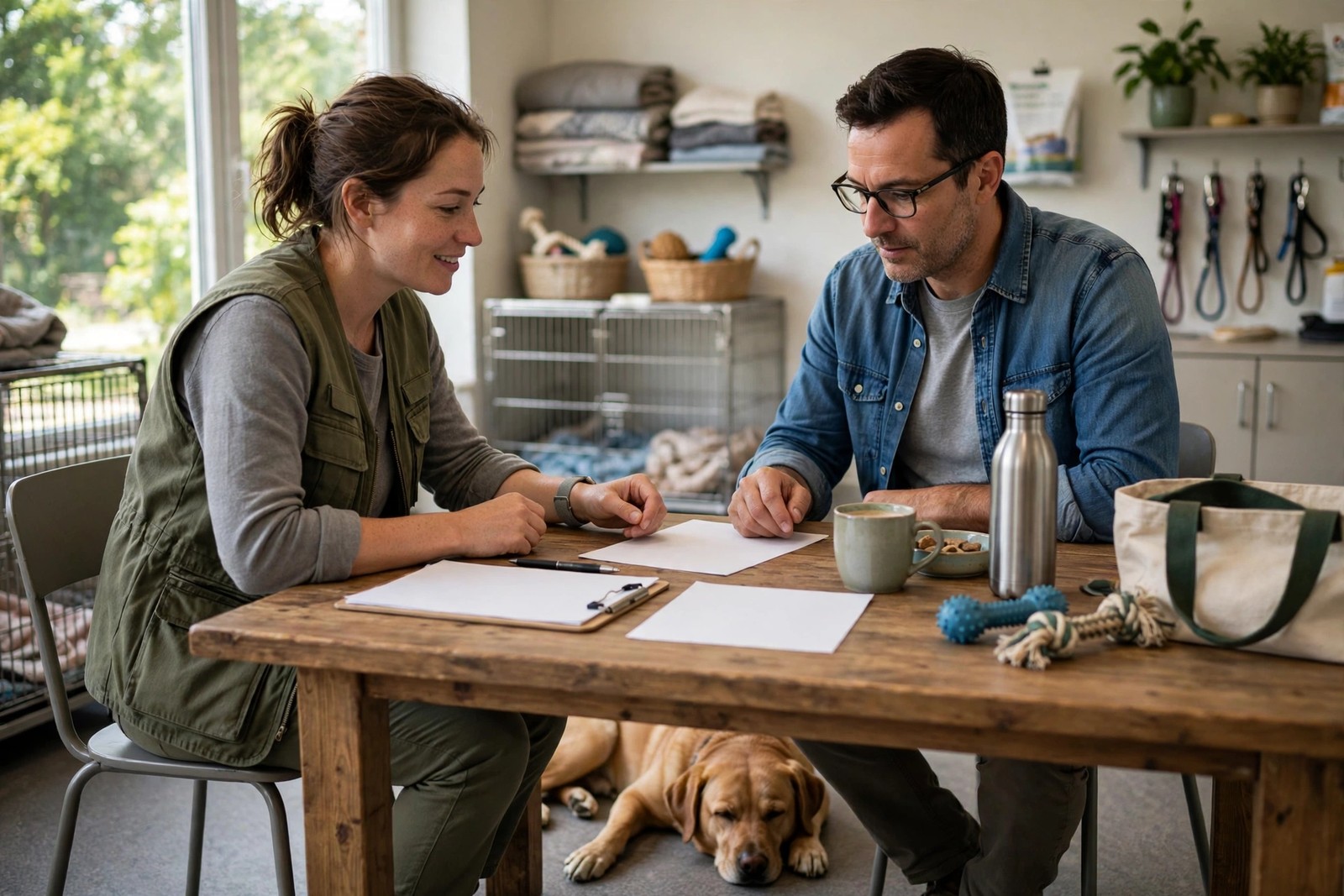
Rescue adoption forms can feel intrusive until you see what they are for: the rescue has usually taken this dog in once already, and every question is aimed at making sure this home is the last one. Forms vary between organisations, but the same sections appear again and again, and knowing them in advance lets you gather the answers — and the one or two documents — before you fall for a particular dog.
Your Home and Permission to Keep a Dog
The first block is housing. Are you renting or do you own, how long have you lived there, and are you planning a move? Renters should expect to provide their landlord's contact details or written permission for a dog — rescues are frequently asked for this and adoptions do fall through at this point, so arranging permission before applying saves everyone heartbreak. The form then covers the physical setup: house or flat, garden size, and crucially the fencing — its height, material, and whether it is complete and secure — plus where the dog will sleep, spend the day, and be kept when you are out. Some rescues follow this section with a home check, in person or by video, to see the fencing and living space the form describes.
Household, Lifestyle, and Time
Next comes who the dog will live with: every household member and their ages, visitors such as young grandchildren, anyone with allergies or health limits, and every animal already in the home, with their species, age, temperament, and whether they are neutered and vaccinated. Lifestyle questions follow — your work pattern, the longest the dog would routinely be left alone, who will feed, walk, and train it, what happens during holidays, and how much exercise you realistically expect to give each day. Rescues are matching energy and need, so an honest answer about a quiet working household directs you to a dog who will thrive there rather than the young, high-drive dog who would not. Many forms also ask what you would do if your circumstances changed, and what behaviour problems you could and could not work with.
Vet References and Your Pet History
Expect to name your current veterinary practice, or the one you intend to register with, and to give permission for the rescue to speak to them as a reference. The history section asks about pets you have owned before: what happened to them, whether any were rehomed, and how long ago. New owners are not disqualified by having no history — most rescues simply ask first-time applicants extra questions and offer more follow-up support — but evasive answers about previous animals are taken seriously. The closing sections usually cover the practical contract: your understanding of costs, whether you will keep vaccinations, microchip details, and insurance current, the rescue's neutering requirements for puppies, and a direct question about circumstances in which you would return the dog, which good rescues ask without judgement because their contract requires the dog to come back to them rather than be passed on.
Answer fully and honestly, including the awkward parts, because a rescue that trusts your answers will work to match you — and after approval the paperwork continues to help you, since KinsLe's Transferrable Profiles let the rescue hand the dog's known history, health records, and daily routines over into your care intact.