
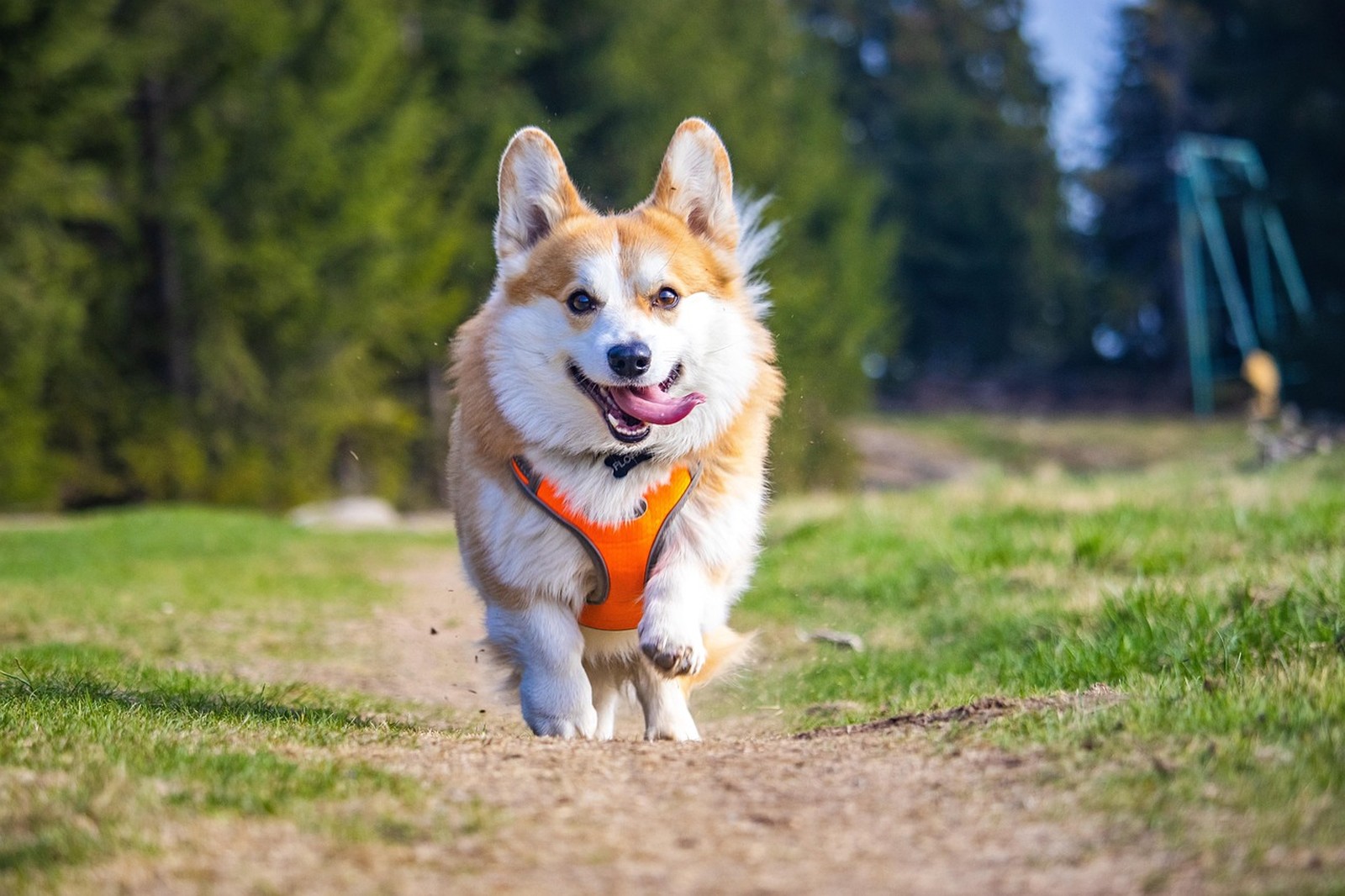
A typical day with a Pembroke Welsh Corgi is the day of a proper working dog who happens to be built low to the ground. Corgis were cattle herders — ducking kicks, driving stock by nipping heels, and thinking for themselves all day — and the pet version still needs a job, firm weight control, and more mental exercise than his short legs suggest.
Morning: a walk with work in it
The day opens with a walk of forty minutes or more, ideally with variation — a different route, a ball game, some allowed sniffing time — because a corgi walked identically around the block daily will invent his own entertainment. Breakfast is measured strictly. This breed gains weight with enthusiasm, and every extra pound loads a long spine and short legs, so treats through the day come out of the food allowance rather than on top of it. Ramps or steps at the sofa, and a discouraging word for jumping down from height or racing stairs, protect that back as a matter of daily habit.
A herding brain needs its sessions
Through the day, training and puzzle work arrive in short, frequent doses: a few minutes of trick training, a snuffle mat or food puzzle, a game of find-it with toys hidden around a room. Corgis learn fast and then test the boundaries of what they have learned, so sessions stay upbeat and end before the dog starts freelancing. The herding instinct needs managing rather than scolding — a young corgi who chases and nips at running children's heels is doing his ancestral job in the wrong place, and the fix is redirecting that chase onto toys and teaching a solid stop and recall early.
Coat, barking, and the corgi commentary
The thick double coat sheds far more than the dog's size predicts, with heavy seasonal blows, so a brush a few times a week — daily during a blow-out — is normal care, and bathing stays occasional so the coat keeps its weatherproofing. Corgis are also alert, vocal watchdogs: arrivals, passers-by, and suspicious noises all get announced. Daily life therefore includes a trained quiet cue and enough exercise and occupation that the barking stays commentary rather than becoming the dog's main hobby.
Evening outing and the household supervisor
A second walk or garden play session closes the exercise account, and evenings show the corgi's chosen role: positioned where the whole household can be observed, involved in everything, and quite certain his view should be heard. This is an affectionate, clownish breed at home, but also a strong-willed one — routines kept kindly and consistently get cooperation, while rules that vary by family member get exploited with impressive precision.
The corgi day, summed up honestly
Budget an hour-plus of exercise, daily mental work, regular brushing, and permanent portion discipline — moderate in time, high in engagement. A corgi who suddenly struggles with stairs, drags a hind foot, cries out when picked up, or stops jumping up as usual needs a veterinarian promptly, because back problems in a long-bodied breed are not a wait-and-see matter. When the puzzle ideas run dry mid-afternoon, KinsLe's Kinny is there to be asked for a new game or training step suited to a clever herding dog, and what you work out stays recorded alongside your corgi's profile for the next session.