
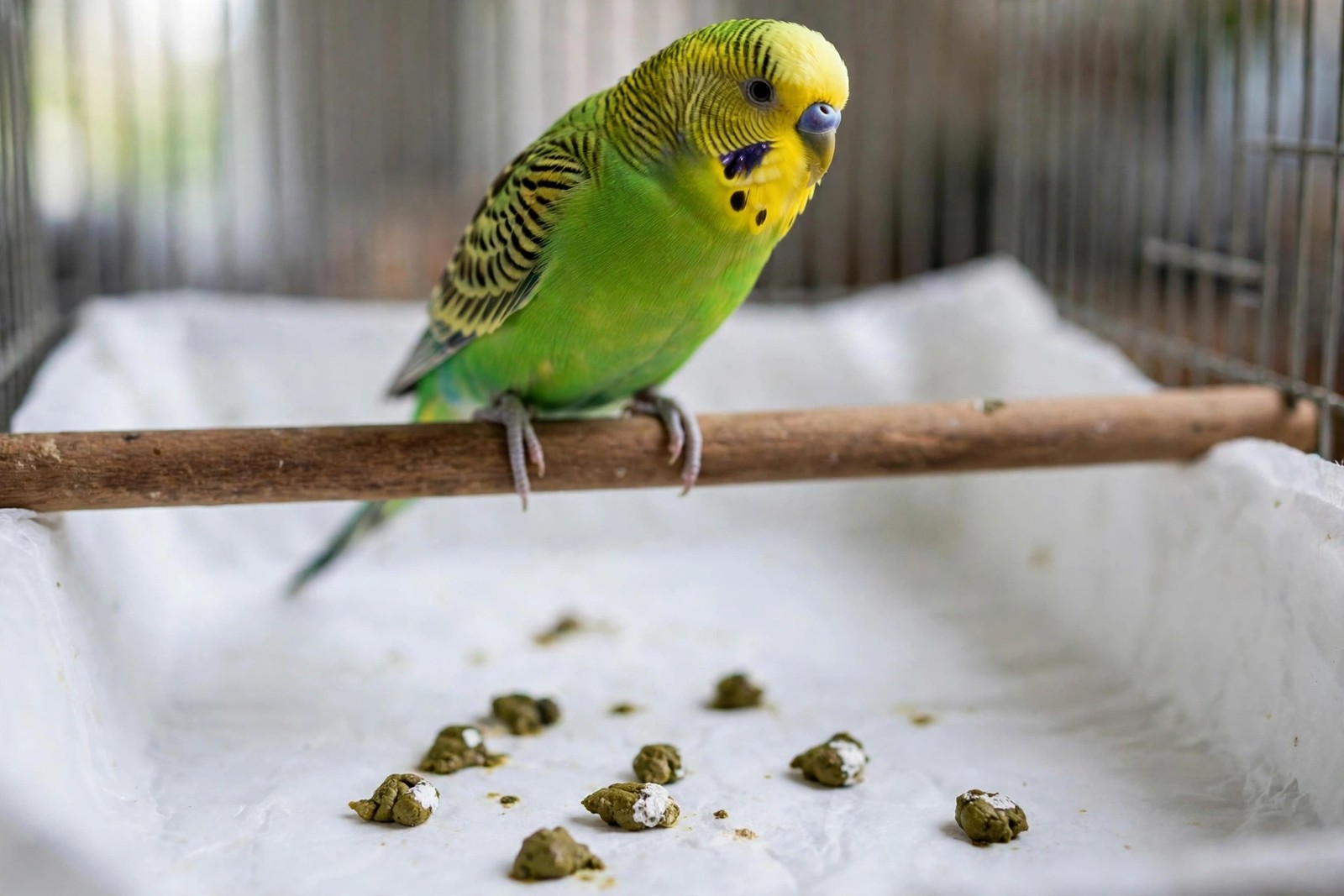
Healthy bird droppings usually have three parts: a formed green or brown solid, white or cream urates, and a small amount of clear liquid urine — all in one neat little package. Diet matters a lot: pellets can shift the solid part toward brown, and a feast of berries or sweet potato can tint droppings for a few hours. What deserves attention is a sudden change from your bird's own normal that lasts, or droppings with blood or no solid part at all.
Learning Your Bird's Personal Normal
There is no single perfect dropping, because species and menus differ. A lorikeet on nectar produces far wetter droppings than a budgie on seed. A cockatiel eating pellets looks different from one eating mostly seed and greens. So the useful skill is comparison: line the cage with plain white paper or unprinted paper towel for a day, look at the morning droppings before breakfast colors them, and take a phone photo. That photo becomes your reference for "normal for this bird."
Expect harmless variations. The first dropping of the morning is often larger and wetter because it has collected overnight. A bird who just drank a lot or ate melon will pass more liquid for a short while. Females in breeding condition can produce bigger droppings too. Temporary, explainable, and back to normal by the next day is the pattern of a non-issue.
Changes That Deserve a Vet Call
Contact an avian vet when you see:
- Bright red blood, or black, tarry-looking solids
- No solid part at all — just liquid and urates — persisting beyond a few droppings
- Undigested seed visible in the droppings
- A strong change in urates, such as bright yellow or green staining that lasts
- Far fewer droppings than usual, which can mean your bird is barely eating
- Any dropping change paired with fluffing, quietness, or appetite loss
Bring a fresh sample — the cage paper itself is fine — and tell the vet exactly what your bird ate in the last twenty-four hours. That context prevents a berry-related false alarm from wasting the visit and helps a real problem get read correctly. This kind of observation guide is general information, not a diagnosis; only an examination can say what a persistent change means for your individual bird.
A Simple Monitoring Habit That Works
You do not need a spreadsheet or a daily inspection ritual. Swap cage liner in the morning, glance rather than study, and only act on the comparison: same as usual, briefly different after a known meal, or different with no explanation. If it is the third kind two days running, make the call. Owners of multiple birds should note that shared paper tells you something changed, not who changed it — a day or two of separate observation, or your vet's advice, sorts that out.
Stress shows up in droppings too. A car ride to the vet famously produces watery droppings in a perfectly healthy bird, which is worth remembering before you panic in the waiting room.
Turning Notes Into Follow-Through
The gap between "I'll keep an eye on it" and actually checking again tomorrow is where most monitoring fails. When a change puzzles you, bring the question to KinsLe's Kinny, the built-in AI assistant, as it arises: whether this morning's watery dropping follows yesterday's melon, how today's photo compares with your reference shot, or what bright yellow urates lasting into a second day could signify. Bird signs are small and easy to second-guess, and talking a specific change through question by question keeps the observation concrete instead of letting it blur into worry. Kinny can answer follow-up questions in KinsLe about what a lasting dropping change means, with replies drawn from the KinsLe Answers library, and a change that does not pass quickly still belongs in a vet call.