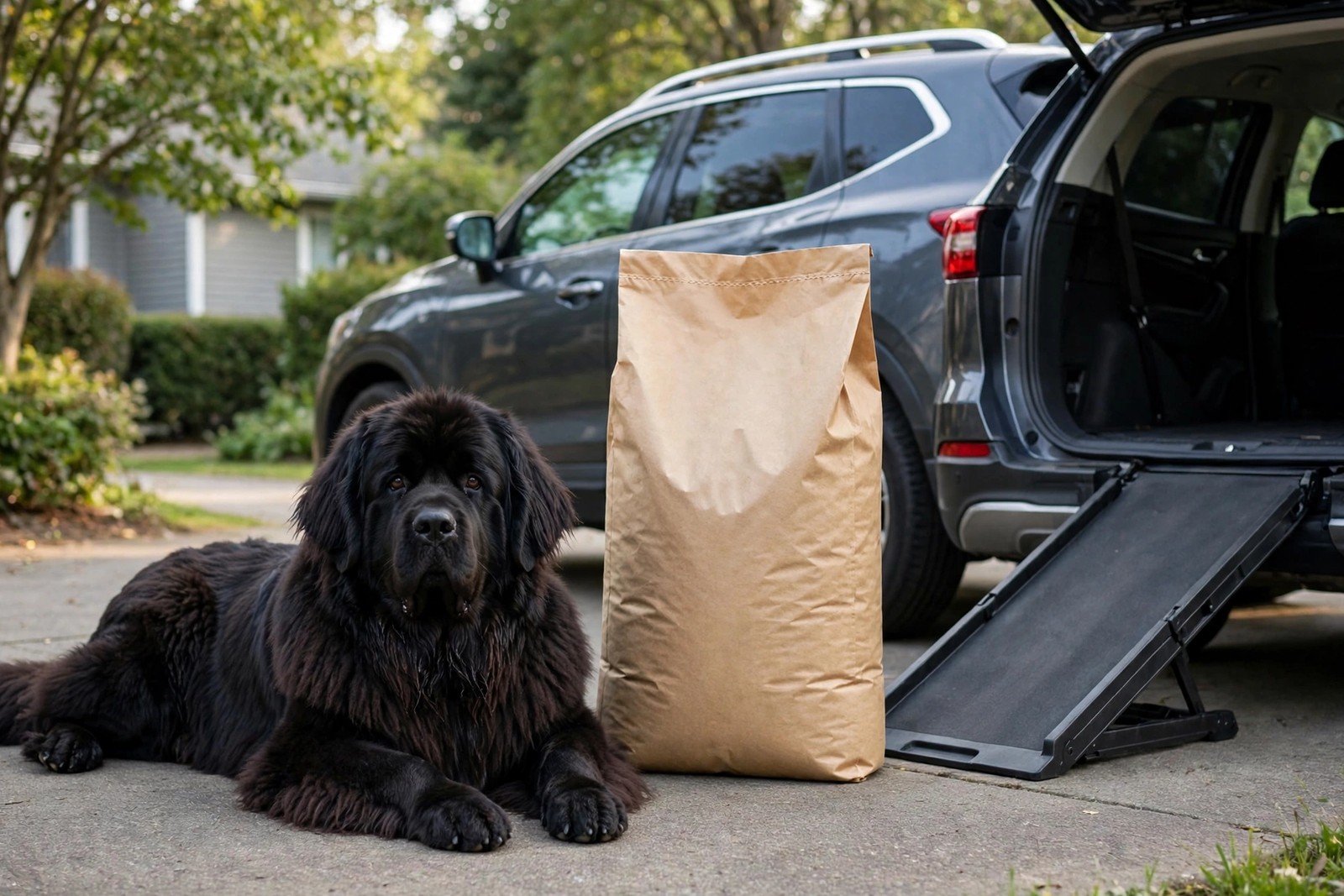
Roughly double is the honest headline, and the detail matters more than the headline. A giant breed does not cost a little more in every category; it costs more in specific, predictable places, driven by body weight and food volume. A buyer who sees the structure of the costs can plan for a Newfoundland calmly, while a buyer who only hears that giants are expensive meets the same figures later as a series of shocks.
The monthly comparison, broken down
Treat these as planning ranges for a healthy adult, not quotes. A Newfoundland typically runs to $340 to $540 a month, made up of food at $180 to $260, insurance at $90 to $160, grooming and everyday essentials at $40 to $60, and routine veterinary care averaged across the year at $30 to $60. An average-sized dog typically runs to $150 to $255 a month, made up of food at $70 to $110, insurance at $45 to $80, grooming and everyday essentials at $20 to $30, and routine veterinary care averaged across the year at $15 to $35. Both totals follow their breakdowns exactly, and the comparison shows food and insurance doing most of the doubling between the two dogs.
Why food costs scale the way they do
A Newfoundland maintains a body several times the mass of an average dog, and its daily ration reflects that mass even though giant breeds eat less per unit of body weight than small dogs do. You will buy food in the largest bag sizes, store it properly to keep it fresh, and go through it at a pace that makes delivery subscriptions and storage bins practical necessities rather than conveniences. Puppyhood adds a specific caution: giant-breed youngsters need controlled growth, so the food budget should follow your vet's guidance on suitable diets and amounts rather than a bigger-is-better instinct, because growing too fast loads developing joints.
Why insurance premiums sit higher
Insurers price the claims a breed actually generates, and a Newfoundland's likely claims are expensive ones. Joint problems, cruciate injuries, stomach torsion emergencies, and heart conditions all involve surgery or specialist care at giant-dog scale, where anaesthesia, medication, implants, and hospital time are charged against a much larger body. Premiums also commonly rise with age, and a giant breed reaches senior pricing sooner in its shorter life. Compare policies on what they cover for hereditary and joint conditions, on annual limits that a single giant-breed surgery could test, and on how dental illness is treated, rather than choosing on the monthly figure alone.
The weight tax on everything else
Beyond food and insurance, weight follows the dog through the budget. Parasite control and medication are dosed and priced by weight bands, and a Newfoundland sits in the top band or needs multiple packs. Grooming a heavy double coat takes a professional longer, boarding kennels charge for the largest runs, and a giant dog needs a vehicle it can enter without being lifted, which can mean a ramp and a bigger boot. Even home costs scale: beds, crates, and gates are bought in giant sizes at giant prices, and they wear out under giant use.
Planning so the costs stay boring
Build the giant-breed premium into the household budget from the puppy stage, keep insurance continuous so conditions are not excluded as pre-existing, and review food quantities against body condition with your vet rather than feeding by appetite, because an overweight giant loads its joints with every step. Newfoundlands are famously gentle, patient dogs, and their costs are the known price of that companionship, not a hidden flaw in the breed. Keeping weight records, food amounts, insurance details, and vet receipts together in KinsLe's Pet Passport makes the true cost of your giant visible at a glance each year.