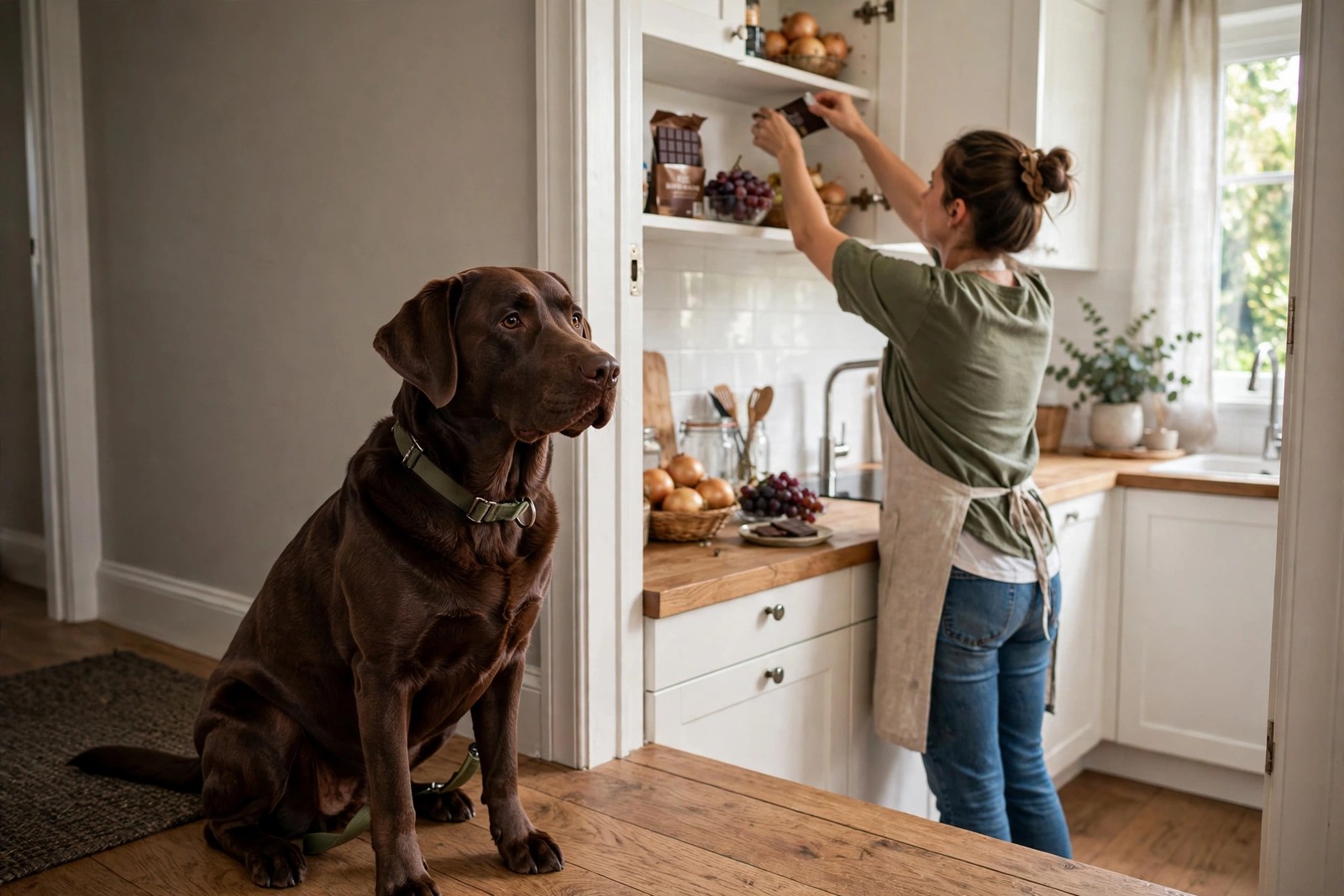
Some human foods are merely unhealthy for dogs, but a short list is genuinely poisonous, and those are the ones every person in the household needs to know by heart. The foods below cause the most emergency vet visits, and several can harm a dog in surprisingly small amounts.
The True Poisons
Chocolate contains theobromine, which dogs clear far more slowly than people do. The darker and more bitter the chocolate, the more dangerous it is, so baking chocolate and cocoa powder are far riskier than a small piece of milk chocolate, although none is safe to offer. Grapes, raisins, currants, and sultanas can cause sudden kidney failure in some dogs, and there is no known safe amount, so a single dropped raisin packet deserves a vet call, not a wait-and-see approach. Onions, garlic, leeks, and chives damage red blood cells, and the risk hides in leftovers: gravy, stuffing, baby food, stock, and seasoning powders all count, with signs sometimes appearing a day or two later. Xylitol, also labelled birch sugar, appears in sugar-free gum, sweets, mints, and some peanut butters; it triggers a rapid insulin surge that can drop blood sugar dangerously and damage the liver. Macadamia nuts cause weakness, tremors, and overheating. Alcohol and caffeine are both toxic in amounts a dog can easily lap up from an unattended mug or glass. Raw yeast dough expands in the warm stomach and produces alcohol as it ferments, a double hazard. Mouldy food, including mouldy bread, fallen fruit, and compost, can carry tremor-causing toxins, which is why compost bins need lids a dog cannot lift.
Physical Hazards, Not Poisons
Cooked bones splinter into sharp fragments and can also lodge across the jaw or in the gut, which is why vets treat them as an emergency risk rather than a treat. Corn cobs are swallowed whole by enthusiastic dogs and are a classic cause of intestinal blockage needing surgery. Stone-fruit pits from peaches, plums, and cherries obstruct in the same way and are not safe chew toys, however long a dog has carried them around.
If Your Dog Eats Something on This List
Do not wait for symptoms and do not guess that the amount was too small to matter. Call your veterinarian or an emergency service straight away and give four facts: the food, the amount as best you know it, your dog's weight, and the time it happened. For grapes, xylitol, chocolate, and the onion family, early treatment changes outcomes dramatically, and the first couple of hours matter most. Never make your dog sick at home unless a vet specifically tells you to, because some substances cause more damage coming back up and some dogs aspirate.
Keeping Toxic Foods Out of Reach
Prevention is household discipline rather than training. Keep chocolate, gum, and raisins in closed cupboards rather than on counters, use bins with lids a nose cannot nudge open, and keep handbags, which so often hold gum, mints, chocolate, and medication, off the floor and zipped. Brief visitors and children with the same simple rule: nothing from a plate reaches the dog without an owner checking first, however pleading the look.
A written never-feed list on the fridge helps, and keeping that same banned list inside KinsLe Care Teams, where each feeder's tasks are set out, stops a well-meant treat from becoming an emergency.