
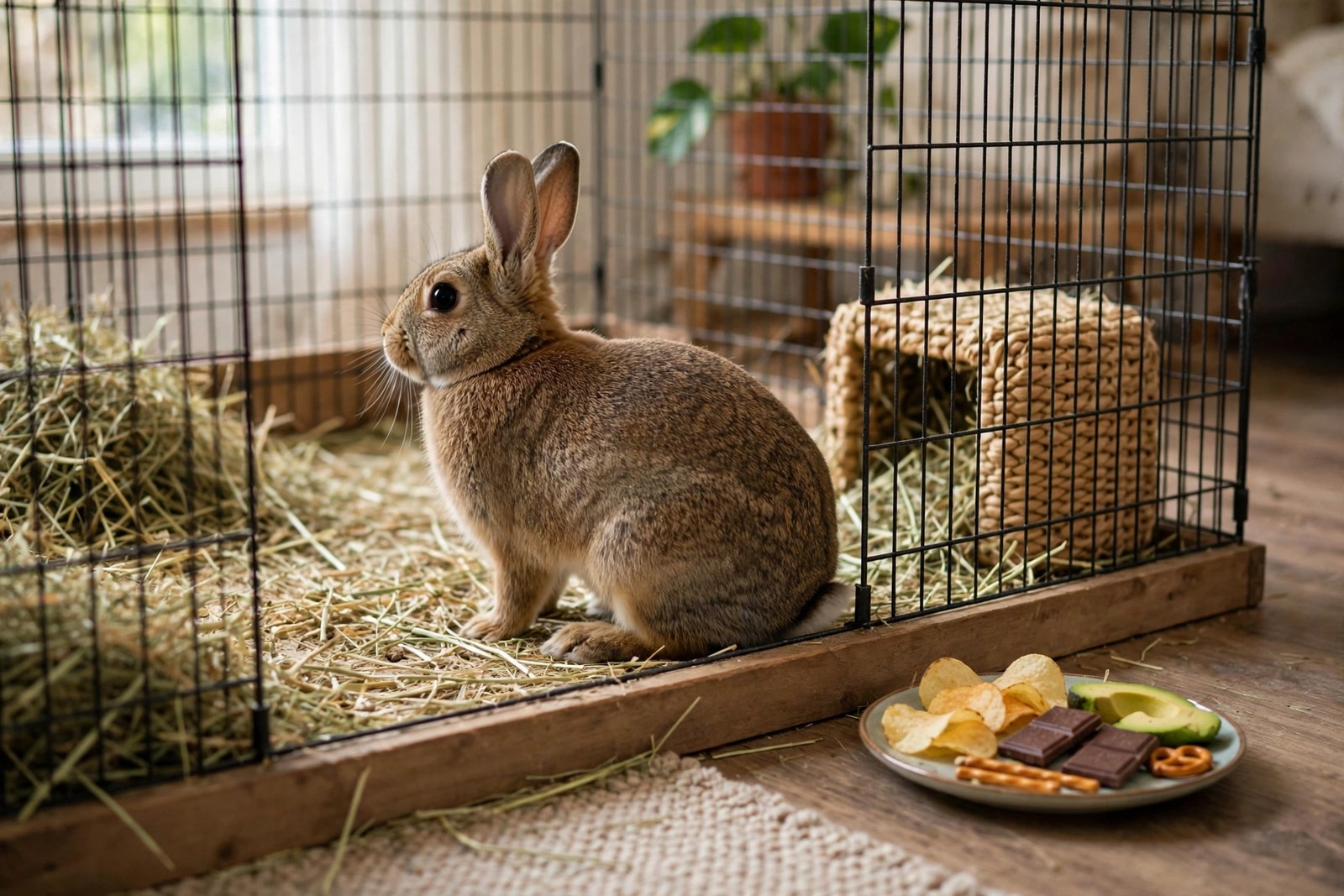
Never feed your rabbit potatoes, rhubarb, avocado, onions, garlic, chocolate, or human snack foods — these can be toxic or seriously disrupt a rabbit's sensitive gut. A rabbit's digestive system is specialized for high-fiber plant material, and foods outside that pattern range from useless to genuinely dangerous.
The genuinely toxic list
Rhubarb leaves and stalks contain compounds that are poisonous to rabbits and should never be offered, including from the garden. Avocado contains persin, which is toxic to many animals including rabbits. Allium vegetables — onions, garlic, leeks, and chives — can damage red blood cells and have no place in a rabbit enclosure. Potato in its raw form, along with potato and tomato leaves and stems, carries harmful plant compounds; green or sprouted potatoes are especially risky. Chocolate contains theobromine and is dangerous to rabbits as it is to dogs. Keep houseplants in mind too: many common ones are unsafe if nibbled, so position them out of reach of a free-roaming rabbit.
Human foods that wreck a rabbit gut
Even foods that are not outright poisons can cause real harm. Crackers, bread, cereal, biscuits, and other processed snacks deliver starch and sugar that feed the wrong gut bacteria and can trigger painful gas and stasis. Nuts and seeds are far too fatty and can be a choking or blockage risk. Yogurt drops and similar marketed treats, despite the packaging, are sugary dairy products a rabbit gains nothing from. Corn and other starchy vegetables in quantity belong on the avoid list as well. If it comes from your plate or a snack packet, it does not belong in the rabbit bowl.
The poor-choice staples
Iceberg lettuce is the classic trap: not toxic, but mostly water with very little fiber, so it fills a rabbit up with almost nothing useful and can contribute to loose droppings. It crowds out the dark leafy greens and hay that should dominate. Similarly, large daily servings of carrot — the cartoon staple — are too sugary to be a staple, whatever the cartoons suggest; treat carrot as an occasional small treat instead. When in doubt about any plant or food, leave it out until you have checked a reliable rabbit source or asked your vet.
If your rabbit eats something unsafe
Stay calm and act promptly. Note what was eaten, roughly how much, and when, and call your veterinarian or an emergency animal clinic for advice — do not wait for symptoms, and do not attempt home remedies or induce vomiting, which is not appropriate for rabbits. Watch closely for appetite loss, reduced droppings, bloating, or unusual quietness, and follow the clinic's instructions. Speed and information are the two things that help most, so keep your vet's number somewhere the whole household can find it.
A do-not-feed list everyone can see
Most accidental feedings are honest mistakes by a helpful family member, sitter, or visiting child working from good intentions and no information. Keeping a clear do-not-feed list in KinsLe's Pet Passport — the records packet that also holds vaccines, medications, and allergies — means the warning travels with your rabbit's profile and can be shared with sitters and vets before care changes hands. One visible list prevents the handful of chips, the shared biscuit, and the well-meant rhubarb from the garden. File that never-feed list where sitters will actually see it, in the Pet Passport file on KinsLe.