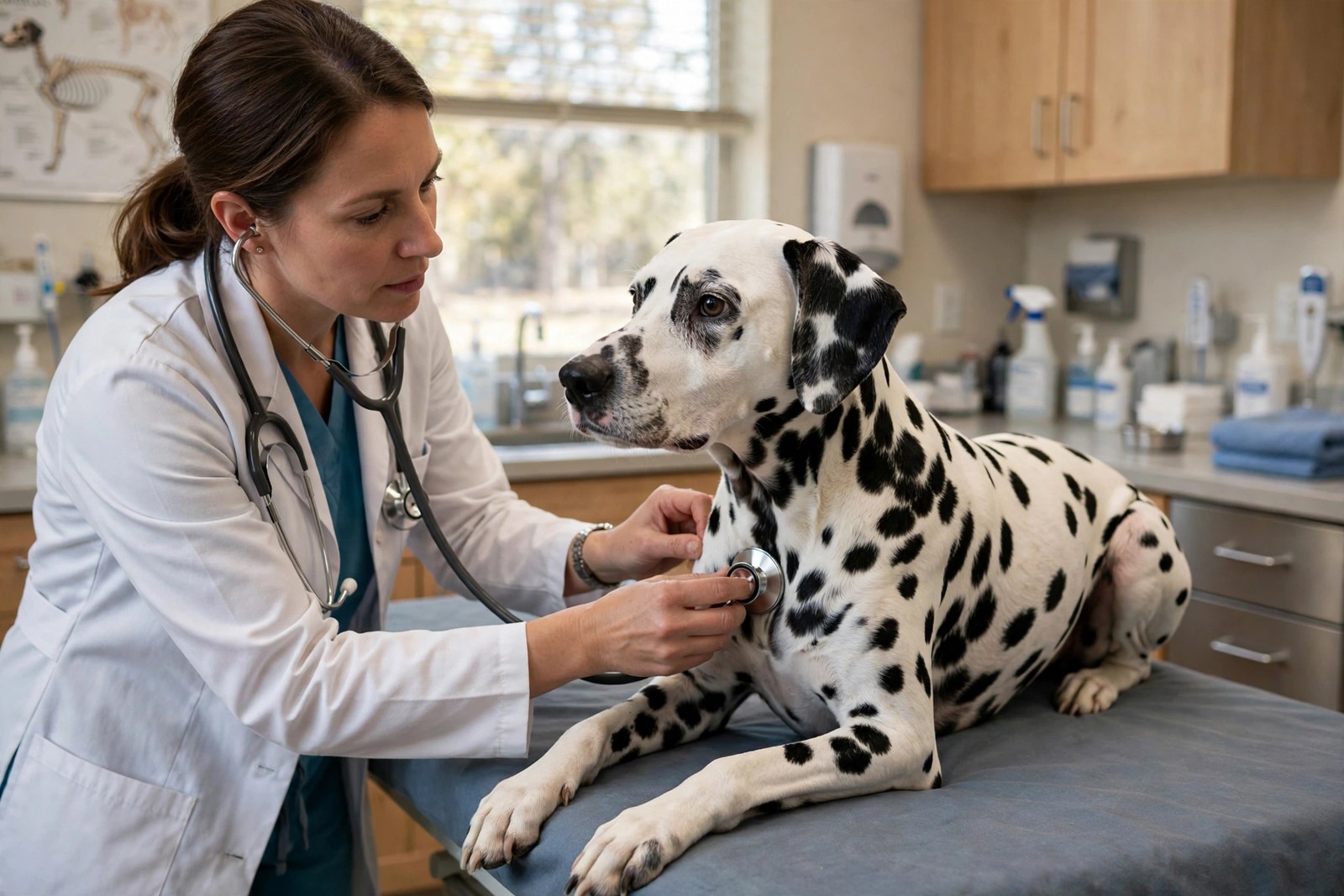
The senior Dalmatian is usually still a busy, athletic dog in outlook, which makes it easy to miss the systems that genuinely need watching in this breed. Urinary health leads the list because of the breed's unusual purine metabolism, hearing matters because deafness occurs in Dalmatians and can blend invisibly into ordinary age-related hearing loss, and skin and joints reward regular hands-on checks. Twice-yearly senior vet visits hold the pattern together. This is general information about what to monitor and discuss; your veterinarian decides what your individual dog needs.
Urinary Health and the Urate Stone Conversation
Dalmatians excrete uric acid differently from other breeds, and that is why urate stones are the breed-specific conversation to have with your vet — not something to settle at home, but a risk to manage knowingly. The home checks are observational: is your dog weeing normally, in a good stream, at the usual frequency? Straining, producing frequent small amounts, blood in the urine, licking under the tail, or new accidents in a reliably house-trained dog are all reasons to phone the vet promptly rather than wait, because a dog who cannot pass urine at all is an emergency. Keep fresh water available at all times and encourage drinking — generous water intake dilutes the urine and is the simplest daily habit in your control. Diet is the other half of the picture: some Dalmatians are fed with purine levels in mind, but changing foods, and especially restricting protein, is a decision to make with your vet using your dog's own urine results, not a rule to copy from another owner's dog.
Hearing: Breed Deafness Meets Old Age
Deafness present from puppyhood is known in this breed, and separately, many older dogs lose hearing gradually, starting with higher sounds. At home, notice whether your dog still turns toward sounds from another room, wakes to familiar noises, or has started to startle when approached from behind or when asleep. A dog who is losing hearing is not becoming disobedient, and the kind adjustments are visual: approach within sight, use a gentle floor vibration or a hand signal before touching a sleeping dog, and keep a deaf or hard-of-hearing senior on a lead anywhere traffic is possible, because the recall that worked by voice may no longer reach them. Tell your vet what you have observed, since a change in hearing can also reflect ear disease that an examination can find.
Skin, Coat and the Ground Between the Spots
Run your hands over your dog weekly, through the short coat, feeling for lumps and looking for flaky patches, redness between the toes, itchy areas your dog scratches or licks, and any sore that is slow to heal. Dalmatian skin can be reactive, and ageing skin heals more slowly, so a note of where a patch appeared and whether it is spreading gives your vet a head start. The weekly check is also your lump check: new lumps are common in older dogs and are often harmless, but only an examination can sort the ones that matter, so record size and position with dates and report change rather than waiting for a lump to declare itself.
Joints, Weight and a Runner's Frame
A breed built to trot for long distances carries its age in hips, elbows and feet, and the dog who still wants to run can overdo it on a good day and pay for it that evening. Keep exercise daily and steady, watch for stiffness after rest, reluctance on stairs, or an uneven gait at the back end, and keep weight lean — feel for ribs under a light covering of fat at your weekly check. Measure meals, count the treats honestly, and raise any mobility change at the six-monthly visit rather than assuming it is simply age. KinsLe's Pet Passport keeps your Dalmatian's urine results, hearing notes, diet decisions and six-monthly weights in one portable record, so the urinary conversation with your vet runs on your dog's own recorded history.