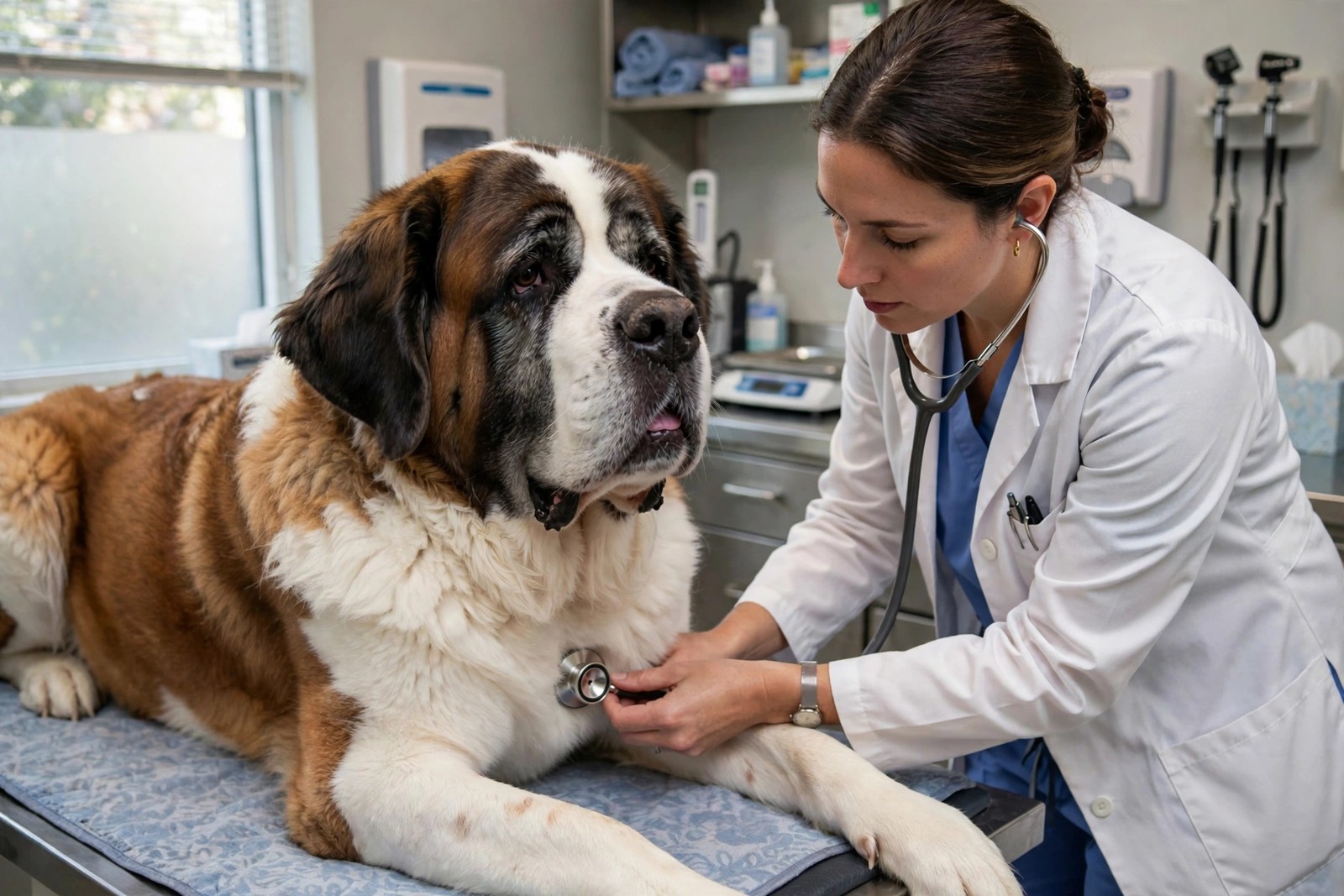
A Saint Bernard ages as a giant, and the health checks that matter reflect the sheer load that frame carries. Build each visit around joints, heart, weight, and stomach awareness, then let your veterinarian tailor the rest, because screening earns its place when it answers a question about the individual dog on the table. Blood tests, urine checks, dental examination, and eye review all belong in that conversation, with their frequency agreed between you and the practice rather than copied from a chart for another breed.
Joints under a heavy frame
Ask for a hands-on joint and gait review at every senior visit, and report what you see between appointments in concrete terms. A Bernard who hesitates before rising, bunny-hops on stairs, lags on the return leg of a walk, or shifts weight off one leg at rest is offering information a short examination may not reproduce. Discuss pain control, activity levels, and home adaptations with the practice before stiffness dictates the routine. Ramps at the car and at steps, a supportive bed away from draughts, raised feeding bowls only if your veterinarian advises them, and short, frequent walks rather than one long outing all protect ageing joints without wrapping a sociable dog in cotton wool.
Heart, breathing, and stamina
A giant chest deserves a careful listen. Your veterinarian will check heart rhythm and sounds, breathing effort, and pulse quality, and may discuss further heart investigation if an examination finding or a change in stamina raises a question. At home, learn your dog's resting breathing pattern while asleep, and report a new cough, faster resting breathing, tiring on routes once handled easily, fainting, or a reluctance to lie flat. Weight control supports the heart as directly as it supports the joints, so weigh monthly and record the figure rather than trusting your eye under all that coat.
Stomach awareness that never retires
Deep-chested giants carry a lifelong risk of the stomach twisting, a condition owners often call bloat, and senior status does not retire it. Learn the presentation cold: a swollen or tight abdomen, retching that produces nothing, drooling, pacing, restlessness, and obvious distress. Any of those signs means emergency care at once, day or night, not a phone call deferred until morning. Discuss prevention honestly with your veterinarian, including meal size, feeding frequency, exercise around meals, and whether a surgical option for the stomach wall is a conversation worth having for your dog. Feed calm meals, avoid vigorous activity directly before and after eating, and make sure everyone who cares for your Bernard can recite the signs without looking them up, because minutes matter and the dog cannot describe what is happening.
Between visits: a giant-dog home check
Run a short hands-on check each week while grooming, because a Bernard's coat hides change well. Feel along the ribs for weight creep, check muscle over the hips and thighs, and run your hands over the skin for lumps, sores, or damp patches under the heavier folds. Lift the lips to inspect teeth and gums, smell the ears, and watch drool, thirst, and appetite for shifts from your dog's normal pattern. Bring dated notes to appointments, including walk distances that now prompt a rest, so the practice sees a trend rather than a single morning.
Records that match the dog's scale
Senior Bernard care accumulates paper quickly: imaging reports, heart findings, weight history, dental notes, and a medication list that may span several conditions at once. Keep those records ordered by date, with the current ration, the agreed walk length, and the emergency signs list attached at the front. If your dog ever moves to a new home, a relative, or a rescue placement in old age, that organised history is the difference between care that continues seamlessly and care that restarts from guesses about a very large, very stoic patient. KinsLe offers Transferrable Profiles, which carries that dated history, routine sheet, and vet contact list across with the dog, sparing a new carer weeks of reconstruction.