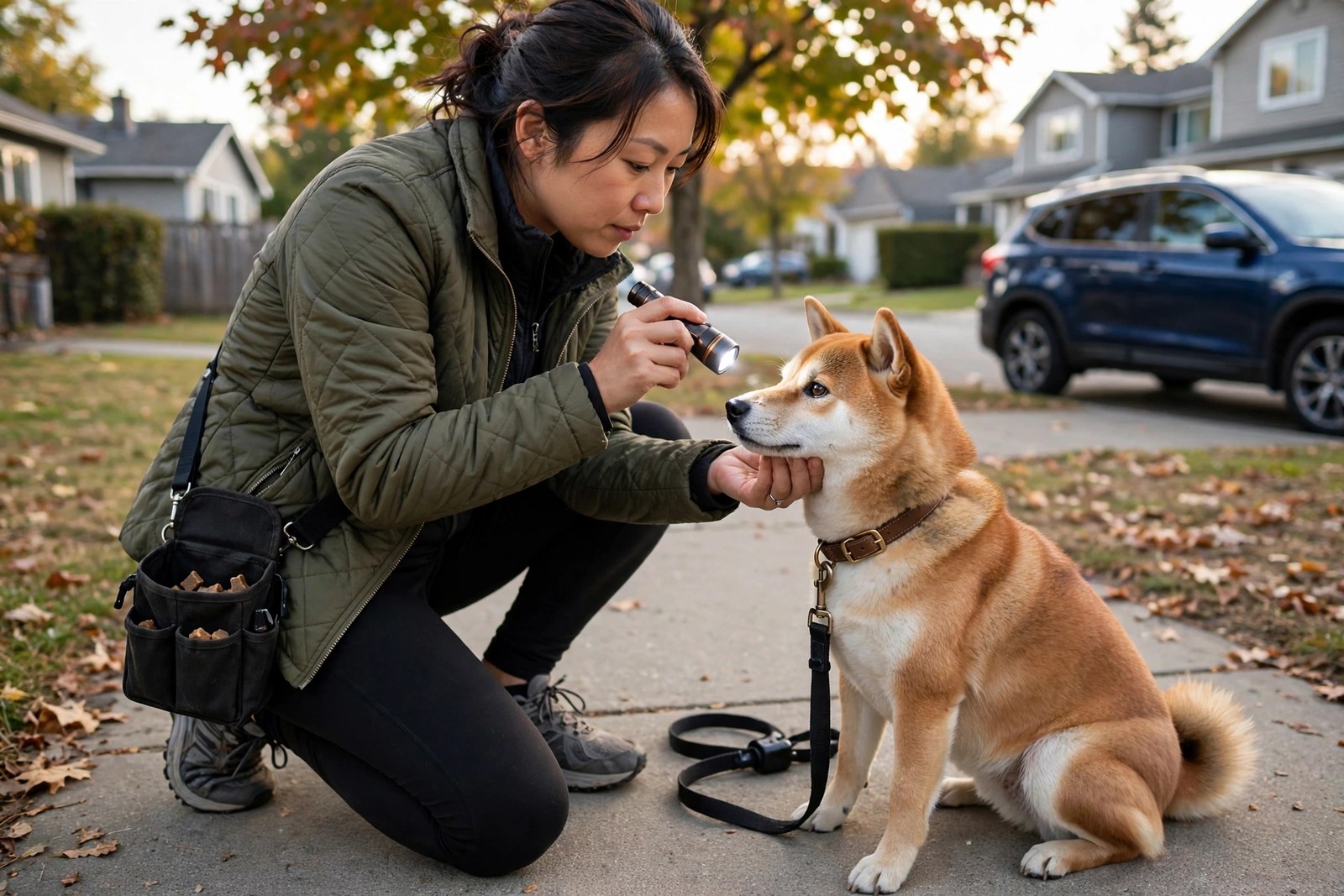
A Shiba Inu often ages on a long timetable, staying bright, agile, and firmly opinionated years after larger breeds have slowed. You are not simply watching for decline; you are protecting knees, eyes, and skin across a retirement that may last a long while, in a dog who may accept handling only on carefully negotiated terms. Build veterinary visits around those three areas, add teeth and general screening as your practice advises for the individual, and invest as much effort in making examinations tolerable as in scheduling them, because a Shiba who cannot be examined calmly cannot be screened thoroughly.
Knees and that skipping step
Ask your veterinarian to feel both kneecaps at every senior visit and to watch your dog walk and trot in a straight line. Kneecap problems in smaller breeds can show as an occasional skip, a hind leg carried for a few steps and then used normally, or a new reluctance to jump into the car or onto a favourite chair. Note each episode with its date and setting, including whether it followed rest, a long walk, or a turn on a slippery floor. Discuss weight, muscle support, ramps at furniture, and which activity limits, if any, the examination supports.
Eyes checked, changes reported early
Include the eyes in each review, and learn the home signs that should shorten the interval. Bumping furniture edges in low light, hesitating at kerbs, missing a treat tossed to one side, new cloudiness, redness, discharge, or a paw raised repeatedly to one eye all merit a call rather than a wait. Your veterinarian can examine the eye structures, talk through which concerns they watch for in an ageing Shiba, and judge whether further assessment would change anything.
Skin, itching, and a dated itch log
Skin questions earn a standing place on a senior Shiba's list. Itching, paw licking, ear irritation, seasonal flares, thinning coat, and patches that return after seeming to settle should be described to the practice as a pattern over time, not as a single bad week. Keep an itch log with dates, body areas involved, food or routine changes, and anything else that shifted at the same time, such as a new walking route through long grass. That record helps your veterinarian discuss allergy and other skin possibilities in an orderly way, separating triggers worth testing from noise. Resist rotating foods, supplements, and shampoos in quick succession while you gather evidence, because each change muddies the log and a dog with sore skin pays for the confusion in lost sleep and scratched, infected patches.
Handling practice that makes screening possible
A senior Shiba may need blood sampling, eye examination, dental work, or imaging one day, and cooperative habits built early decide how stressful that day becomes. Practise brief, rewarded handling at home: touching each paw, lifting lips, feeling knees, and looking into ears for a few seconds, followed by a valued treat and a full stop before patience runs out. Tell the practice honestly how your dog tolerates restraint, ask about fear-free handling options or a pre-visit plan if examinations are a struggle, and record what worked in your notes.
Teeth, tests, and a long view
Small mouths crowd teeth, so ask for a dental look at each visit and report bad breath, tartar you can see, dropped kibble, or chewing that has shifted to one side. Blood screening and other tests join the plan at intervals you agree with your veterinarian, building a baseline while your dog is well that will make later illness easier to interpret in a breed with many senior years ahead. Keep weight, appetite, thirst, and sleep notes between visits, and bring them with the itch log and skip diary. Should this self-contained dog ever need a new home late in life, KinsLe's Transferrable Profiles sends those handling notes, screening results, and daily routines across intact, letting a stranger start from knowledge instead of guesswork.