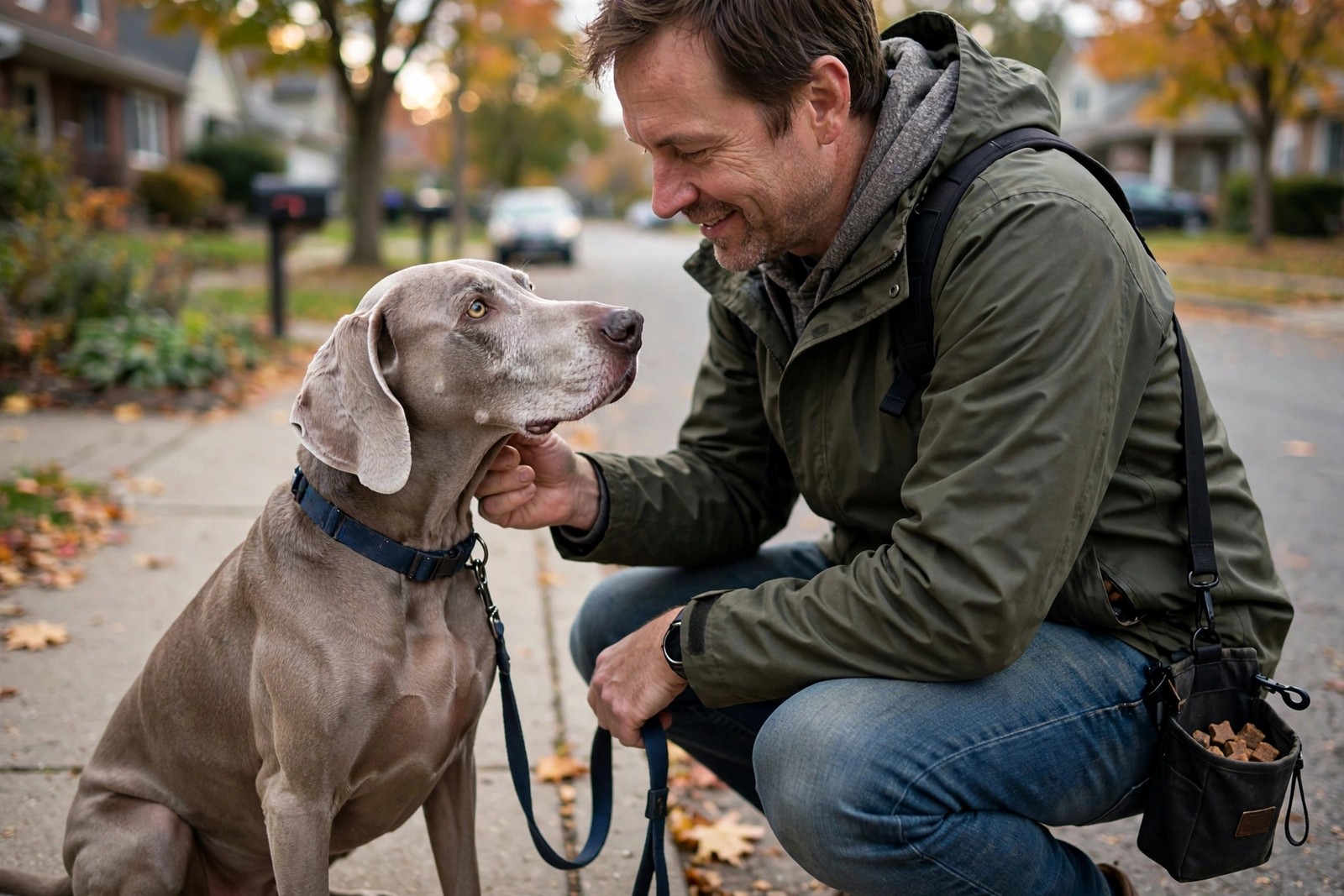
An older Weimaraner brings a distinctive senior profile to the examination table: a deep, narrow chest, an athletic history written into hips and muscle, and a drive that can outrun the ageing body carrying it. Stomach awareness comes first in this breed at every age, hip assessment and condition follow closely, and general senior screening, including eyes, teeth, heart, and blood work as your practice advises, fills the plan out around them. Agree the visit rhythm with your veterinarian and keep your own dated notes between appointments, because a dog this intense can look unchanged in the field while recovery at home quietly tells another story.
The deep chest: stomach signs every owner must know
A Weimaraner's chest shape carries a lifelong risk of the stomach filling with gas and twisting, an emergency owners commonly call bloat. Commit the signs to memory now: a tight, swelling abdomen, retching that brings nothing up, drooling, pacing, whining, restlessness, and a dog who cannot settle or who stands stretched and uncomfortable. Any combination of those signs means emergency care immediately, at whatever hour they appear. Discuss preventive feeding habits with your veterinarian, including meal division across the day, calm feeding, and avoiding hard exercise close to meals, and ask whether a preventive stomach procedure deserves discussion for your dog. Brief every person who feeds or walks your Weimaraner on the signs and on the journey plan, because the person present at the crisis may not be you.
Hips assessed against an athletic past
Ask for hip and gait assessment at each senior visit, interpreted against your dog's working history rather than against a generic activity scale. Old stiffness in this breed often announces itself in specific settings: rising from a cold floor after rest, the first minutes of a walk before the dog warms into movement, jumping down from a vehicle, or turning tightly at speed. Your veterinarian may discuss imaging, pain management, weight targets, and exercise modification based on the examination. At home, provide non-slip footing on hard floors, a supportive bed in a warm corner, and ramps where jumping down has become a negotiation, so daily life stops taxing the joints between formal reviews of their condition.
Conditioning a senior who still wants distance
A Weimaraner who has run for years will not volunteer for retirement, so conditioning has to be managed rather than abandoned. Replace occasional long outings with a steadier weekly pattern of moderate walks, building duration gradually and inserting genuine rest days that the dog spends pottering rather than training. Watch recovery as your guide: appetite that evening, stiffness the next morning, and willingness at the door the day after. Discuss ration changes alongside activity changes at each visit, since a dog covering fewer miles on the same generous ration gains the weight its hips can least afford to carry through old age.
Eyes, teeth, heart, and laboratory baselines
Round out the senior review deliberately. Ask for an eye examination, and report bumping in dim light, hesitation at steps, or any cloudiness, redness, or discharge you have noticed at home. Lift the lips weekly to monitor teeth and gums, raising bad breath, bleeding, or reluctance to crunch food at the next appointment. A heart listen, a weight trend, and blood or urine screening at intervals your veterinarian recommends build a baseline while your dog is well, giving later illness a comparison point. Mention changes in thirst, urination, sleep, and appetite even when they feel minor, because in a senior dog those small reports often decide which tests the practice runs first and which findings they watch rather than chase.
An emergency-ready household record
Keep one page where anyone in the house can find it: the practice number, the emergency practice address, the stomach signs, current medicines, the agreed ration, and the exercise level the last visit set. KinsLe stores that history in Transferrable Profiles, and a transfer sends the emergency page, screening record, and feeding routine across together, so a new owner inherits readiness rather than reconstructing it under pressure.