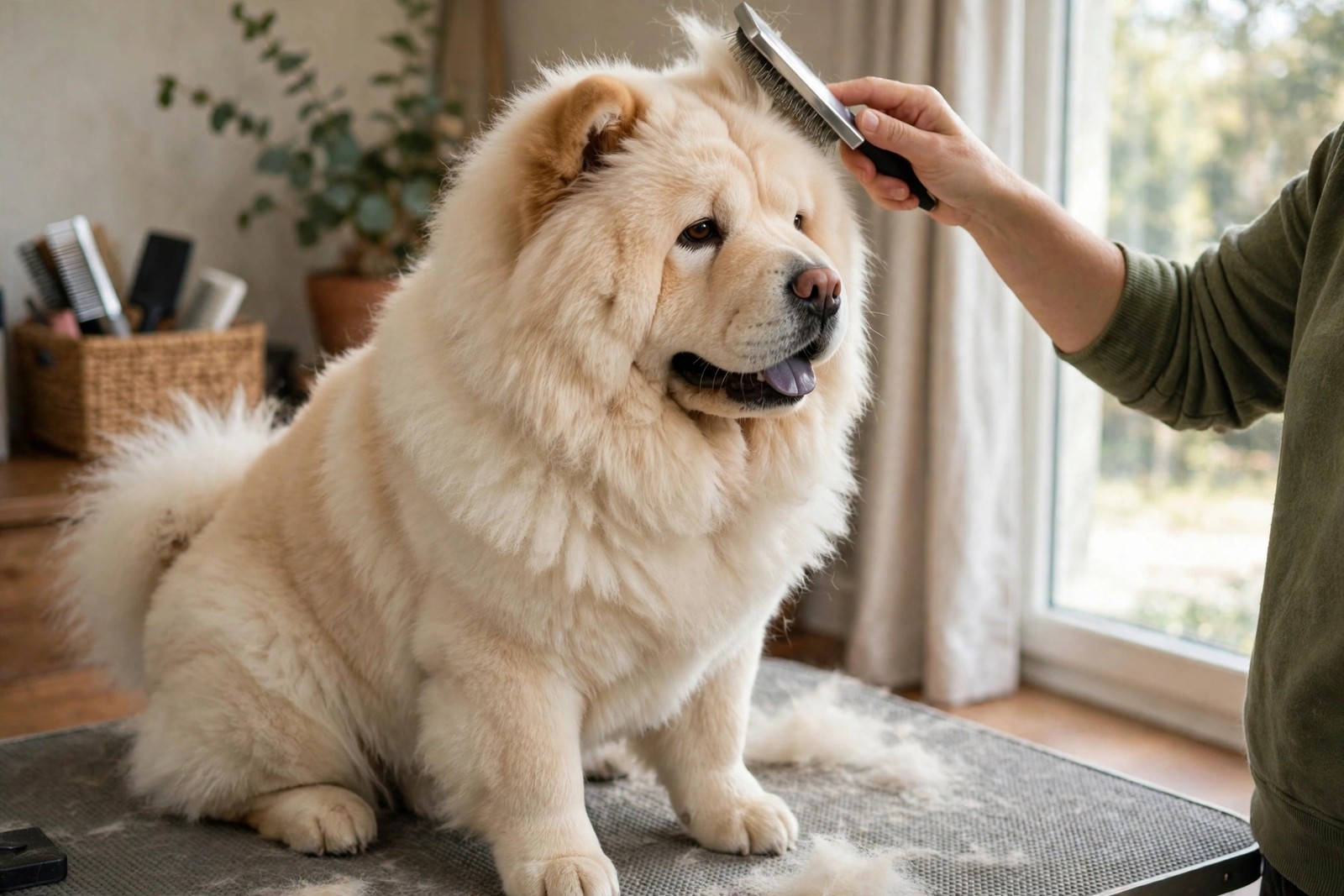
There is no light version of Chow Chow grooming. The breed carries a dense double coat with a coarse outer layer, a soft woolly undercoat, and a heavy ruff of longer hair around the head and neck, and it needs brushing three or four times a week to stay open and comfortable. Each session typically takes twenty to thirty minutes. Owners who brush once a week, or who brush often but only across the surface, end up with a coat that looks impressive while the undercoat quietly packs into felt underneath.
Line brushing through the ruff and trousers
The technique that works is line brushing: lift a section of coat, brush the undercoat out in layers from the skin upward, then let the next section fall and repeat, so you see clean skin at each parting. A slicker brush, a pin brush, and a metal comb cover most of the work, and the comb is the final test, since it snags on any undercoat you missed. The ruff, the hair behind the ears, the armpits, and the thick trousers on the hind legs felt first and deserve time at every session. Keep sessions steady and unhurried, and stop for a break rather than pulling at a tangle, because a Chow that decides grooming hurts will simply refuse to cooperate.
What rushed grooming leaves behind
Packed undercoat traps moisture and heat against the skin, blocks airflow, and hides redness, flaking, or a sore patch until it is well established. A coat in that state also makes bathing counterproductive: water tightens felted undercoat into mats that sit wet against the skin for hours. If the coat has already packed down badly, a professional groomer can work it out or clip the worst areas, which is kinder than an afternoon of home pulling. Never shave a Chow's double coat down as a shortcut; the coat insulates in both heat and cold, and shaving can leave the regrowth uneven and the skin exposed to sun.
Bathing and drying are part of the count
A Chow does not need frequent baths, but a bath is a major grooming event when it happens. Brush the coat out fully first, bathe, then dry the dog completely to the skin, section by section; with this density, air-drying alone can leave the undercoat damp for many hours while the outer coat feels dry to the hand. Between baths, the three or four weekly brushing sessions are what keep the coat clean, because they remove the dirt, loose hair, and debris the coat picks up. Check ears, eyes, and nails during one session each week, and use the partings you make while line brushing to look at the skin itself in good light.
Keeping three or four sessions honest
The gap between three or four sessions promised and one session delivered is where Chow coats tend to go wrong, especially in a household where everyone assumes someone else brushed the dog. Agree a simple rota, keep the brushes where the dog actually rests, and record which areas were finished each time, since the ruff and trousers are the sections most often rushed. Puppies should meet the brush in short, calm sessions long before the adult coat arrives at full density. Senior Chows, and any Chow who stiffens or tires standing, can be groomed lying down in shorter sittings spread across the day, as long as the week's total still reaches three or four full sessions to the skin. KinsLe's Care Teams supports that rota by assigning each session to a person and marking it complete with a timestamp, so the whole household can see the week's brushing at a glance.