
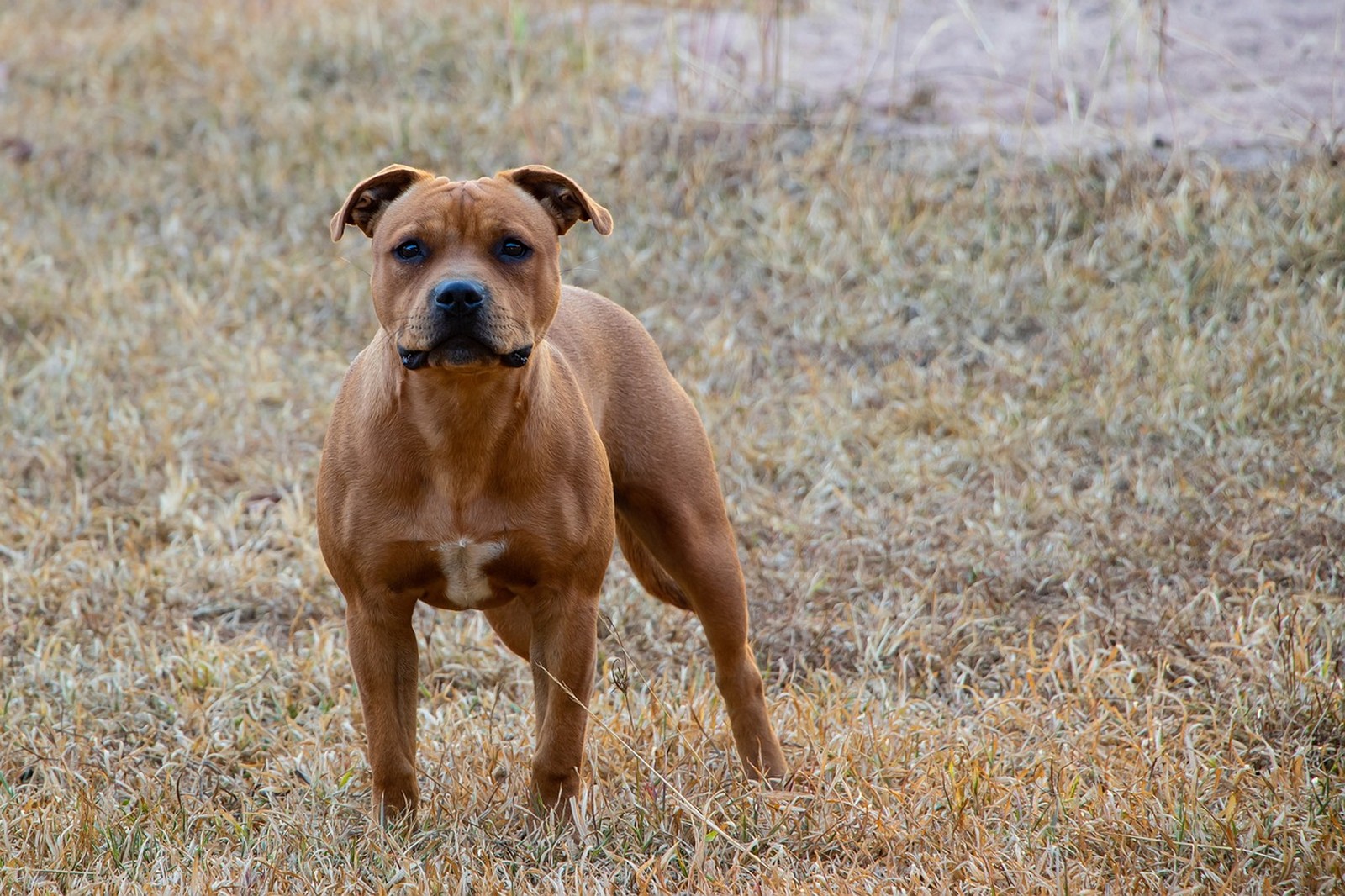
The AmStaff health picture in brief
American Staffordshire Terriers are sturdy, muscular dogs, but the breed carries a recognizable cluster of inherited and structural risks. Skin allergies sit near the top of the list, alongside hip and elbow dysplasia, an underactive thyroid, eye changes such as cataracts, and a hereditary nerve condition that gradually affects balance and coordination. None of this means an individual AmStaff will develop all, or even any, of these problems. It does mean an owner who knows the pattern can spot early changes while they are still small, inexpensive to investigate, and easier to manage.
Itchy skin is this breed's signature complaint
Allergic skin disease shows up in AmStaffs as paw chewing, belly redness, recurrent ear inflammation, and hot spots that return in the same places. Their short, close coat offers little cover, so parasites, pollen exposure, and food sensitivities can all leave visible marks quickly. Watch for hair thinning along the flanks, a yeasty smell from the ears, or scratching that wakes the dog at night. Because several different triggers produce nearly identical itching, guessing at home tends to drag the problem out; a veterinarian can examine the skin, check the ears properly, and work through likely causes in a sensible order.
Joints built under a heavy, athletic frame
Hip and elbow dysplasia occur when those joints form loosely, and an AmStaff's dense muscle and enthusiasm for launching off furniture or sprinting on hard ground can strain an imperfect joint further. Early clues include bunny-hopping at a run, stiffness after rest that eases once moving, reluctance to climb stairs, or a dog who sits sloppily to one side. Keeping this breed lean matters more than for many others, because every extra pound rides directly on those joints. Controlled leash exercise and avoiding repetitive jumping while a puppy is still growing are practical, low-cost protections.
Thyroid, eyes, and coordination changes to note
Hypothyroidism in AmStaffs can creep in as unexplained weight gain, a thinning coat, low energy, or a dog who seems to feel the cold more than before. Cataracts may appear as a cloudy or bluish lens and bumping into objects in dim light. The breed's inherited cerebellar condition is different in character: a young adult gradually becomes wobbly, overshoots steps, or sways when turning, without pain. Any loss of coordination should be assessed promptly rather than watched at home, because several unrelated problems can look similar and some need urgent attention.
Screening and the vet-visit thresholds for this breed
Ask your veterinarian about hip and elbow evaluation, thyroid testing when symptoms fit, and an eye examination as part of routine adult care, especially for breeding dogs or dogs from lines with known problems. Book a visit sooner if itching breaks the skin, an ear becomes painful or foul-smelling, lameness lasts beyond a day or two of rest, or balance changes appear at any age. Bring notes on when each sign started and whether it is progressing, since the timeline is genuinely useful information for this breed's slower, creeping conditions. For an AmStaff, KinsLe's Pet Passport gathers screening results, skin flare histories, and vaccine records into a single file that travels cleanly between your regular clinic and any specialist.