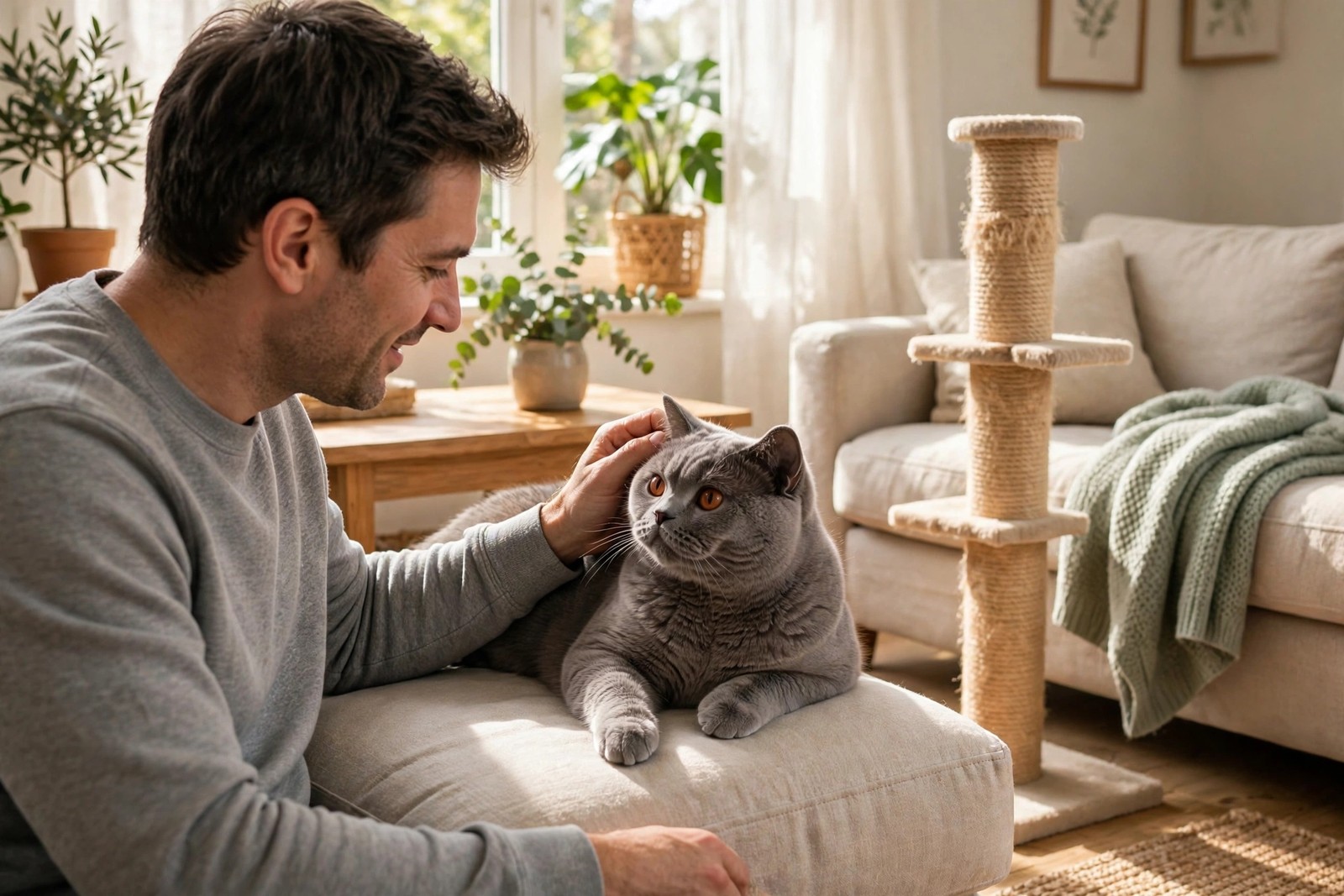
Three watch-items dominate British Shorthair health, and weight leads the list: this solidly built breed rounds out on surprisingly little food, and carrying too much of it invites diabetes and strains his joints. Behind it sit hypertrophic cardiomyopathy (HCM, heart-muscle thickening) and polycystic kidney disease (PKD — inherited cysts in the kidneys, less common in British Shorthairs than Persians but present in some lines). Haemophilia B was historically noted in the breed, so breeders may test breeding males. A British Shorthair from a breeder who heart-scans and DNA-tests starts ahead.
Weight Is the British Shorthair Project
Judge condition by feel, not silhouette: under that plush coat you should feel ribs with light pressure, and your cat should have a waist from above. Weigh monthly, feed measured meals, and treat 'he's just a chunky breed' as the sentence that causes the problems — diabetes in an overweight British Shorthair typically announces itself through increased thirst, urination, and weight loss despite a good appetite, a combination that always earns prompt blood tests. Kidney disease from PKD follows the general kidney pattern (thirst, weight loss, pickiness) and is one more reason senior British Shorthairs deserve twice-yearly screening. Heart disease may show nothing until it shows a lot: breathing changes or sudden back-leg problems are emergencies in any cat.
Working With Your Vet
With a British Shorthair, start by observing and dating what you see: when thirst crept up, when his waist thickened, when jumping onto the sofa stopped, and what else changed alongside. Then let a veterinarian examine him and make the diagnosis — this background helps you judge what to track, but it cannot replace an examination, and dated notes with photos of his changing shape give the vet far more than a worried summary can.
Increased thirst with weight loss, breathing changes, or sudden hind-leg weakness in a British Shorthair should be seen by a vet promptly — the leg and breathing signs are emergencies.
Keep his log breed-specific: monthly weight, water intake, appetite, litter output, activity, and the day any symptom first appeared. Spread over a fortnight, those entries expose a pattern — climbing thirst, a quietly rising weight line — that memory alone smooths over before the appointment. Update the baseline when he moves home, starts a medication, or enters his senior years, because each shift redefines what normal looks like for him.
For a British Shorthair, KinsLe's Pet Passport holds those screening dates, notes and vet history in a packet that travels to boarding, travel and handoffs as easily as to the clinic.