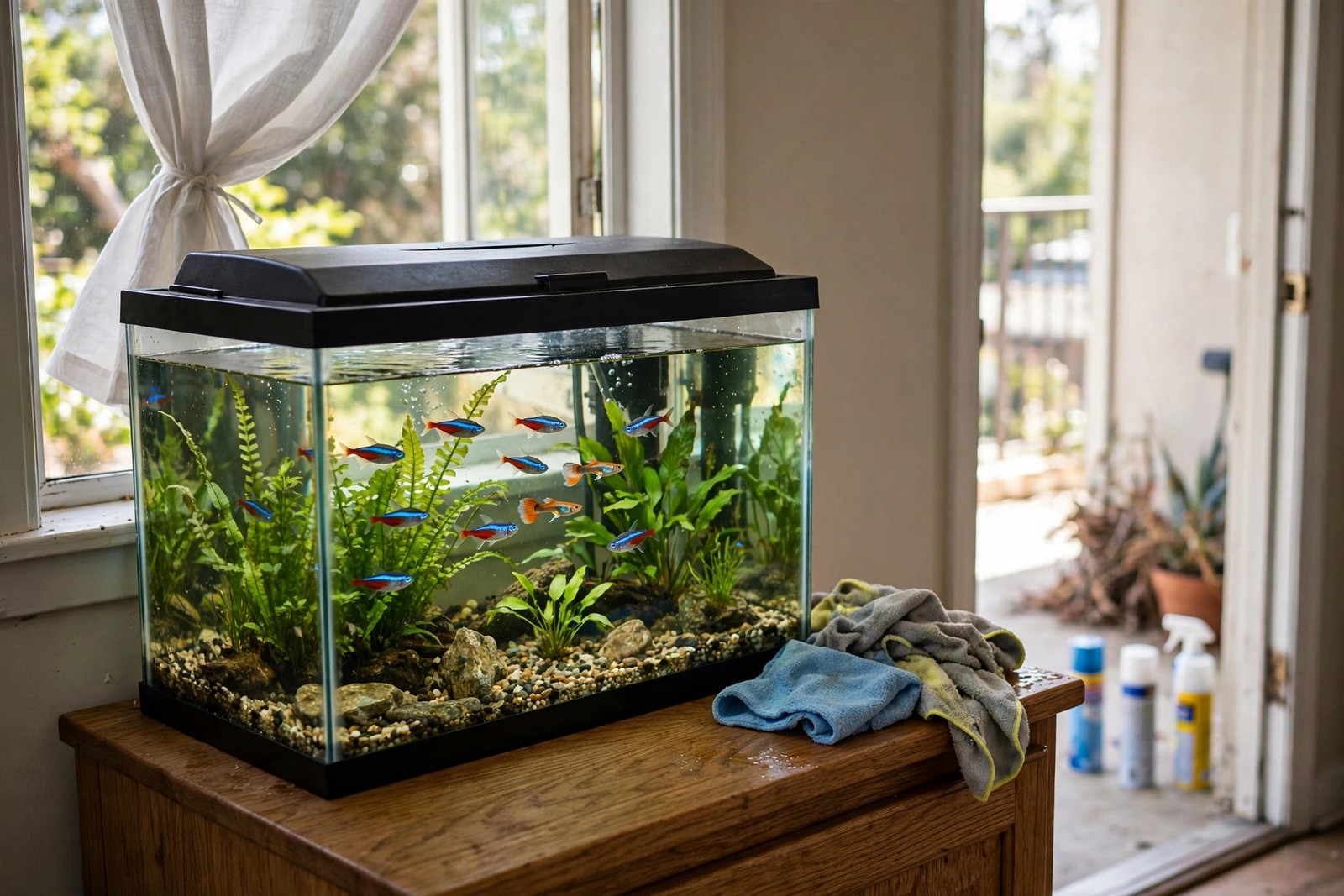
A fish tank is not sealed against its room. An air pump actively pulls room air and bubbles it through the water, the surface sits open to settling droplets, and many lids have gaps for cables and feeding. Whatever hangs in the room's air is, in a small way, dosed into the tank — and fish, passing water constantly across delicate gill tissue, meet chemicals at concentrations their bodies cannot shrug off.
The Sprays That Matter Most
Insect sprays are the worst of the list by design: fly, wasp and ant sprays are made to kill small animals efficiently, and aquatic invertebrates and fish sit squarely in their path. A shrimp tank can be wiped out by insect spray used in the same room, and fish kills after a household spraying are a familiar story to aquatic shops. Aerosol air fresheners and disinfectant sprays come next — fine droplets, made to linger in air, settling steadily onto the surface film where many fish feed. Spray furniture polish, window cleaner and oven or bathroom sprays add solvents and detergents, and hairspray and body sprays used at a dressing table beside a tank are an overlooked everyday source.
Paint and varnish fumes during decorating belong in the same conversation: not sprays, but the tank breathes them for days.
How Poisoning Shows — and Why It Is Often Misread
There is rarely a dramatic moment. The pattern is fish gathering at the surface or by the filter outflow, breathing fast, losing colour or going off food in the hours after cleaning or spraying happened nearby, sometimes with deaths starting the next day and no disease signs to explain them. Because the cause left no trace in the water an owner can test at home, these losses get blamed on mystery illness. If symptoms follow any spraying in the house, treat it as contamination: large partial water change with properly treated water, fresh activated carbon in the filter if you run it, maximum surface agitation, and a call to your aquatic shop describing exactly what was sprayed and when.
The Working Rules
Make the tank's room a no-spray room, permanently. Nobody sprays anything in it — not air freshener before guests, not fly spray in summer, not polish on the stand itself. Clean glass and surfaces the old way: product applied to a cloth in another room, or plain water and a dedicated tank-only cloth for the glass. Hands and arms get washed and rinsed before going into the water, because the same logic covers hand creams, sun lotion and insect repellent on skin.
For unavoidable jobs nearby — a wasp nest in the same room, decorating the wall behind the tank — move what you can, cover the tank fully with a clean sheet or cling film for the shortest time, switch the air pump off while covering since it would draw the contaminated air in, open windows, and uncover and restart once the air has genuinely cleared. Fish tolerate a quiet hour far better than a dosed one.
Rules only work if everyone in the house knows them, including a cleaner who arrives while you are out. Writing the no-spray rule into your fish's profile on KinsLe's Family Sharing puts it in front of every family member and helper, with the reason attached, before anyone reaches for a can.