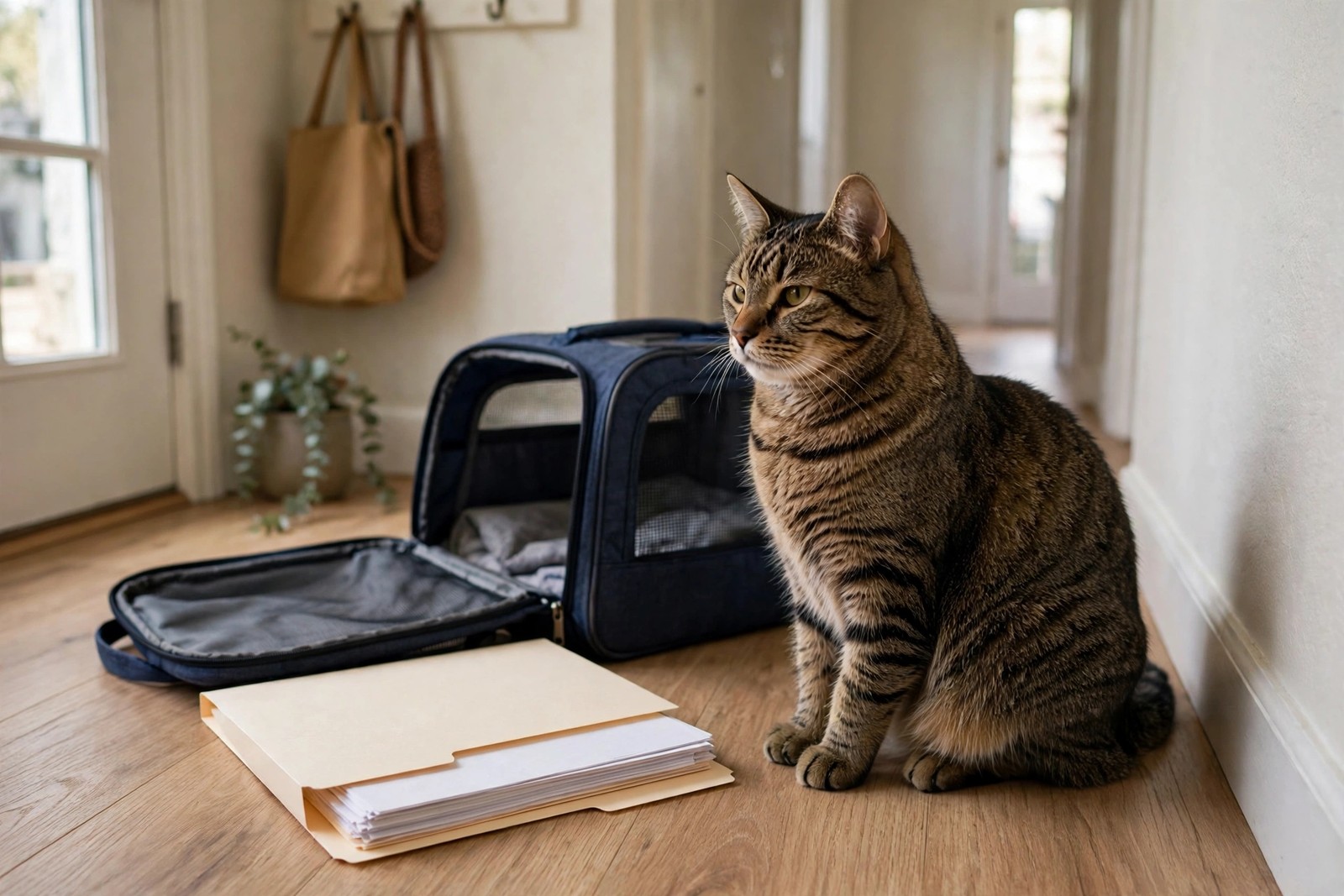
A rescue can only match your cat to the right home with information it actually receives, and it receives that information mainly from you. Cats are routinely misdescribed by silence rather than by dishonesty: the surrender form says friendly, while nobody mentions that she hides from visiting children, bolts at the vacuum cleaner, or has eaten one specific food for six years. A thorough handover is the kindest thing you can still do for her, because it shortens her stay in rescue care and raises the chance that the next home is the final one.
Health Records and Ongoing Conditions
Gather the veterinary history in full: vaccination record, neutering status, recent treatments, test results, and the contact details of her usual vet practice, with your permission for the rescue to request records directly. List any ongoing condition plainly — kidney disease managed with diet, arthritis that makes high-sided litter trays hard, a heart murmur under monitoring — with any medication she takes, what it is for, and how it is given. Note allergies, past reactions, and flea and worming treatment dates.
Microchip and Identity Details
Write down her microchip number and the database it is registered with, her approximate age if her birth date is unknown, her colouring and distinguishing marks, and clear recent photographs. Tell the rescue explicitly that the chip registration needs to transfer to the new keeper, and update your own contact details with the database before she leaves if they have changed, so she stays traceable during the move. Note whether she is an indoor cat, an indoor-outdoor cat, or a cat who has only ever lived in a flat — a detail that shapes what home is safe for her.
Diet and Daily Routine
Record exactly what she eats: the food, the amounts, the feeding times, and the treats she recognises, plus what she refuses or what upsets her stomach. Note her water habits, litter type and tray setup, where she sleeps, and the shape of her ordinary day — active at dawn, asleep all afternoon, sociable in the evening. A rescue foster carer who can reproduce her routine even roughly will see the real cat sooner, and a new owner who keeps her food the same for the first weeks removes one large, avoidable stress from a move that already changes everything else.
Behaviour, Likes and Fears — the Honest Version
This is the section that decides her match, so write it as observation rather than advertisement. Cover:
- People: how she greets visitors, whether she seeks laps or prefers proximity without contact, and how she behaves with children of different ages.
- Other animals: whether she has lived with cats or dogs, how she reacted, and any incidents, described factually.
- Fears and stress signals: noises, carriers, car travel, being picked up, grooming, and the early signs she shows before hiding or swatting.
- Pleasures: favourite games, toys, treats, sleeping spots, and the handling she actively enjoys.
- Habits a new home must plan for: night activity, door-darting, scratching posts versus furniture, spraying, or litter-tray misses and when they happen.
If she is being rehomed because of a problem — a house move, a new baby she cannot settle with, conflict with another pet — say so plainly and describe what you have already tried. Rescues hear these reasons constantly, they do not judge them on a surrender form, and the detail prevents her being placed into the same situation again.
Assemble the handover as one packet — records, chip details, diet sheet and behaviour notes together — and keep a copy for yourself in case the rescue or new keeper has questions in the first weeks. A transfer through KinsLe Transferrable Profiles carries that whole packet with her profile as it moves to the rescue and then to her new keeper, so her history, records and routines arrive with her instead of being reconstructed from memory.