
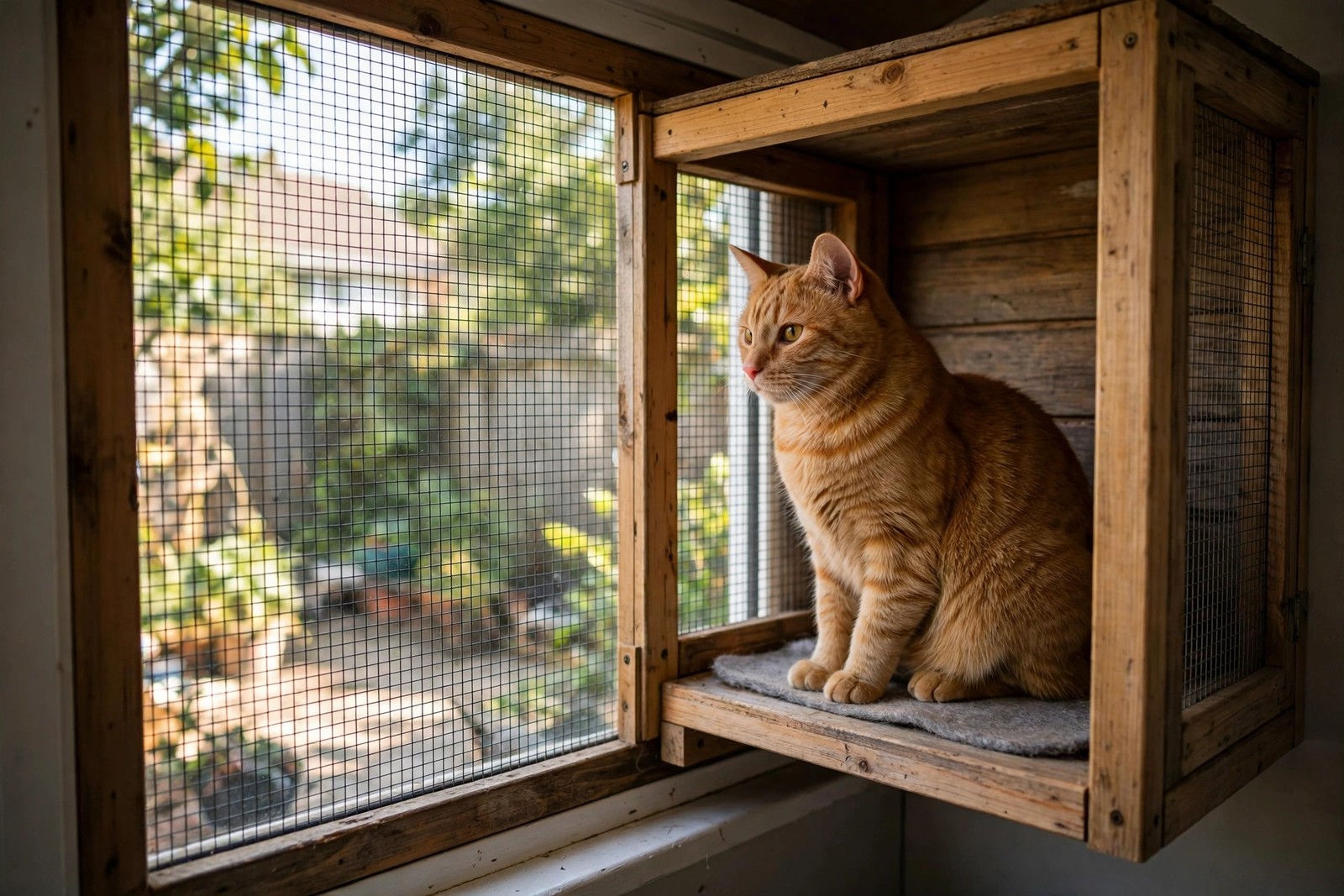
A catio is an enclosed outdoor space that lets a cat enjoy fresh air, sunshine, and outdoor sights without roaming free — anything from a small window-box enclosure to a full patio pen. And yes, starting small is not just fine, it is smart: a secure window enclosure with a shelf and a scratching post delights most cats and costs a fraction of a full build.
What a Catio Gives Your Cat
Indoor cats are safe cats, but many are visibly fascinated by the outdoors — chattering at birds, pressing against window screens, dashing at opening doors. A catio answers that curiosity without the dangers of free roaming: no traffic, no fights, no getting lost, and no hunting wildlife. Owners often notice their cat spending long, contented stretches watching birds, napping in sun patches, and patrolling her little outdoor room with obvious ownership.
A catio also expands territory, which matters in multi-cat homes and small apartments. An extra "room" that smells of outside air and changes with the weather adds novelty no indoor toy rotation can match, and a shy cat often blossoms with a private outdoor lookout she can retreat from whenever she chooses.
Start Small: Three Beginner Builds
You do not need carpentry skills or a big budget to test the idea:
- Window-box enclosure: a framed, mesh-sided box fitted securely to a window, with a shelf inside and access through the opened window or a cat flap. Best first step for apartment dwellers.
- Freestanding patio pen: a ready-made or DIY framed enclosure on a balcony (fully enclosing it) or patio, with a door for cleaning and a covered corner for shade.
- Lean-to or full patio catio: a larger structure against the house with multiple shelves, ramps, and a scratching post — the upgrade once you know your cat loves it.
Whichever size you choose, the essentials are the same: sturdy mesh a cat cannot push out or climb through, secure fixings, a roof or cover for shade and rain, at least one high shelf, and safe access back indoors at all times. Check fixings and mesh regularly for rust, damage, and loose edges, and lock any human door or hatch so visitors do not accidentally leave it open.
Furnish It Like a Cat, Not a Cage
A bare enclosure is boring; a furnished one becomes a destination. Add vertical levels so she can climb and survey, a scratching post or log, a weather-resistant bed in the shaded corner, and fresh water on longer sessions. A patch of cat grass to nibble, a cardboard box for the first weeks, and toys rotated from indoors keep it feeling new.
Consider sun and weather honestly. Part of the catio should always be in shade, and your cat must be able to go back inside whenever she wants — never lock a cat in a catio in heat, cold, or a storm. Supervise early sessions, watch how she uses the space, and let shy cats discover it at their own pace with the access door simply left open.
Confirm local rules before a larger build: leases, homeowners' associations, and building codes may limit outdoor structures, and renters should get permission in writing.
Find Local Help Through the Directory
If DIY is not your strength, you do not have to figure it out alone. KinsLe's Pet Services Directory helps you find local groomers, vets, sitters, and trainers — the kind of pet professionals who can advise on a safe setup for your cat, check a design against her age and mobility, or care for her confidently once she has favourite outdoor routines to maintain. A quick conversation with your vet about sun exposure, parasites in your area, and your individual cat is a sensible step before her first long afternoons outside.
A small catio is one of the highest-joy, lowest-regret upgrades in cat ownership — start with the window box and watch her face. KinsLe's Pet Services Directory points you to a nearby vet who can weigh sun exposure and parasite risks where you live before she starts using the enclosure.