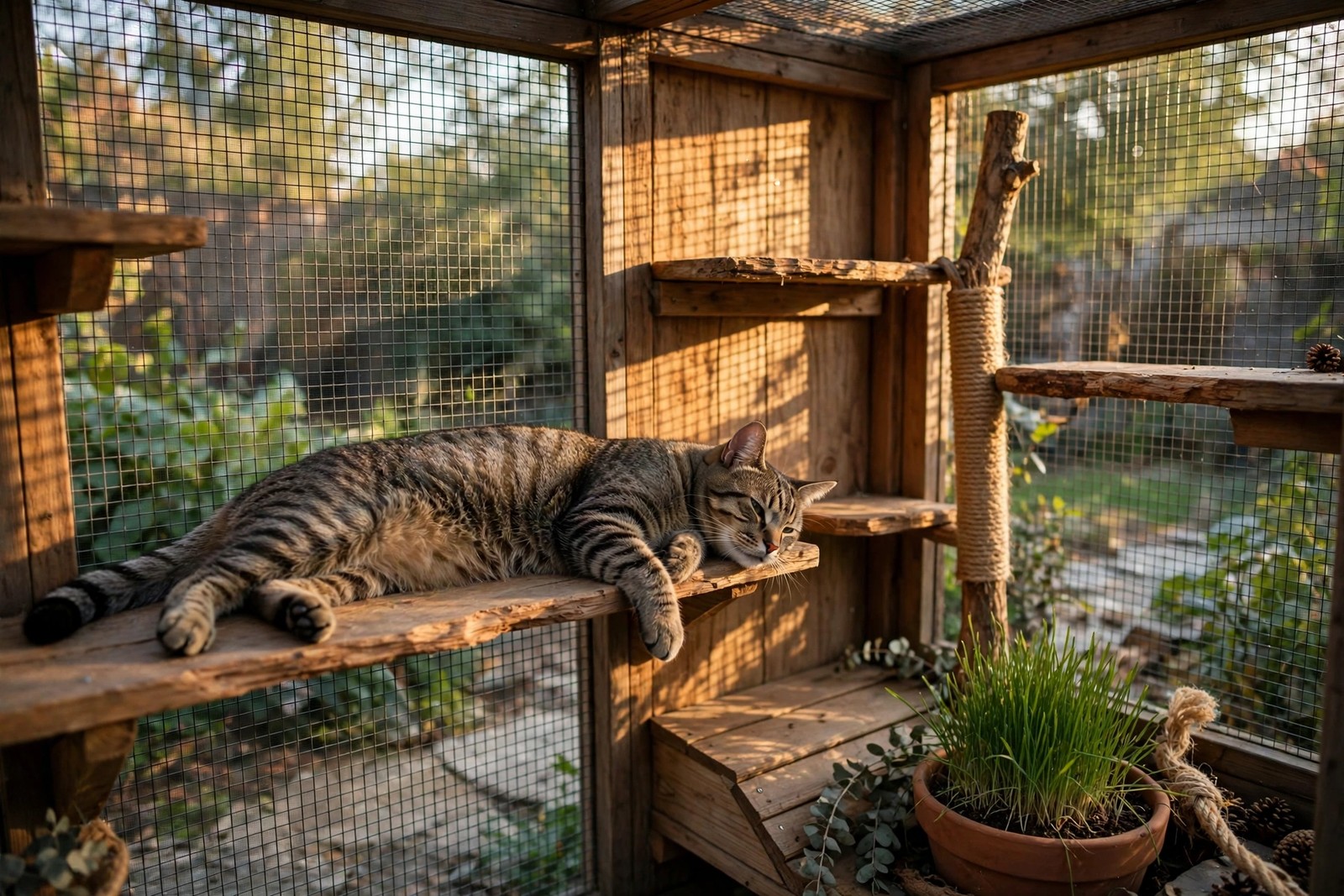
A catio, cat plus patio, is an enclosed outdoor space that lets a cat experience the garden without actually roaming it. Everything inside the mesh is chosen by you; everything outside it, traffic, dogs, other cats, poisoned bait, stays outside.
The Forms a Catio Takes
The smallest version is a window box, a framed mesh extension outside a window that gives a flat-dwelling cat a sunny lookout and real air. A balcony enclosure wraps an existing balcony in mesh from floor to ceiling, which suits renters when the fixings are reversible. Freestanding runs sit on a lawn or deck, reached through a cat flap in a door or window or along a short mesh tunnel from the house. The most generous option converts a whole patio or porch with screening, giving room for shelves, a scratching trunk, and a human chair so the cat gets company as well as air. Access matters: a design the cat can use freely through a flap gets far more use than one needing a person to carry the cat out.
What Cats Get From It
Fresh air, moving light, smells, sounds, and a high perch from which to watch birds are real enrichment for an animal built as an observer and hunter, and many cats spend long, contented stretches simply watching. Sunlight and a choice of warm and shaded spots add comfort, and a multi-level catio with ramps and shelves gives gentle exercise to an indoor cat whose world is otherwise a few rooms. Owners gain too: no dawn chorus of casualties on the mat, no vet bills from road accidents or cat fights, and no friction with neighbours whose gardens a roaming cat visits uninvited.
The Honest Drawbacks
A catio costs money and space, and a large, sturdy one costs real money; flimsy mesh that a determined cat, fox, or dog can breach is worse than none, because it teaches false confidence. Renters and apartment dwellers may need landlord or building permission, and planning rules vary. A catio is not climate control, so shade, shelter from rain and wind, drinking water, and a way back indoors are essentials, and in hot weather the cat must always be able to retreat inside. Nor does it replace indoor play, litter facilities, or company; it widens a cat's world rather than maintaining it.
Deciding and Setting Up Well
It suits most indoor cats, especially young, curious, frustrated, or formerly outdoor ones; a very elderly or unwell cat needs a vet's view first on temperature and exertion. Build or buy with strong welded mesh, a roof, secure latches a paw cannot lift, and ground fixings nothing can dig under. Furnish in levels, with perches, a weatherproof hide, a scratch post, and non-toxic planting, and check seams and latches weekly, since weather works on fixings all year. A simple shared household routine helps too, and KinsLe's Family Sharing lets everyone who gives your cat catio time see the same latch-check and access notes, so a visitor or teenager never leaves a gate resting on trust.