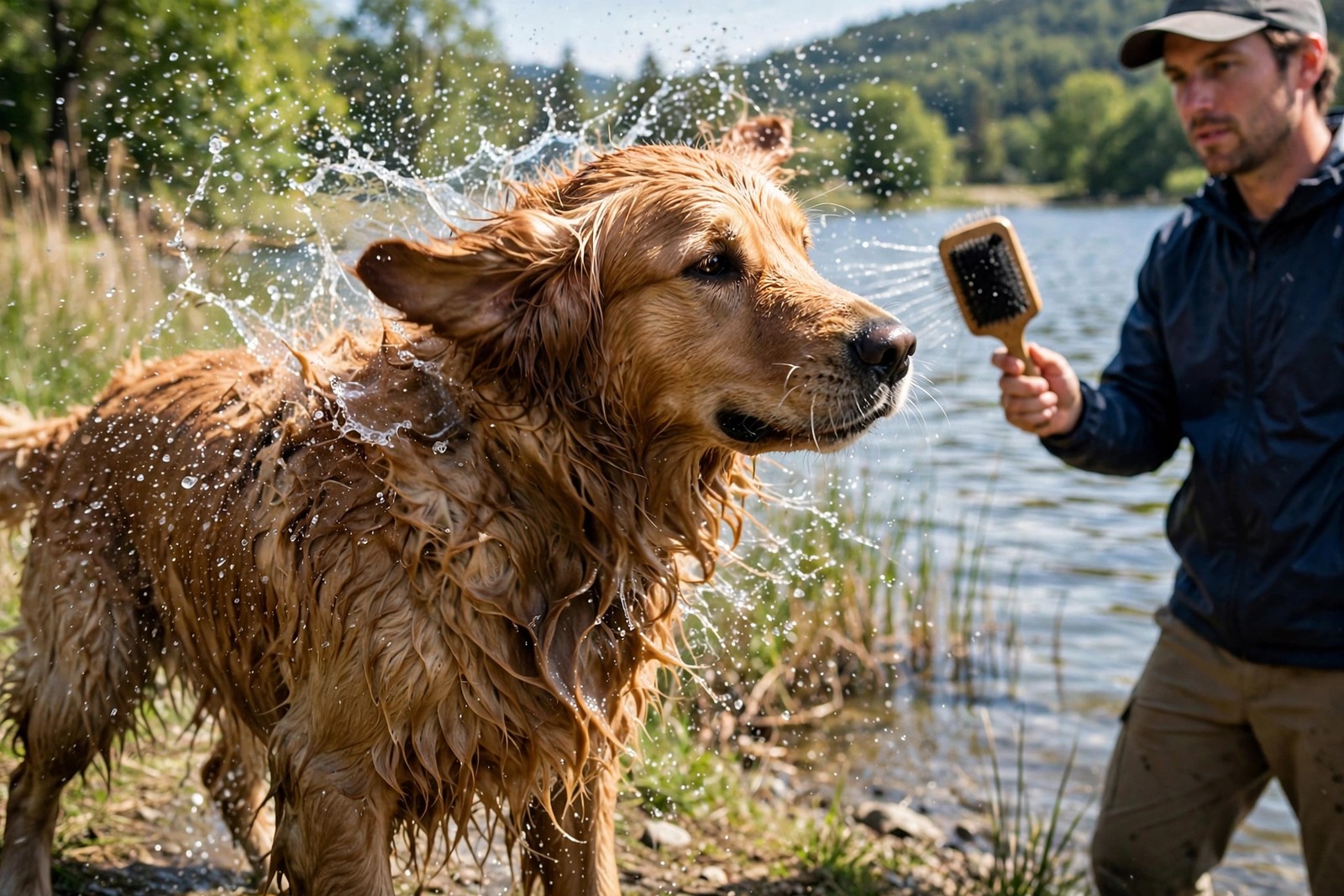
An ordinary double coat is often managed around removing loose undercoat and keeping the coat clean. A water breed's coat asks for a different priority. In retrievers and spaniels bred for water work, oil is not dirt to be stripped away. It is part of how the coat works, helping water run off the outer hair and giving some protection when the dog is working or swimming in cold conditions.
Why the oil should be left to do its job
The coat feels heavier and can carry a noticeable scent compared with a dry, fluffy double coat. That texture comes from oils produced by the skin and spread through the hair. Frequent washing, especially with a harsh shampoo, removes oil faster than the skin replaces it. The coat may then feel dry, lose its weather-shedding quality and leave the skin more prone to irritation.
This does not mean a water breed should never be bathed. Mud, stagnant pond smell, fox mess or a genuinely dirty coat are reasonable occasions. It means bathing is an occasional reset, not the main way the coat is maintained. Between baths, brushing and a rinse with clean water after a filthy outing often handle the real problem without disturbing the oil balance again.
Bathing less often, and rinsing longer than feels necessary
When a bath is needed, choose a mild dog shampoo and use it sparingly rather than lathering repeatedly until the coat squeaks. That squeaky feeling usually means the natural oil has been washed out along with the dirt. Work the shampoo through once, unless the dog is exceptionally filthy, and then spend longer on rinsing than on washing.
Thorough rinsing matters because shampoo residue trapped in a dense water coat can itch once the dog dries. Rinse until the water runs clear and the hair no longer feels slippery, paying attention to the chest, armpits, belly and behind the ears, where product collects. Dry the coat well afterwards, because a thick oily coat can stay damp against the skin for a long time. If the skin becomes flaky, red or persistently itchy, or the smell turns sharp and sour rather than familiar, ask your vet to look rather than bathing more often in response.
Brushing to move oil, not remove it
Brushing is the routine tool for this coat. It lifts dead undercoat before it packs, removes burrs and grit picked up outdoors, and draws natural oil along the hair so the coat stays evenly conditioned. Work through the dense areas in sections, including feathering on the legs and the thicker hair around the neck, instead of skimming only the visible top layer.
A dog returning from water may need a freshwater rinse, a thorough dry and a brush once the coat is dry enough to work through. That sequence deals with pond residue and tangles without turning every swim into a full shampoo bath. Watch for mats forming where friction and moisture combine, particularly behind the ears and under a collar, and tease them apart early while they are still small.
Living with the returning scent
Owners are often surprised that the characteristic breed scent returns within days of a bath. In a healthy water breed, that is the oil rebuilding, not proof that the bath failed. Re-bathing because the scent came back creates a cycle: oil is stripped, skin works to replace it, scent returns, and the dog is washed again.
Judge change against the dog's normal scent instead. A familiar musky smell with comfortable skin and a coat that sheds water is the breed being itself. A sudden sour odour, greasy flakes, sore patches or constant scratching is different and deserves veterinary advice.
Care Teams, reached through KinsLe, lets a household record who rinsed and brushed the dog, keeping bath frequency from creeping up unnoticed.