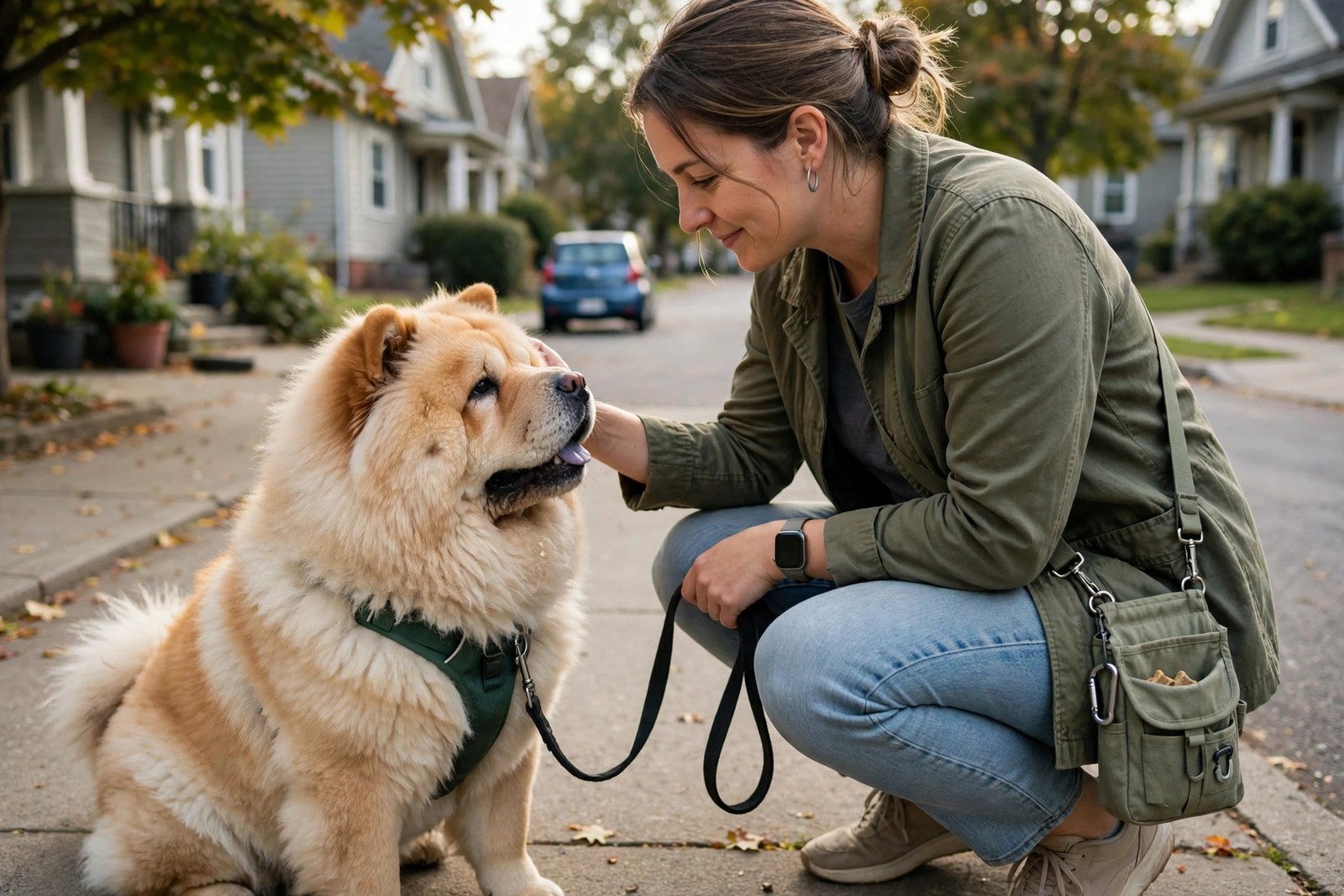
A Chow Chow household runs at a lower volume than many dog homes. The day typically opens with a composed, almost cat-like dog who accepts a morning walk of moderate length, attends to business with minimal fuss and returns home ready to hold a chosen post near the family. Around an hour of moderate exercise across the day suits a typical adult, scheduled in cool conditions because the profuse double coat and the breed's build make hot weather genuinely uncomfortable. Early and evening walks in summer, shade on every route and rest during the warm middle hours are standard Chow management. Puppies need the usual frequent outings and gentle social learning, while adults often give the impression that the routine was their idea all along.
Company on the Dog's Own Terms
Social life is where Chow ownership differs sharply from life with a fawning breed. A Chow typically reserves deep loyalty for its own people and treats strangers with polite distance, sometimes with suspicion if visitors crowd or grab. Daily life works better when guests are briefed: let the dog approach, avoid looming hugs, and give children clear rules about space around a resting dog. Early, well-managed exposure to varied people, places and handling helps a young Chow grow steadier, and that work continues in short, calm doses through adolescence. Many Chows live peacefully alongside household members while showing little interest in dog-park socialising, and forcing cheerful greetings on a reserved dog usually achieves the opposite of the intention.
Several Brushing Sessions a Week, Without Shortcuts
At 45 to 70 pounds (about 20 to 32 kilograms), much of a Chow's apparent bulk is coat, and that coat is a standing appointment. Brushing several times a week, right through the dense double layer to the skin, prevents the soft undercoat from packing into mats behind the ears, under the collar and around the hindquarters. Sessions take real time and should be built into the week like any other commitment, with a puppy taught gradually to accept thorough handling, including paws, ears and the skin folds around the face. A rushed session that skims the surface leaves trouble hidden underneath, since matted areas can conceal sore skin. Check eyes and skin during grooming, keep the area around the eyes clean, and raise persistent irritation, hair loss or discomfort with your veterinarian rather than increasing home treatment on your own.
Evenings of Quiet Supervision
Evenings in a Chow home are usually still. After a cool evening walk and a measured dinner, the dog often selects a vantage point, a doorway or a cool floor near the family, and supervises without demanding entertainment. Training fits the same register: short, consistent sessions with clear expectations and worthwhile rewards, delivered without repetition for its own sake, since a Chow who has understood and complied twice may see no reason to perform a tenth repetition. Food portions need measuring, as a calm dog with a slow day can gain weight quietly under all that coat, and hands-on body checks during grooming double as your weight monitoring.
Time is the real cost of this breed, and money follows behind it. Grooming appointments for a full Chow coat, when owners outsource part of the work, are long appointments priced accordingly, while owners who groom at home invest in proper brushes, a dryer and the patience to use them weekly. Food costs sit in the medium-to-large range, fencing should be secure for a strong, self-directed dog, and early training support from a qualified, reward-based trainer is money well placed for a breed where early habits set hard.
A household that values quiet loyalty over constant cuddling tends to suit this breed well, and KinsLe Transferrable Profiles preserves handling preferences, brush schedule and measured portions whenever a Chow changes residence.