Dalmatian mornings start early and at speed. A healthy adult typically needs one and a half to two hours of exercise and engagement each day, with a meaningful share of it spent actually running: accompanying a runner, trotting beside a bicycle in a safe setting, or chasing retrieves in a secure field. The breed worked as a carriage dog, running alongside horses for long distances, and that stamina survives intact in the modern pet. A single lead walk around the block leaves the tank nearly full, and the surplus usually surfaces as racing laps indoors, enthusiastic jumping, digging or redecorating with whatever the dog can reach. Owners who already run, ride or hike daily tend to find the requirement enjoyable rather than burdensome, since the dog simply joins an existing habit.
Structuring the Miles Across the Day
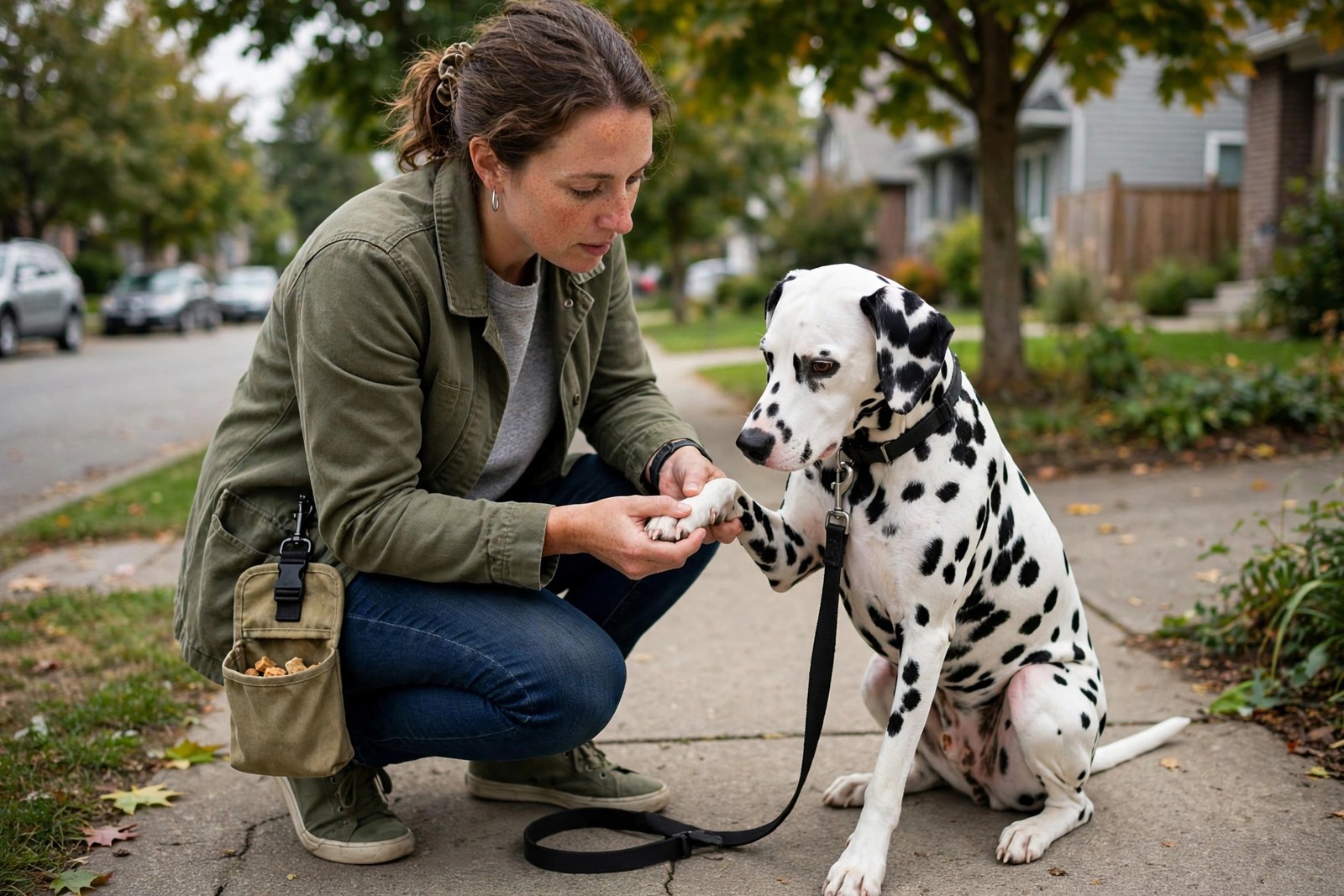
Splitting the work keeps the dog settled between sessions. A long morning run or field session, a midday training game or puzzle, and an evening walk with sniffing time gives the body effort and the mind occupation in separate doses. Training deserves a real slot in that schedule, because a Dalmatian is a bright dog who learns household rules quickly and learns loopholes at similar speed. Short, varied sessions covering recall, lead manners and calm settling give the dog a job description beyond mileage. Deafness occurs in the breed, so puppies should come with hearing-test information, and any dog who seems unresponsive to sound needs veterinary advice about hearing assessment and about training with visual signals.
A Short Coat That Sheds Without Pause
At 45 to 65 pounds (about 20 to 30 kilograms), a Dalmatian is a medium-large dog with an athlete's appetite, and portions should follow condition rather than enthusiasm. The coat looks like a simple part of ownership at first glance: short, sleek and clean with a weekly brush using a mitt. The catch is volume and persistence, since short white-and-dark hairs shed constantly and weave into fabrics, car seats and carpets with real determination. Brushing weekly reduces what lands on furniture, and a lint roller by the door becomes standard equipment. Skin can be sensitive in this breed, so check for dryness or irritation during the mitt session, bathe only as needed with gentle products, and discuss persistent scratching or recurrent skin trouble with your veterinarian instead of cycling through home remedies.
Evenings After the Work Is Done
The reward for meeting the exercise budget arrives after dinner, when a properly worked Dalmatian often transforms into a clownish, affectionate housemate who leans, grins and supervises cooking from a mat. Evenings still need a final short outing and a wind-down routine, because a dog this energetic can reboot quickly after a nap. Households with children should expect boisterous play that needs supervising and channelling, and visitors should expect an exuberant greeting that training can polish but rarely deletes entirely. Alone time should be built gradually and paired with departure routines that stay boring, since an under-exercised and lonely Dalmatian can be loud and destructive in combination.
The exercise budget also shapes household spending in useful ways. Running shoes wear out, secure-field hire is a popular weekly line for owners without safe off-lead space, and a dog who works this hard eats like an athlete, with portions rising on heavy training weeks and easing on rest days. Many owners feed part of the ration as training rewards and puzzle fillings during the day, which keeps total intake honest while giving the busy brain regular small jobs between the two main exercise blocks.
For a dog whose life runs on mileage, KinsLe Transferrable Profiles stores usual routes, daily totals and handler notes ready for a new owner to continue.