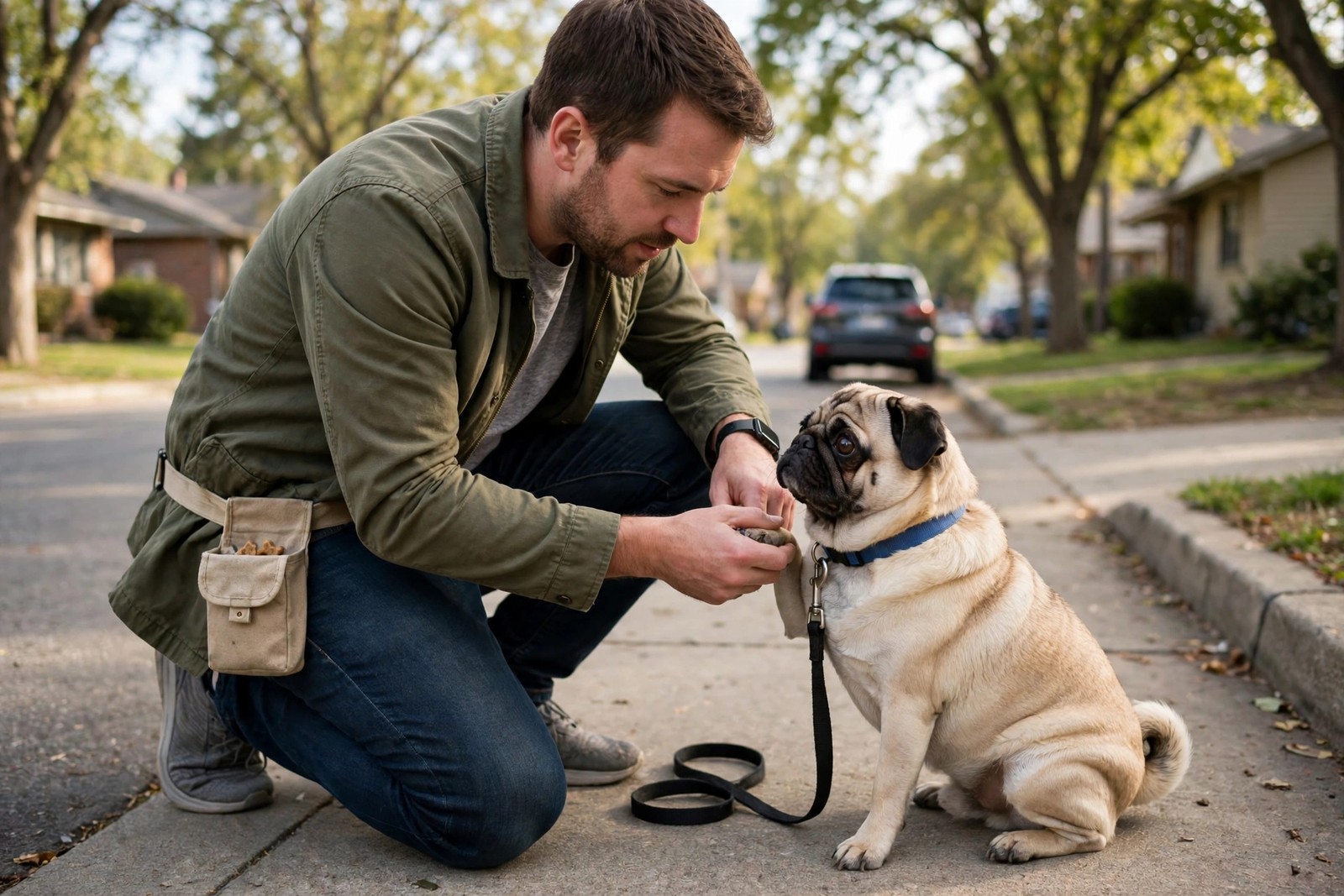
Pug days are organised around comfort, company and the weather forecast. A healthy adult typically manages 30 to 60 minutes of gentle exercise across the day, delivered as unhurried walks and indoor play in cool conditions. That limit is set by anatomy, not laziness: the flat face and narrow airways make breathing and cooling inefficient, so heat changes the whole schedule. Warm days move walks to dawn and dusk, shorten every outing, and replace midday exercise with a shaded toilet trip and a nap indoors. A Pug should never be exercised in strong heat or left waiting in a parked car, and laboured breathing, distress or collapse in any weather needs emergency veterinary care rather than home observation.
The Daily Fold Round and the Weekly Brush
Grooming effort concentrates on skin rather than hair. The short coat takes a weekly brush, which also shifts a surprising amount of shed hair, while the facial folds need cleaning and careful drying every day, since moisture and debris collect in the creases around the nose and can leave the skin sore. Use a soft cloth, work gently into each fold, dry thoroughly afterwards, and check the eyes, ears and skin at the same sitting. Wrinkles elsewhere, the tail curl area included, benefit from the same attention. Persistent redness, odour from a fold or rubbing at the face deserves a veterinary conversation rather than stronger scrubbing at home. Puppies should learn to accept this handling in short, rewarded sessions, because a lifetime of daily fold care goes smoothly only when the dog cooperates willingly.
Food, Weight and the Pug Campaign for Seconds
At 14 to 18 pounds (about 6.5 to 8 kilograms), a Pug is a compact dog with an expansive appetite, and weight management is the central health habit of ownership. Portions should be weighed, treats counted inside the day's total rather than added to it, and body condition checked by hand monthly, feeling for ribs under a modest fat cover. Extra weight makes breathing harder for a breed already working at it, so the kind choice is the measured bowl, not the extra handful delivered in response to a very persuasive face. Training works well when paid in tiny pieces of the ration, with short sessions built around the Pug's genuine desire to be involved, and stubbornness usually signals that the reward or the timing needs adjusting rather than that the dog cannot learn.
Evenings of Snoring and Supervised Laps
Evenings bring the breed's full companion performance: a dog who follows between rooms, claims a lap or a cushion touching a lap, and snores through television programmes at impressive volume for its size. Pugs often live happily in flats and small homes, provided daytime company or a sensible alone-time plan exists, since a people-focused dog left lonely may become anxious or noisy. Visitors typically receive an enthusiastic, wheezing welcome, and children should be taught gentle handling, with play kept calm in warm rooms. The Pug offers devotion, comedy and closeness in exchange for discipline about food, heat and folds, a bargain its owners usually describe as heavily in their favour.
Summer deserves a dedicated household plan rather than daily improvisation. Walks shift to dawn and dusk, routes favour shade and grass over hot pavement, water travels with you even on short outings, and indoor play, scent games and gentle training replace outdoor exercise on dangerous days. A cool resting area away from sunny windows, constant access to drinking water and a household rule that nobody walks the Pug at midday in a heatwave protect a dog who will often attempt more than breathing safely allows, simply to stay beside its person.
Fold routines, weighed meals and warm-weather limits stay attached to this Pug inside KinsLe Transferrable Profiles for the household that follows.