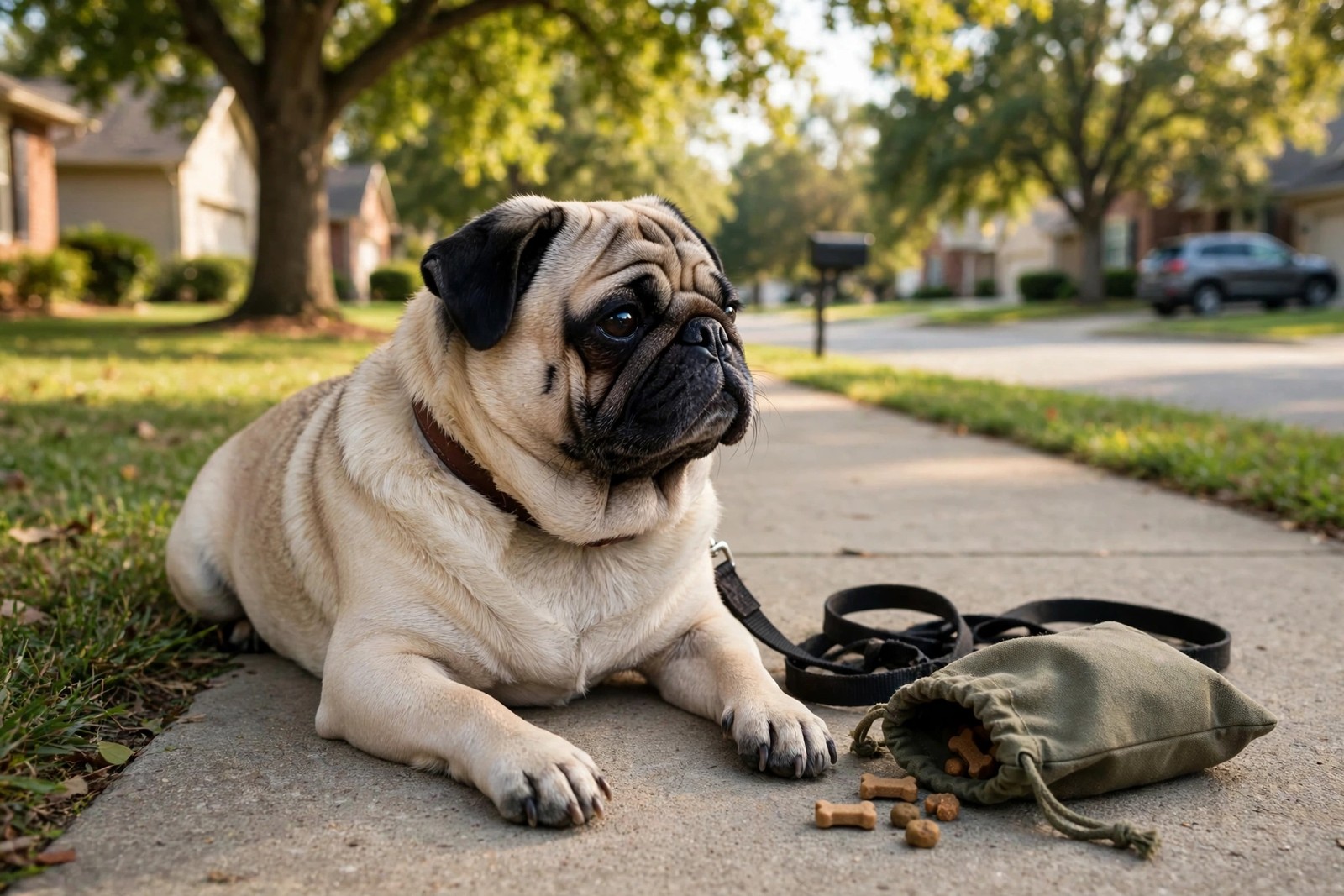
A Pug's expected span sits at 12 to 15 years, a typical range rather than a promise for any individual dog: genetics, weight, dental care and how quickly health changes get veterinary attention move a Pug either side of it. For this breed, the things most worth monitoring with age are breathing, heat, eyes and weight — a slim Pug breathes, moves and lives better. Keeping the dog lean is the single habit most strongly linked to extra healthy years in study after study.
What Shapes a Pug's Years
Weight sits at the centre of a Pug's lifespan because it presses on everything else this breed already finds hard. Extra kilos narrow an already compact airway, make hot days riskier, and load small joints that must carry a stocky frame. A Pug you can feel ribs on, under a thin covering, with a visible waist from above, is set up to use those 12 to 15 years well. Breathing is the second watchpoint: snoring is expected, but noisy, laboured breathing at rest, reluctance to exercise, or disturbed sleep deserves a veterinary conversation rather than a shrug. Heat follows from the same flat-faced build — Pugs cannot pant as efficiently as longer-muzzled dogs, so summer walks belong to the cool hours and a hot car is never an option.
The Checks That Earn Their Place
Build a short Pug-specific routine around the areas this breed actually troubles:
- Weigh monthly and note the figure, adjusting food before a drift becomes a diet
- Watch breathing at rest and after mild exercise, and report any clear change
- Check eyes daily for cloudiness, redness or pawing, since Pug eyes sit exposed
- Clean and dry facial folds gently, watching for redness or a sour smell
- Keep teeth in view with regular brushing or dental checks at vet visits
- Book senior check-ups promptly once middle age arrives, not only when something looks wrong
None of this is complicated, and that is the point: a Pug's long life is protected by small observations repeated often, recorded plainly, and acted on early. A note of when the breathing changed or the appetite dipped gives your veterinarian something concrete to work from at the appointment.
Living Well Into the Senior Years
Older Pugs often stay cheerful, greedy and devoted long after their pace slows, so ageing care is mostly adjustment rather than reinvention. Shorter, more frequent walks replace the single long outing; ramps or a lift spare joints at the car and sofa; and a cool, draught-free sleeping spot matters more as temperature control weakens with age. Appetite can mislead in both directions — a senior who eats less may have sore teeth rather than a fading interest in food, and one who begs constantly may simply have learned that it works. Keep weighing, keep watching the breathing, and let the vet judge changes you can describe but not explain.
Across a life this long, a Pug may also change homes, through rehoming or a change in an owner's circumstances. A Pug's profile can pass to its new owner through KinsLe's Transferrable Profiles, records travelling with the dog rather than being reconstructed from memory.