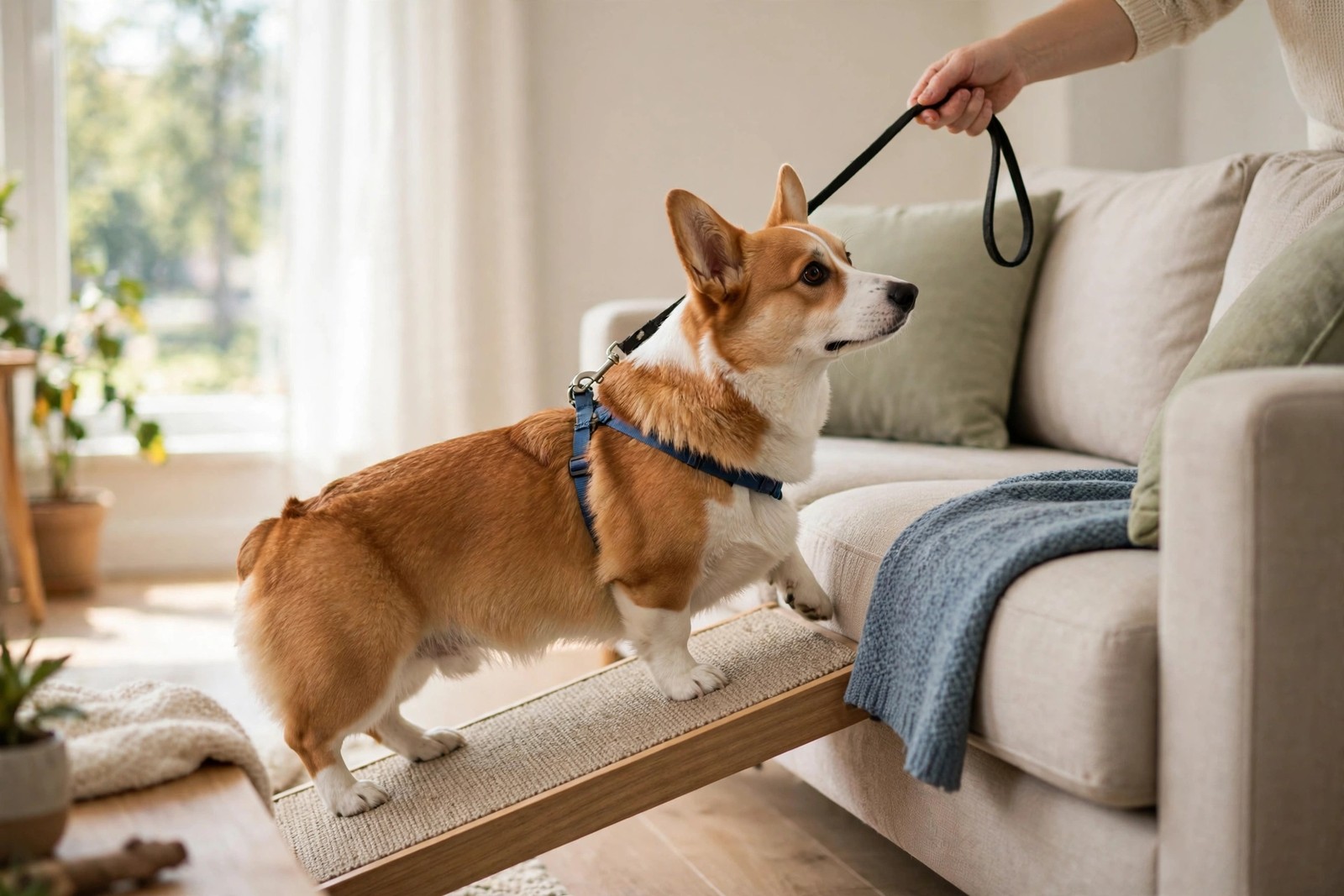
Corgis usually live 12 to 15 years, a range that covers both the Pembroke and the Cardigan. For a herding breed built long and low, that is a good span, and many Corgis stay bright, bossy and active into their teens. The condition attached is written into the shape: a long back supported by short legs, combined with a hearty appetite, means weight and back care are not side topics for this breed. They are the central decisions that shape whether those 12 to 15 years stay mobile and comfortable.
Back and Weight: One Linked Problem
Every extra kilogram on a Corgi hangs from that long spine and loads the discs and joints that keep the dog moving. Keep your Corgi visibly lean: ribs felt easily under a thin cover, a waist visible from above and from the side, and portions adjusted promptly when either check fails. Reduce repeated impact by providing ramps or steps for the car, sofa and bed, lifting your dog with support under both chest and rear rather than under the front legs alone, and discouraging launches off furniture and full flights of stairs where you reasonably can. Report back pain signs promptly: reluctance to jump or climb, a hunched posture, yelping when handled, wobbliness or dragging on the back legs all warrant a vet visit the same day rather than watchful waiting.
Hips, Eyes and Herding Energy
Hips deserve routine attention in Corgis, so ask a breeder what hip evaluation the parents had and keep mobility part of adult vet conversations, especially if stiffness appears after rest. Eyes should be checked at routine visits, with cloudiness, bumping in low light or rubbing reported sooner. A Corgi is also a working herding dog in a compact body: daily exercise and mental work are health care, not extras, because an under-exercised Corgi fills the gap with barking, heel-nipping games and extra food-seeking. Favour steady walks, training games and controlled play over repeated high jumping, and keep fitness built gradually after any rest or injury period your vet advises on.
Senior Corgi Care
From about nine years old, watch how your Corgi handles the routines that protect the back: a dog who once used a ramp confidently but now hesitates may be telling you about pain or weakness, and that change belongs in a vet conversation. Keep weight checks monthly in the senior years, since reduced activity quietly reduces calorie needs while appetite stays enthusiastic. Non-slip mats on smooth floors help short legs keep purchase, and a supportive bed placed away from draughts and away from any need to jump up supports rest. Keep a dated record of weight, mobility notes and vet findings so gradual change is measured rather than debated from memory at each visit.
Back episodes, weight trends and screening results spread across 12 to 15 years tell a clearer story when they sit in a single record. KinsLe's Pet Passport holds your Corgi's weight history, vet notes and check results together, so any vet can see how your dog's back and mobility have developed over time.