
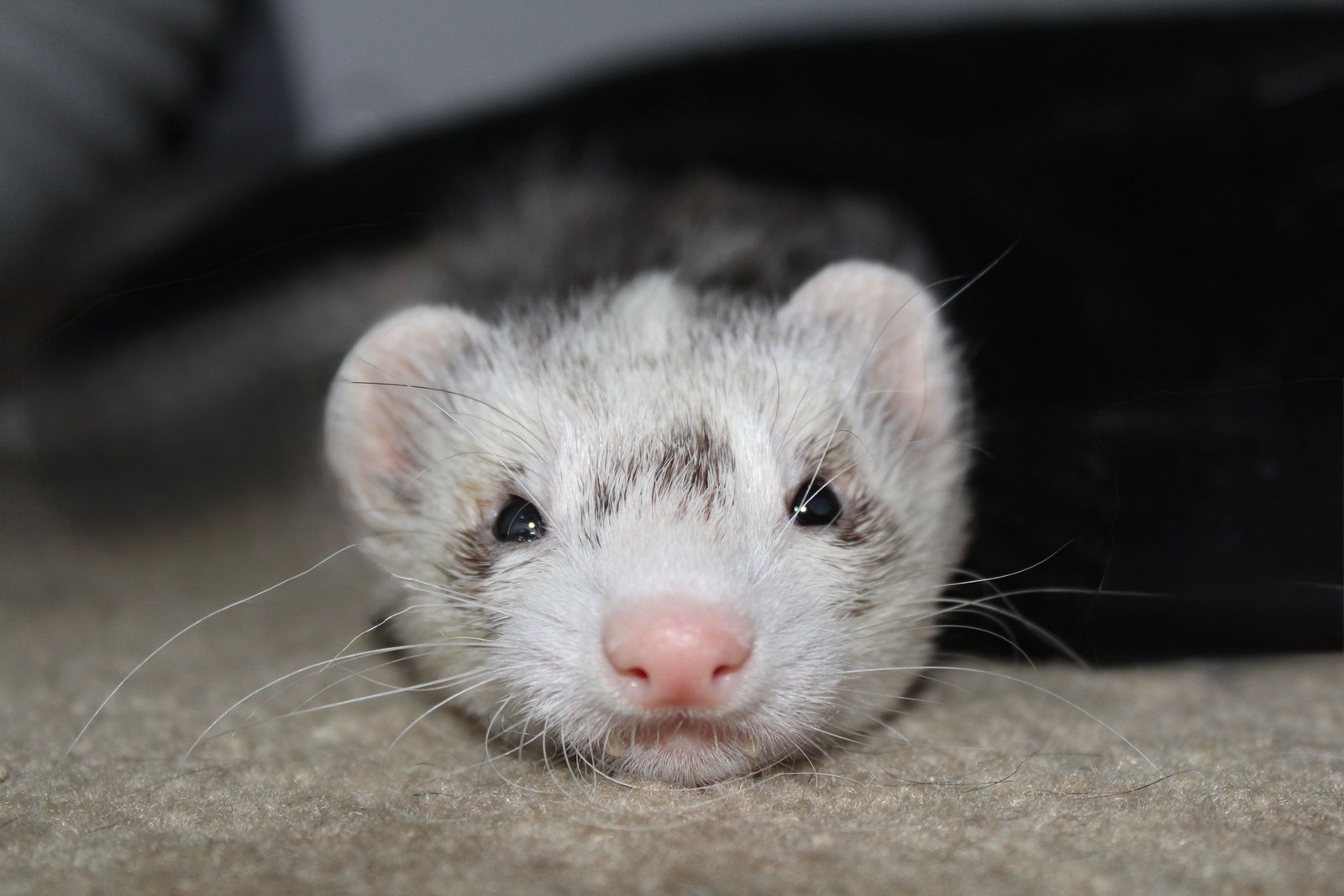
That bouncy, sideways hopping is the ferret war dance, and the soft chuckling sound is called dooking — both are classic signs your ferret is playful, excited, and inviting you or another ferret to join in. Despite the dramatic name, the war dance is almost always about joy, not aggression.
Breaking Down the War Dance
A ferret in full war dance mode throws themselves sideways, backwards, and in little hops with an arched back, puffed tail, and mouth often open in a ferret grin. They may bounce off furniture, crash gently into a cage mate, shake their head, and then freeze for a split second before exploding into motion again. Young ferrets, called kits, do it constantly, but healthy adult ferrets keep the habit for life.
Dooking — that rapid dook-dook-dook chuckle — usually comes with the dance or with exploration of a new toy, tunnel, or room. Some ferrets are very vocal dookers, while others are quieter and show excitement mostly through movement. Hissing, by contrast, can mean overstimulation, frustration, or play that has tipped over the edge, so context always matters.
The dance often appears at predictable moments:
- Right after being let out of the cage for playtime
- When a favorite toy, crinkle tunnel, or dig box appears
- During wrestling and chase games with a trusted ferret friend
- When exploring somewhere new and exciting
Play Biting: Part of the Fun, With Limits
Gentle play biting can be part of war dance fun, especially between ferrets, whose skin is much tougher than yours. A ferret may mouth your hand, ankle, or sleeve while bouncing around, and that soft mouthing is usually an invitation, not a warning.
If nips get hard, break skin, or are paired with latching on and not letting go, calmly pause play rather than punishing. Say nothing dramatic, withdraw your hand, turn away briefly, or place the ferret down for a short break, then resume when they are calmer. Over time, most ferrets learn that softer mouths keep the game going. Never flick a ferret's nose or shout — that confuses a happy animal and can create real biting.
Watch body language overall. A loose, wiggly ferret who keeps coming back for more is having fun. A ferret who hides, screeches, puffs up and stays tense, or tries hard to get away needs space, even if there was dooking a minute earlier.
When Bouncing Is Not Just Play
Sudden changes matter. A ferret who normally dances but becomes flat, wobbly, drools, or seems dazed is not performing a quieter war dance — that needs prompt attention from a veterinarian. Likewise, frantic bouncing paired with pawing at the mouth, gagging, or distress calls for a check rather than a laugh. Knowing your individual ferret's normal happy routine is what lets you spot the difference quickly.
Sharing the Joy — and the Meaning — With KinsLe
Those joyful quirks are perfect to record so anyone caring for your ferret understands them. With a KinsLe Care Pass, a temporary scoped link that a sitter can open with no account or app needed, you can share that the sideways bounce and dooking mean play, not panic, along with feeding and playtime details for that stay. A nervous first-time sitter who might otherwise be alarmed by a ferret launching sideways off a cushion will instead recognize it as the best part of the evening.
Your Care Pass on KinsLe, available only to the sitter you named for that stay alone, carries those play-signal notes — bouncing signals excitement, hard nips pause the game — and the feeding schedule.