
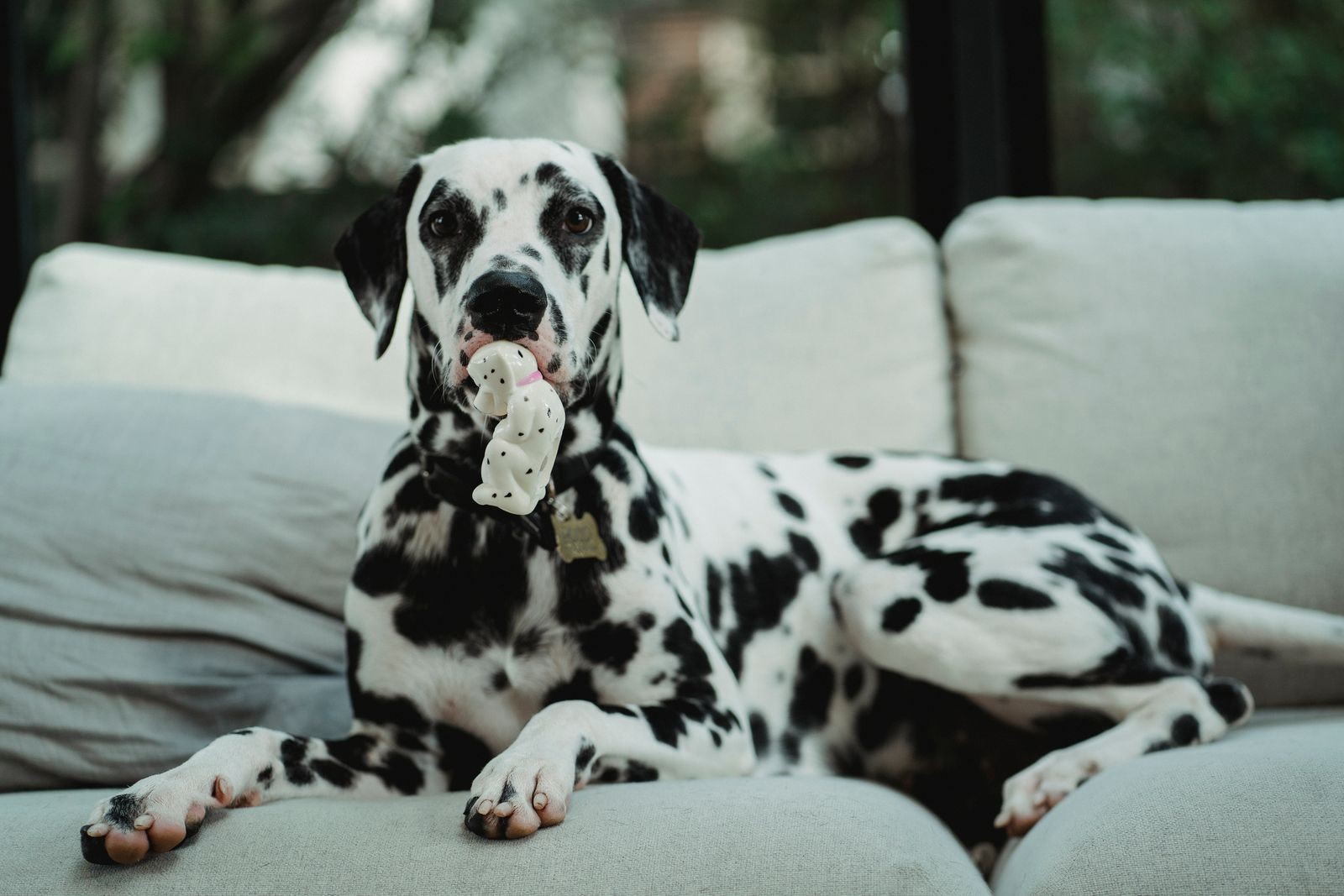
Resource guarding is when a dog protects something they value — food, a bowl, toys, chews, a favorite bed, a stolen sock, or even a person — by freezing, hovering over the item, growling, snapping, or carrying it away from people or other animals. It is a normal, instinctive canine behavior on a spectrum from mild tension to dangerous aggression, and growling within it is communication, not defiance. Punishing a dog for growling removes the warning without removing the feeling, which can make guarding more dangerous, not less.
How guarding shows itself
Early signs are easy to miss: your dog goes still over the bowl, eats faster when someone approaches, places a paw or body over a toy, gives a hard stare, or quietly relocates a chew to a corner. Louder signs — growling, lip lifting, snapping, or biting — usually come after the quiet signals were missed or overridden.
Guarding targets vary. Some dogs guard only high-value items like bones or food stolen from a counter, and happily share ordinary toys. Some guard from other dogs but not people, or the reverse. Puppies can show guarding early, and it can also appear or intensify with stress, pain, competition in a multi-dog home, or a history of having valued things taken away. Because a sudden behavior change can have a medical component, mention new or escalating guarding to your veterinarian, who can advise whether an examination is warranted.
What to do in the moment — and at home
In the moment, stay calm and do not reach for the item or the dog. Call or lure your dog away with something genuinely better, let them leave the guarded item behind voluntarily, and only then pick it up. Never corner a guarding dog, and keep children away from a dog who is eating or chewing — management protects everyone while training catches up.
At home, build safety into routines:
- Feed in a quiet, consistent spot where nobody needs to walk past the bowl
- Give long-lasting chews in a crate or separate room, especially in multi-dog homes
- Trade, do not take: offer a high-value treat or toy in exchange, and often give the original item back during practice so trades predict good things
- Teach a reliable "drop it" and "leave it" gradually with low-value items and generous rewards, away from real guarding situations
- Stop hand-feeding games, teasing, or repeatedly removing food to "show dominance" — these commonly create or worsen guarding
If guarding involves snapping or biting, targets people, or centers on a child or a place like a bed, treat it as a safety issue: tighten management immediately and get professional help promptly rather than testing the dog.
Why punishment backfires
A dog punished for growling learns that warning is unsafe — not that the item is safe to surrender. The discomfort remains, the early signals disappear, and the next response can arrive without the growl that used to give people time to back off. Likewise, physically forcing items away teaches the dog that approaching hands predict loss and confrontation, which is precisely the association that created the problem. Changing guarding means changing the emotion underneath it: people approaching should predict something better arriving, at a pace the dog can handle.
Find safe, professional help with KinsLe
KinsLe's Pet Services Directory helps you find a professional trainer to address guarding safely, alongside local vets, groomers, and sitters. For guarding, look for a credentialed, reward-based trainer or behavior professional with specific experience in resource guarding, who starts with management and a gradual desensitization plan — and be cautious of anyone who promises to fix it by confronting or dominating your dog.
On KinsLe, your search of the Pet Services Directory should end with credentialed, reward-based professional help for guarding, never with a confrontational plan tried at home.