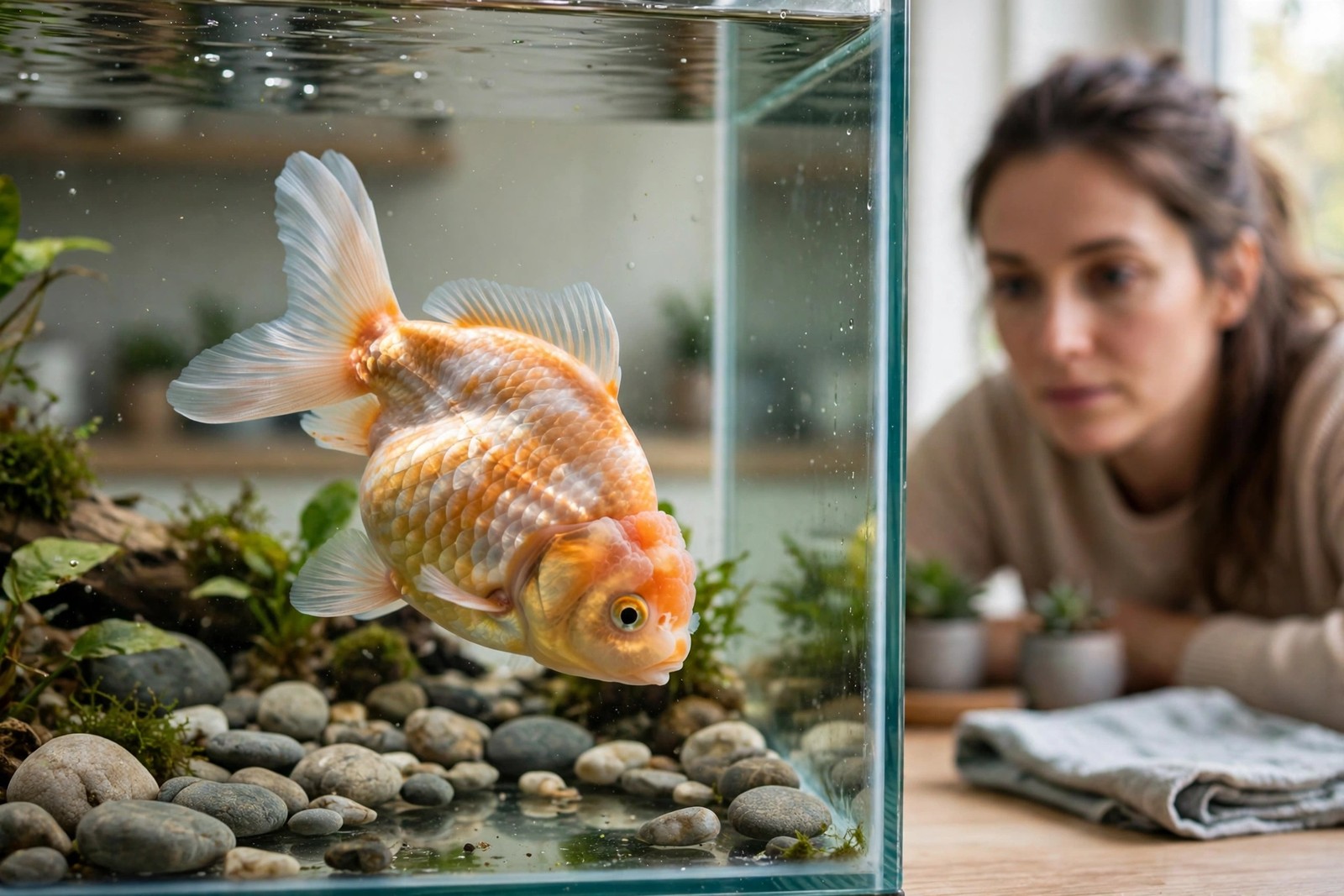
The swim bladder is a gas-filled sac inside the fish that works like adjustable ballast. By adding or releasing gas, a healthy goldfish can hang motionless mid-water, rise, or sink with almost no effort. Swim bladder trouble is not one single disease; it is the visible result when that buoyancy control stops working properly, and it can come from several quite different causes.
What It Looks Like
The signs are about position and effort. A fish with this trouble may float at the surface like a cork and be unable to swim down, or sink and rest on the bottom, pushing off only to drift back down. Some tilt to one side, swim at an angle, or roll partly upside down, and many look exhausted because holding position now takes constant work. A fish floating exposed at the surface for a long time can also develop sore, reddened skin on the part that stays in the air, which is a sign the problem has gone on too long already.
Why Fancy Goldfish Get It Most
Single-tailed goldfish have a long body with room for everything. Fancy varieties — the round, egg-shaped fish such as fantails and ranchu — have been bred into a compressed body where the gut, organs, and swim bladder are packed tightly together. Anything that swells or fills the gut, including a large meal or constipation, can press on the bladder and upset buoyancy for a while. That digestive link is why episodes in fancies often follow heavy feeding. But it is only one cause on the list: bacterial infection of the bladder, injury, egg binding, and failing organs can all produce the same floating or sinking picture, and they cannot be told apart by looking.
Sensible First Checks
Start with the water, because poor quality sits behind a large share of goldfish problems and costs nothing to rule out. Test ammonia, nitrite, and nitrate, check the temperature, and note honestly whether feeding has crept up or the fish was recently moved, treated, or knocked. Write down when the signs started, whether the fish is still eating, and whether it can right itself at all. Short video of the swimming is genuinely useful, because buoyancy problems are much easier to assess moving than described. Gentle, stable conditions while you observe — clean water, calm surroundings, no sudden changes — are safe support for any cause.
What this article will not do is hand you a home treatment course, because the right response depends on a cause nobody can confirm from the tank glass. Feeding tricks and remedies passed around among keepers may do nothing for an infected or injured fish except use up the days when help would have worked best.
When It Is a Vet Case
Contact an aquatic vet promptly if the fish cannot right itself at all, if the trouble lasts beyond a couple of days in clean water, if it keeps relapsing, or if you see raised, pinecone-like scales, surface sores, rapid breathing, or a swollen body alongside the buoyancy problem. Pineconing in particular points to serious internal failure, not simple buoyancy trouble, and it should be treated as urgent. A vet can examine the fish, consider infection and organ causes, and advise on the options honestly, including when the kindest answer is a difficult one.
Keeping a clear history is what makes that appointment count, and it is where KinsLe's Pet Passport earns its keep for a fish like this: your dated notes on episodes, appetite, water readings, and any previous vet findings travel together as one portable record, so the vet sees the pattern of this goldfish's buoyancy trouble instead of a single worried snapshot.