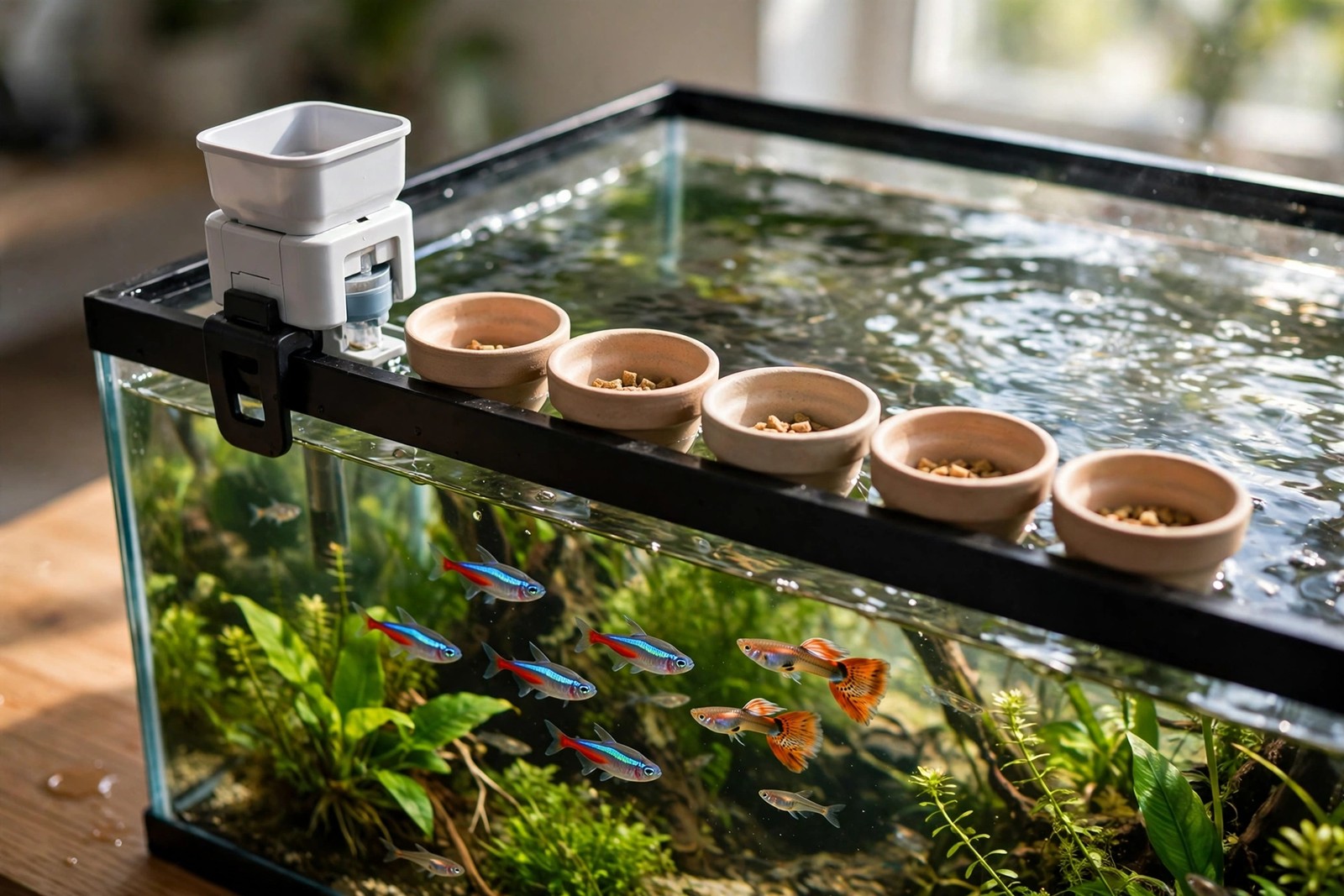
Two weeks is too long to leave most tropical fish unfed, but the real danger on holiday is rarely starvation. It is a well-meaning helper tipping in extra food, uneaten flakes rotting on the gravel, and ammonia climbing in a tank nobody is watching. The best plan is therefore the one that removes guesswork: either a sitter working to portions you measured, or a machine you have already watched work.
Option One: A Sitter With Pre-Portioned Food
A sitter is the better choice for tanks with fry, fussy eaters, or fish fed frozen food, and for anyone whose fish need a daily visual check. The sitter's goodwill is not enough on its own, though. Measure every single day's food into a separate small pot or a compartmented pill organizer, labeled by day, and hide the main food tub. That one step prevents the classic holiday disaster of a handful poured in by someone who thinks a pinch looks too small. Show your sitter, in person, how much a portion actually looks like in the water, explain that uneaten food after a couple of minutes means the next day's pot stays as measured, and leave a phone number they can genuinely reach.
Option Two: An Automatic Feeder
A feeder suits a stable community tank of hardy fish eating dry flake or small pellets. Fit it at least a week before departure and watch it dispense daily: check that the portion matches what you normally feed, that humidity from the tank is not clogging the hopper, and that the batteries are fresh. Set it for once a day rather than twice, because an automatic feeder cannot notice uneaten food, and slightly lean feeding keeps water cleaner across fourteen days. Keep the tank lights on their usual timer so the fish keep their normal rhythm.
What Not to Rely On
Dissolving holiday blocks are the option experienced keepers warn against most. They soften unpredictably, release food into the water column even when fish are not eating, and can shift water chemistry in a small tank. Gel feeders are less messy but many fish ignore them entirely, which you would not discover until you came home. Asking a neighbor to pop in and feed from the tub, with no portions and no demonstration, is the other common failure: kindness plus uncertainty almost always means too much food.
Preparing the Tank Before You Go
Do a partial water change two or three days before leaving, rinse filter media in removed tank water if it is due, and check that heaters, filters, and air pumps are running quietly and normally. Feed normally up to departure rather than giving a big farewell meal, which only adds waste. Leave written notes covering the lights, the portion pots, what to do if a fish dies, and who to call if equipment fails. When you return, test the water before the first feed, resume normal portions rather than compensating with extra, and thank your sitter with a report of how the tank did, so they will help again. A clear temporary handover through KinsLe's Care Pass, with portions, equipment notes, and emergency contacts in one place, is what makes either option run without a single guess.