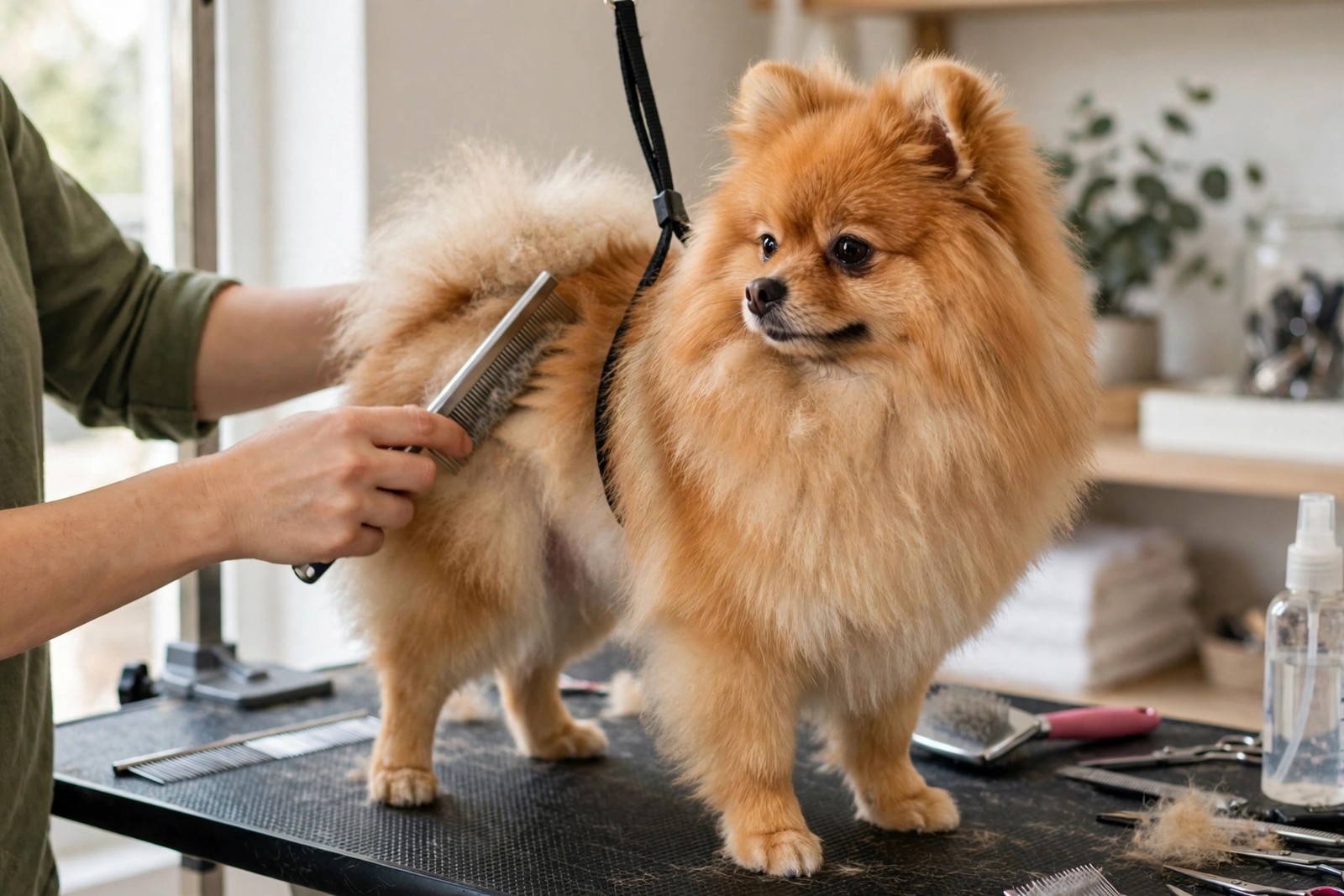
The Pomeranian in photographs looks effortless: a cloud of outer coat standing away from a small dog. The reality is regular, layered brushing, because the abundant undercoat that creates that outline will pack down close to the skin if brushing only polishes the surface. A coat can look fluffy on top while a dense, felted layer is forming underneath.
Line-brushing in layers, with a light mist
Mist the coat lightly before you begin. Brushing a dry Pomeranian coat can break hair and create static, while a light mist makes the layers easier to separate. Part the coat down to a line of skin, hold the hair above the line back, and brush the exposed layer against the growth to lift and separate it, then with the growth to lay it back in place. Move the parting across the body in sections until every layer has been worked, rather than taking long strokes over the top.
Work around the whole dog in an order you repeat each time, so no area is quietly skipped for weeks. The chest, neck ruff, sides, back, belly edge, legs and trousers all hold undercoat that can pack. Short strokes within a layer are more effective than dragging a brush through the full depth at once, and they are gentler on the skin when resistance is found.
The metal comb is the real test
A brush passing over the surface proves very little. After brushing each section, run a metal comb through it. The comb must glide to the skin without catching. Where it stops, that area is not finished, however good it looks. Return to that layer, separate it further and work the resistance apart gently with fingers and brush before testing again.
That test protects the dog in a practical way. Packed undercoat tightens into matting, pulls at the skin and can conceal redness, parasites or a sore spot that nobody can see or feel through the dense layer. Air reaches the skin poorly through a felted patch, and moisture after rain or a bath can linger there. Catching packing at the comb stage is a few extra minutes. Removing a felted coat later is a much harder grooming problem and may need a professional groomer.
Two to three thorough sessions a week
Two to three thorough sessions a week suit the maintenance rhythm described here, provided each session passes the comb test across the body. A quick daily flick over the top does not replace them, and one marathon session less often lets packing establish itself between grooms. Give extra attention to friction zones: behind the ears, where a collar or harness sits, in the armpits and through the thick trousers at the rear.
Between thorough sessions, a brief check of those zones helps. If a small tangle is forming, tease it out while it is still a tangle rather than leaving it to be compressed by the next layer of loose undercoat. During heavier shedding, loose hair needs clearing more promptly, because shed undercoat left in the coat is the raw material packing is made from.
Never shave the double coat as a shortcut. Removing it takes away the insulation and sun protection the coat provides and can leave regrowth uneven or changed in texture. If mats have become too tight to work apart without hurting the dog, a groomer can remove the affected areas and advise on regrowing that section while the rest of the coat is maintained.
Care Teams on KinsLe gives each thorough brush-out a named helper and a completion record, helping the household spread the work evenly.