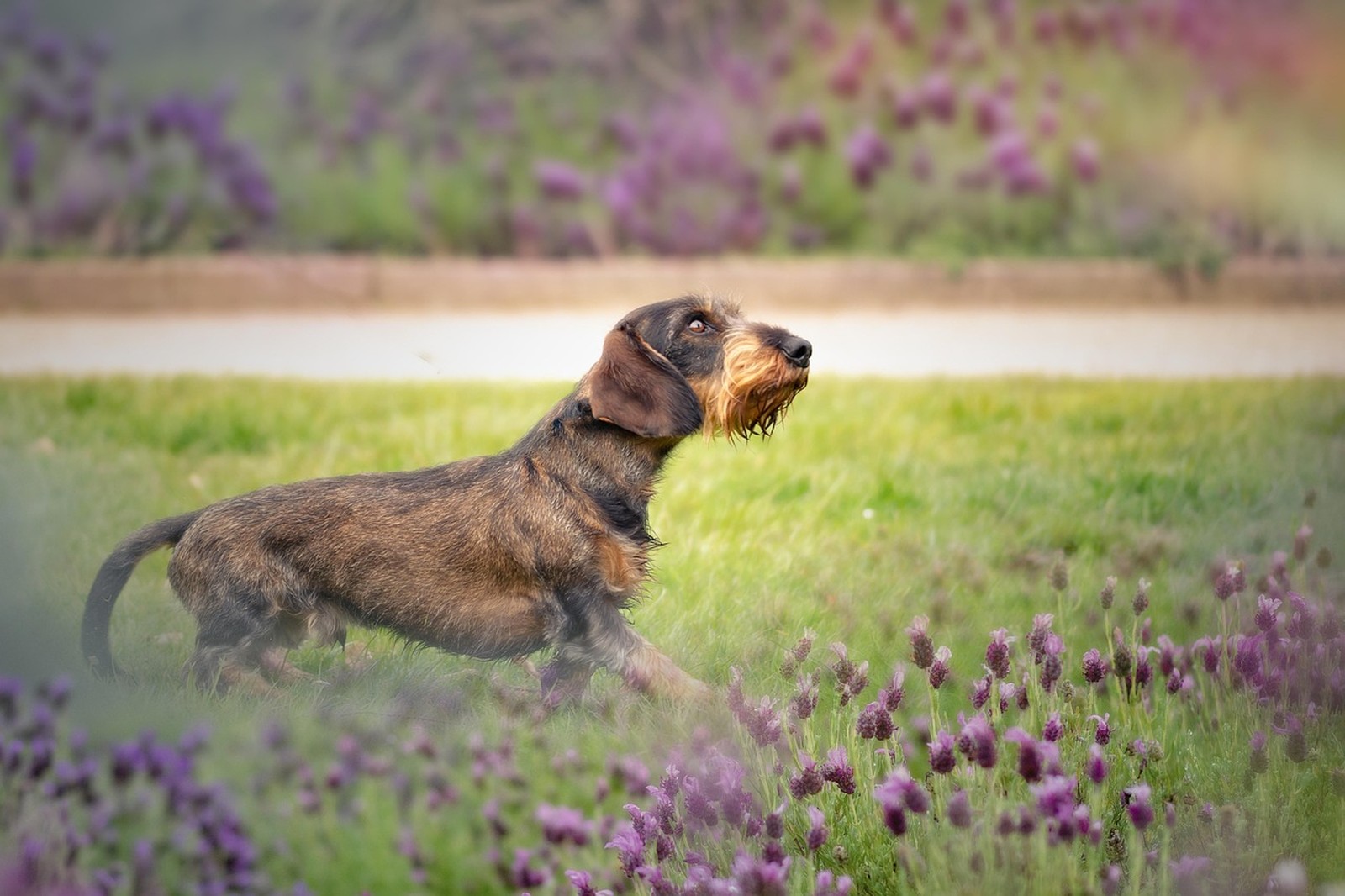
From a distance both dogs look like variations on one joke: a long body carried close to the ground on short legs. Underneath, they are almost opposites. The Dachshund is a hound, engineered in Germany to follow scent into burrows and confront badgers underground. The Corgi, in both its Pembroke and Cardigan forms, is a herding dog from Wales, engineered to nip cattle heels and drop flat when a hoof flies overhead. Burrow hunter versus cattle drover explains nearly every difference you will live with.
Build and what those backs demand
The Dachshund is the longer, lower, more extreme shape, with a deep chest, curved front legs, and a tail carried like a flag for a hunter following underground. The Corgi is sturdier and slightly taller, with a fox-like face, big upright ears, and either a docked or naturally short tail in Pembrokes or a full tail in Cardigans. Both shapes put strain on a long spine, so weight control is not cosmetic for either breed; extra weight loads the back with every jump off the sofa. Ramps, sensible lifting that supports chest and rear together, and lean feeding protect both dogs.
Temperament: independent hunter, bossy herder
Dachshunds are brave to the point of comedy, intensely loyal, and famously stubborn because a dog bred to make decisions alone underground does not see why your opinion should override a scent trail. They bond hard, can be possessive of their person, and often reserve suspicion for strangers and other dogs. Corgis are confident in a different register: alert, organised, and eager to manage the household. A Corgi typically wants to join every activity, learns routines fast, and may attempt to herd children or guests. Both breeds are clever; the Dachshund asks why, the Corgi asks what is next.
Noise, exercise, and training reality
Expect barking from both, but different barking. The Dachshund has a startlingly big, baying voice for its size and uses it at doorbells, passers-by, and squirrels with hound conviction. Corgis bark as commentary and alarm, often while herding the household toward the next event. For exercise, Corgis need more: they are energetic workers who thrive on walks, training games, and tasks. Dachshunds need daily walks and sniffing time but tire sooner. Housetraining can test owners of both breeds; Dachshunds are notoriously slow and weather-averse, so patience and routine matter more than gadgets.
Coat and shedding
Here the Corgi surprises newcomers. Beneath that cheerful face sits a thick double coat that sheds heavily year-round and dramatically in season; daily brushing during coat blows is realistic, not fussy. Dachshunds come in three coats: smooth, which is low-maintenance and sheds lightly; longhaired, needing regular brushing; and wirehaired, needing hand-stripping or clipping to keep its harsh texture. If shedding is a deal-breaker, a smooth Dachshund is the gentlest option in this pairing by a wide margin.
Choosing between the two characters
Choose a Dachshund for a smaller, more portable dog whose world revolves around you, provided you accept stubborn training, a loud voice, and careful back management. Choose a Corgi for a sturdier, busier partner who wants a job in family life and will organise the household if you do not. Visit both breeds in real homes if possible, because photographs sell the shape and hide the personality. Once you decide, KinsLe Transferrable Profiles helps your new dog arrive with their vet history, feeding plan, and known quirks already documented for you.