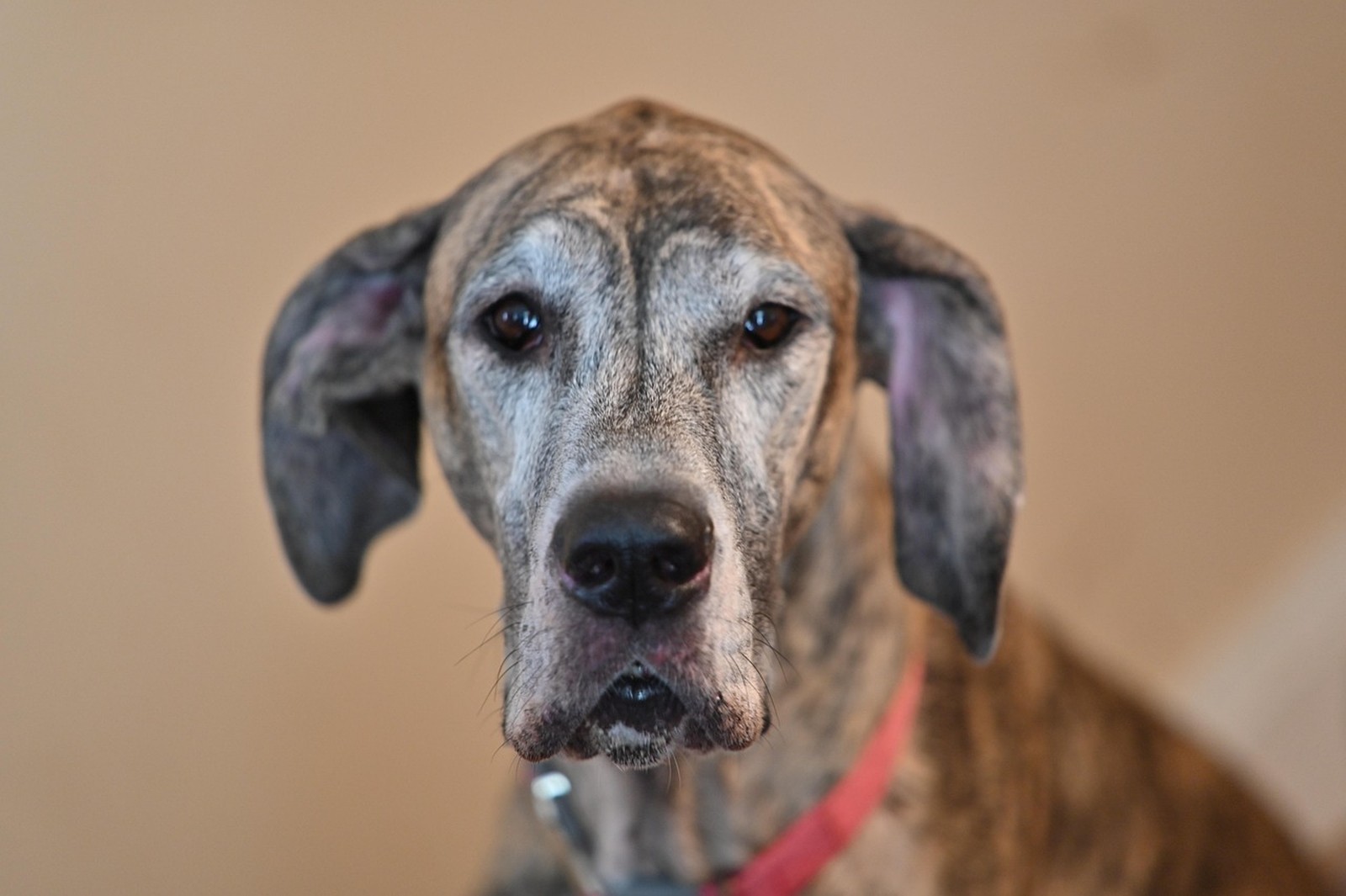
Both dogs will fill a doorway, rest a chin on a dining table, and convince visitors that giants can be gentle. Beyond scale, they diverge. The Great Dane was shaped in Germany as a boar-hunting and estate dog: tall, lean, and statuesque under a single short coat. The Saint Bernard was shaped by monks in the Swiss Alps as a pathfinder and rescue dog in deep snow: broad, massively boned, and insulated by a coat built for blizzards. One is a greyhound in giant form; the other is a mountain in dog form.
Height versus bulk
The Dane wins on height, standing taller at the shoulder with a long neck, deep chest, and tucked waist that reveal its coursing ancestry. A Saint Bernard may weigh as much or more while standing lower, because its mass is spread across a wide chest, heavy bone, and a broad head. In a house this plays out differently: the Dane needs length, sprawling across sofas and beds in long lines, while the Saint needs width, turning circles that clear coffee tables. Both breeds make standard doorways, cars, and vet tables feel designed for smaller species, and both cost notably more to feed, transport, and care for at the vet.
Coat, drool, and climate
The Dane's short, single coat is the low-maintenance option here: weekly brushing, moderate shedding, done. Saints come in short and long coats, both dense and double, shedding heavily with seasonal coat drops that fill brushes daily for weeks. Then there is drool. Saints are champion droolers, flinging strings across walls after drinking and shaking; Dane drool is modest by comparison, mostly after water and excitement. Climate matters too. The Saint's insulation makes it miserable in heat and happiest in cool weather, while the thin-coated Dane feels the cold and may need a coat in winter but handles warmth somewhat better, with shade and care.
Temperament in the family
Both breeds are famously patient and sweet-natured with their families, and both can knock a toddler flying with an affectionate lean, so supervision is about physics, not intent. Danes tend to be more watchful and reserved with strangers, retaining a guardian's appraisal, and many are velcro dogs indoors who believe they are lap-sized. Saints are typically slower, softer, and more openly placid, greeting the world at a lumbering amble. Young Danes can be boisterous and destructive when bored; young Saints mature slowly too but usually at lower voltage. Neither breed is built for stairs-heavy living across a whole lifetime, especially in old age.
Exercise and health realities
Giant puppies of both breeds need careful, moderate exercise while growth plates close; forced running and jumping on hard surfaces are poor ideas. Adults need daily walks but not marathons. Health conversations are serious for both: Danes are discussed often in relation to stomach twisting, a genuine emergency owners should learn to recognise and prevent where possible, plus heart and joint concerns. Saints are associated with joint strain under their mass and heat stress. Both breeds live shorter lives than smaller dogs, which families should accept honestly before falling for a puppy. Insurance, savings, and a vet relationship matter more at this size.
Choosing your giant
Pick the Great Dane for a taller, sleeker, lower-grooming giant with a touch of guard in its temperament and a sofa-centred lifestyle. Pick the Saint Bernard for a broader, shaggier, droolier companion whose calm suits cool climates and unhurried households. Meet adults before deciding; puppy Saints and Danes are deceptively portable for only a few weeks. If a giant dog ever needs a new home, KinsLe helps through Transferrable Profiles, passing on feeding amounts, vet history, and handling notes that matter even more at this size.