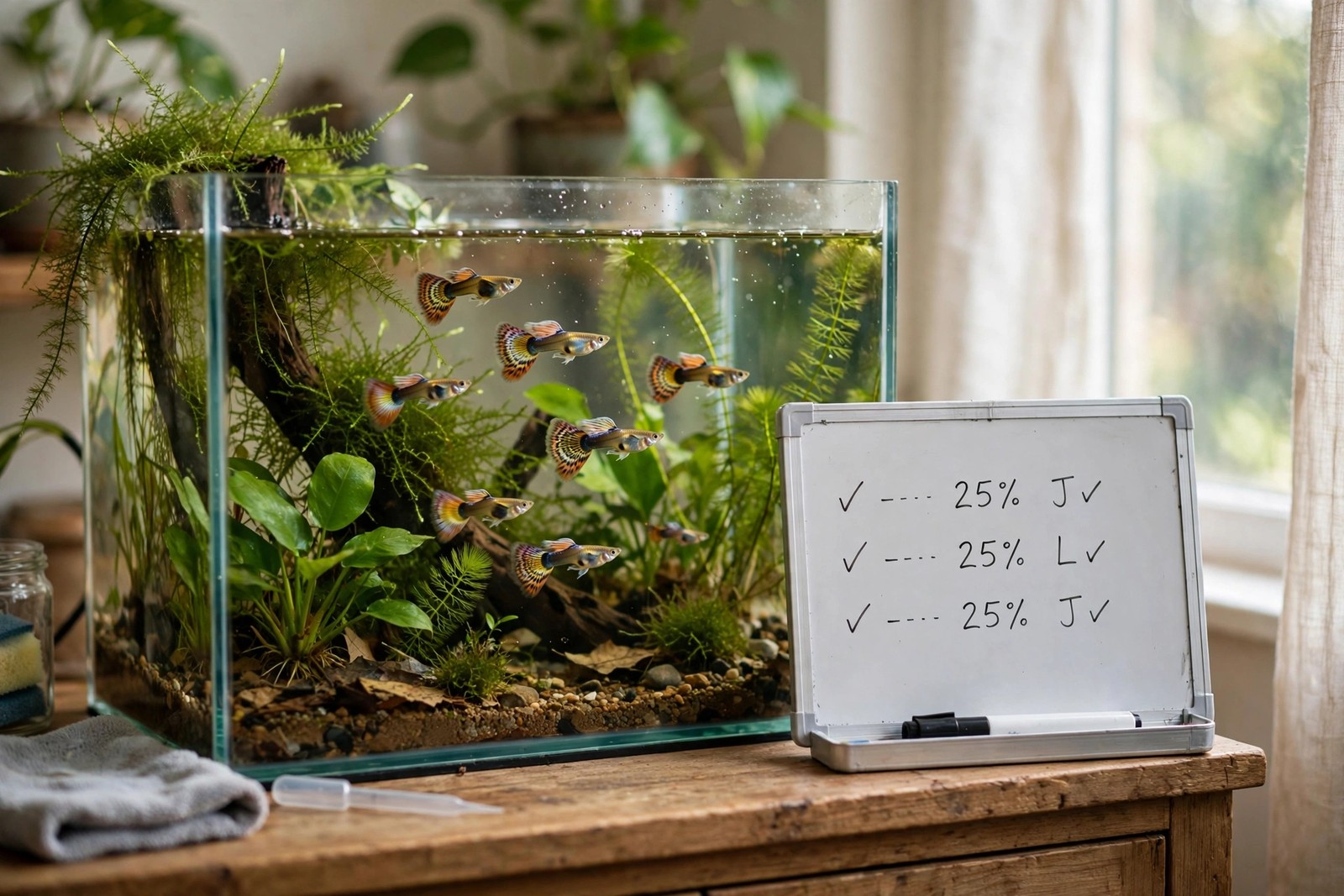
Two carers and one tank fail in two opposite ways: both assume the other changed the water, so a week is missed; or both change it, doubling the disturbance for the fish and the work for you. The fix is not a complicated app or a spreadsheet with twelve columns. It is a single visible record, kept where the work happens, with a line so simple that filling it in takes less time than debating whose turn it was.
The Board Beside the Tank
Mount a small dry-erase board, or tape a laminated card, on the wall or cabinet right beside the guppy tank — not in another room, not inside a drawer. Physical placement is the whole system: the record lives where the siphon and buckets live, so writing the line is part of finishing the change, not a separate chore to remember later. If the tank sits somewhere a board genuinely cannot go, a shared note on both phones is the fallback, using exactly the same four fields and the same rule that the line is written before the carer leaves the room. Either way, there is one record, never two — two private lists recreate the original problem.
One Line, Four Fields
Every water change gets one line with four fields, always in the same order: the date, the percentage of water changed, the initials of the carer who did it, and a tick confirming the dechlorinator was added to the new water. That is the complete line. The date shows when the change happened and when the next falls due; the percentage keeps the two of you consistent, since a guppy community tank does well on a weekly change of about a quarter of the water, and a line showing a much bigger change flags a week when something else was going on; the initials end all doubt about who did it; and the tick covers the step that is easiest to forget and hardest to spot afterwards, because untreated tap water and treated water look identical in the tank. If a change is smaller than usual — to protect fry, say — add a few words at the end of the line, but keep the four fields first.
The Weekly Rhythm Both Carers Follow
Decide which day of the week is water-change day and write it at the top of the board, so the due date is visible without any counting. The initials column settles the rota without a formal schedule: whoever's initials are not on the last line is the natural next pair of hands, and if one of you is away, the board still shows the other exactly where the tank is up to. Cross out or wipe lines only once a fresh line replaces them, and photograph the board at the end of each month if you want a permanent history — a month of lines shows the pattern of the tank's care at a glance.
When the Log Shows a Gap or a Double
Read the board before you fill a bucket, every time. If the last line is dated today with your partner's initials, the change is done and your job is simply to leave the tank alone; if the last line is over a week old, the change is due whoever picks it up first, and the board, not memory, settles it. A gap of two weeks is not a crisis to fix with one huge change — resume the normal quarter change and note the gap on the line, because guppies handle a missed week far better than a sudden near-total water swap. The same glance at the board protects against double-dosing the dechlorinator. KinsLe's Family Sharing adds the portable half of the system: both carers see the same shared tank routine and notes on their own phones, so the weekly change, the feeding arrangement and any fry or filter notes stay in step whether you are standing at the tank or away from home.