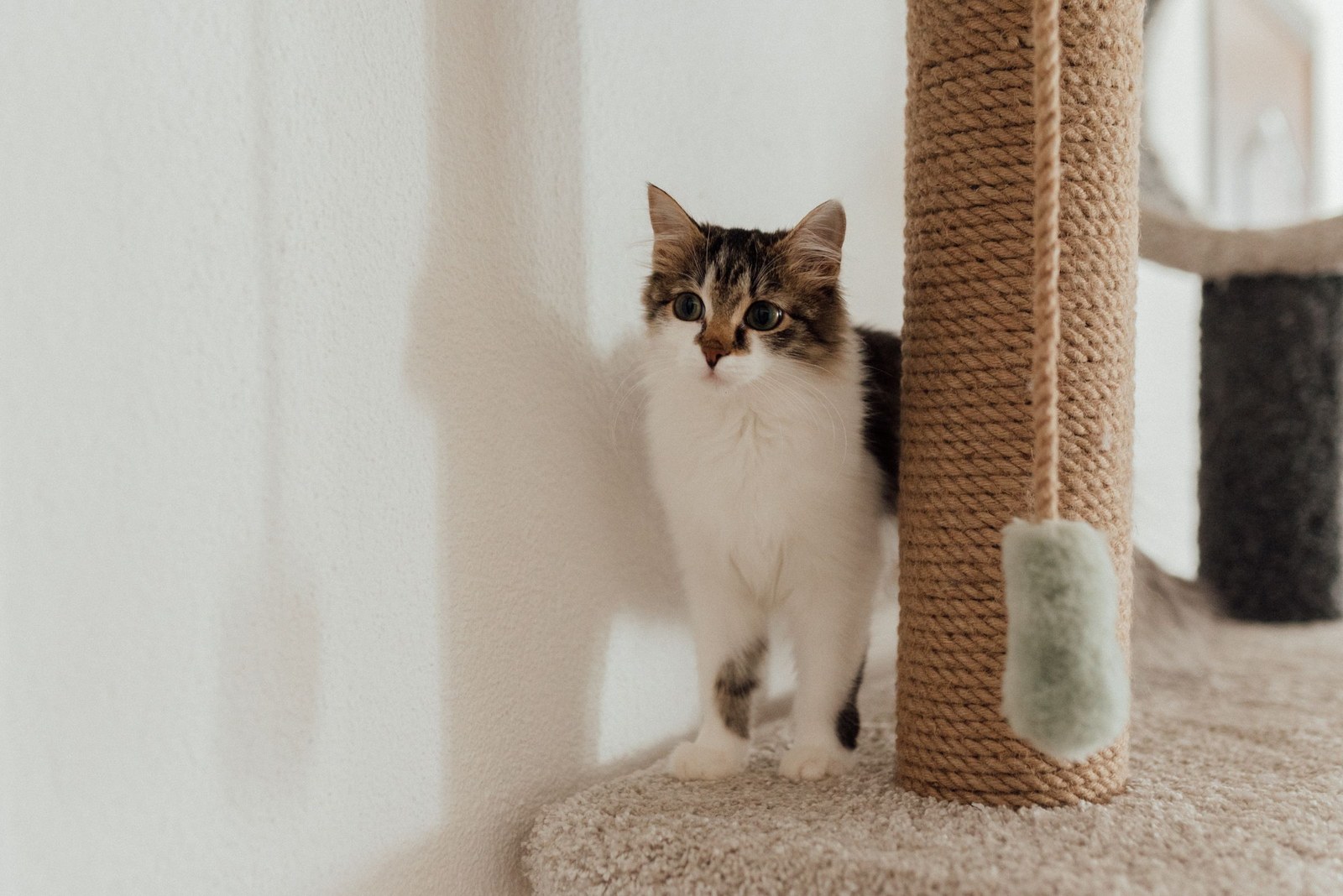
The scratching post cats actually use is tall, rock-steady, and rough-textured — most owners undersize on all three. Think about what a satisfying scratch demands: a full-body stretch with claws hooked in, leaning real weight against the surface, in a spot the cat already loves. Buy for that moment, and the post sells itself.
Height and Stability Come First
A post should let your cat stretch completely upright — front paws extended high, back straight — without her reaching the top. For most adult cats that means roughly 28 to 32 inches of scratchable height at minimum, and taller is better for big breeds like Maine Coons. Stability matters just as much. The base should be wide and heavy enough that the post doesn't rock when she leans in hard; a single wobble teaches many cats to never trust it again. Wall-mounted vertical scratchers are a smart alternative for strong, enthusiastic scratchers.
The Material Most Cats Choose
Sisal rope is the classic favorite because it's rough, durable, and shreds satisfyingly under the claws. Sisal fabric offers a smoother but still grabby surface and often wins over rope for cats who scratch furniture upholstery. Other personalities differ:
- Carpet-covered posts suit cats who already target rugs — though carpet can closely resemble your floor carpet, which some owners regret encouraging
- Corrugated cardboard, laid flat or angled, is beloved by horizontal scratchers and cheap to replace
- Natural wood or a spare log appeals to cats who scratch door frames and table legs
If you're unsure, a combo unit with a sisal section and a cardboard section lets her vote.
Placement Is Half the Battle
Cats scratch most right after waking, so a post beside her favorite napping spot catches her at the exact moment the urge strikes. Social areas count too — near the couch, the entryway, wherever the household gathers — since scratching is partly a territory announcement. Put the post where she already scratches first, then inch it toward its permanent spot over days if needed. In multi-cat homes, provide more than one station so nobody has to queue or guard.
Teaching Her to Use It
Entice rather than instruct. Rub catnip or silver vine into the surface, dangle a wand toy so her paws land on the post mid-play, and reward her with a treat or praise whenever she uses it. Never press her paws against it or hold her to it — forced contact tends to create avoidance. Swap or re-wrap worn sisal when it gets smooth and stringy; an exhausted surface stops satisfying anyone. Most cats adopt a good post within a couple of weeks when the size, feel, and spot are right.
Ask Kimmy as Questions Come Up
Healthy scratching pairs with basic claw care, and both are easy to forget in a busy month. Bring questions to Kimmy in KinsLe as they arise: whether the post is tall enough for a tall cat's full stretch, whether the sisal has worn too smooth, or whether it should sit closer to her napping spot. Ask about nail-check technique too, noting how she tolerates paw handling. Kimmy can answer follow-up questions about post height, sisal, and placement on KinsLe, with replies drawn from the KinsLe Answers library.