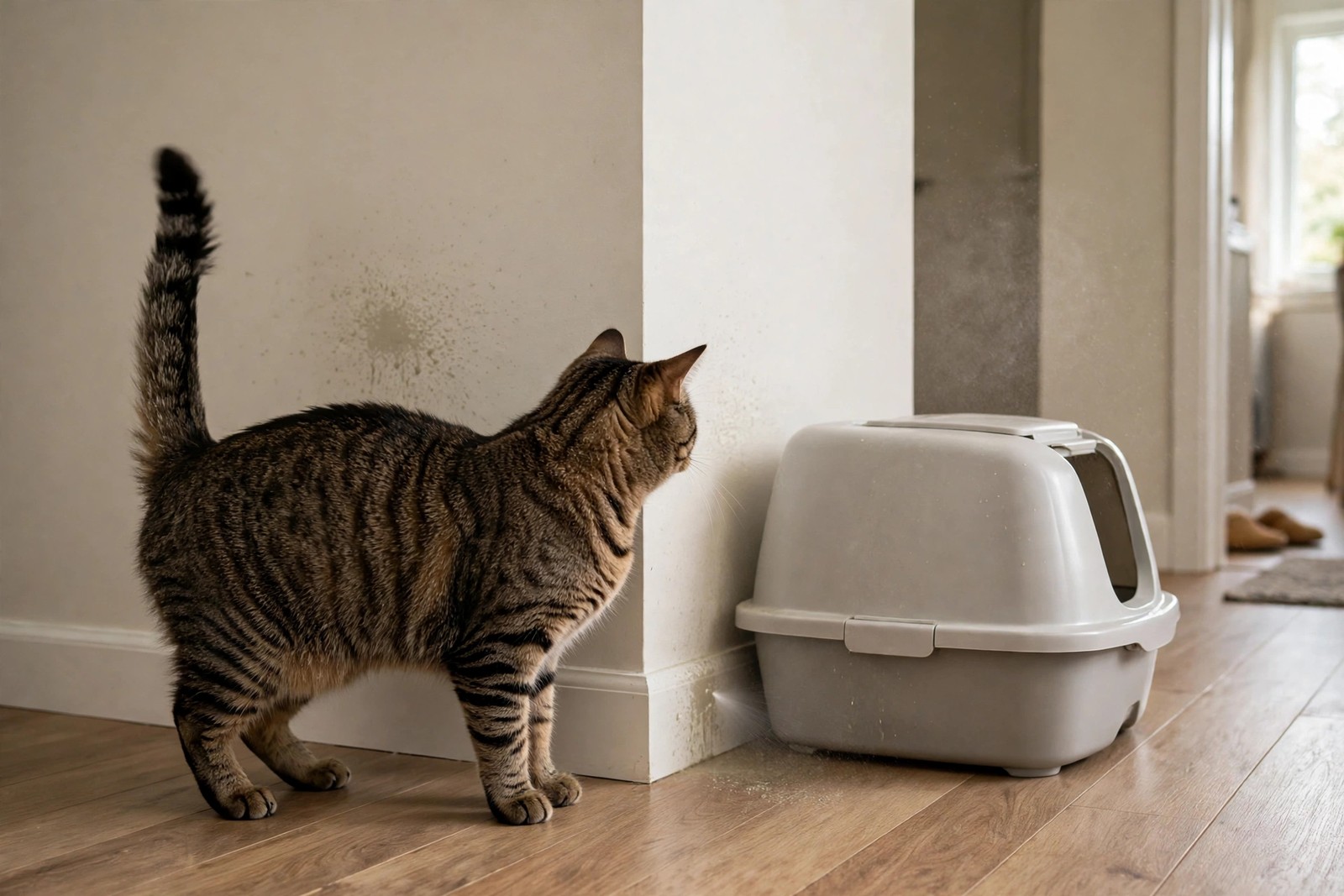
Both leave urine somewhere you do not want it, and owners lump them together as one bad habit. They are not the same behavior, they do not have the same causes, and the fix for one can make the other worse. The good news is that a cat tells you which one you have, if you know what to look at: posture, amount, and surface.
Spraying: A Message on a Vertical Surface
A spraying cat stands upright, often backing toward a wall, door, curtain, or the side of furniture. His tail lifts straight up and quivers, his back feet sometimes tread, and he releases a small, strong-smelling amount of urine onto the vertical surface, then walks away without sniffing, digging, or covering. He is not relieving himself; a spraying cat still uses the litter box for normal urination. He is leaving scent information, and the usual triggers are social: a new cat in the home, neighborhood cats visible through windows, a house move, building work, or conflict with a housemate cat. Intact males spray most, but neutered males and females spray too, especially under stress.
Peeing Outside the Box: A Bladder Emptied Elsewhere
A cat avoiding the box squats, stays a while, and leaves a full, normal-volume puddle on something horizontal: carpet, bedding, a bath mat, a pile of laundry, the bath itself. This cat needed to urinate and chose not to use the tray. Causes split into three groups. The box itself may be the problem, too dirty, too few boxes, an uncovered or covered design he dislikes, an awkward location, or a litter texture he avoids. Stress is the second group: new people, new pets, rearranged furniture, conflict at the box entrance. The third group is medical, and it matters: urinary discomfort makes cats associate the box with pain, so any cat who starts straining, visiting often, passing small amounts, crying, or producing blood in the urine should see a vet promptly rather than be treated as a behavior problem.
Why the Distinction Changes the Fix
For spraying, punishment and extra boxes achieve nothing. Clean marked spots thoroughly with a cleaner that fully removes the scent, reduce the trigger where you can, block window views of visiting cats if that is the spark, and give a multi-cat household more vertical space, scratching posts, and separated resources so tension drops. For box avoidance, audit the tray setup first: the usual starting point is one box per cat plus one extra, unscented litter, scooped daily, placed in quiet spots away from food. If the setup is sound and the behavior is new, the vet comes before the behavior plan.
Keeping a Record That Separates Them
Note each incident with three details: vertical or horizontal surface, small or full amount, and what had changed that day. Within a fortnight most households can see which behavior they actually have and what it follows. Sharing those notes through KinsLe's Family Sharing means the person who finds each puddle or mark adds it to the same record, so your vet or behavior conversation starts from evidence instead of guesswork.