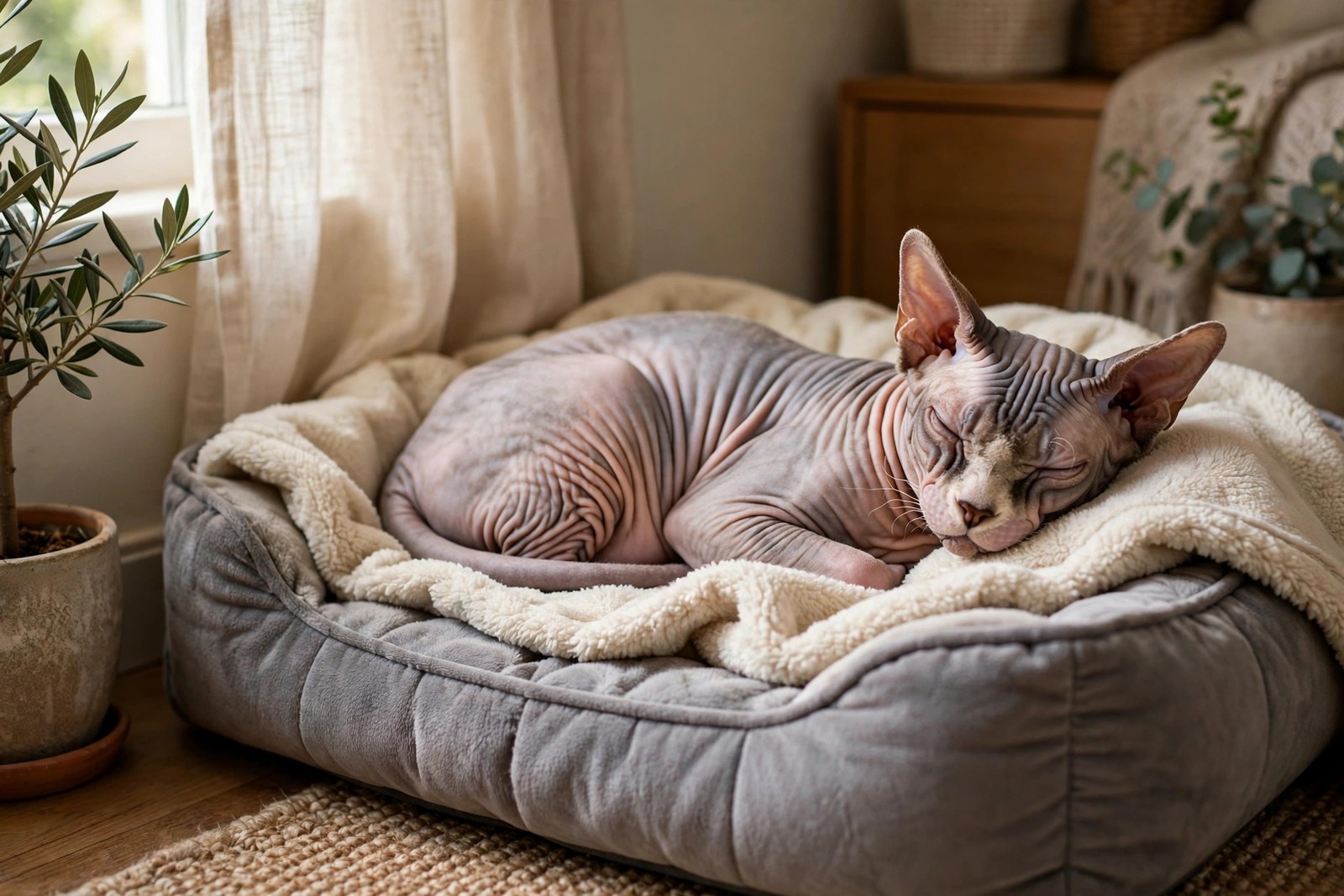
A Sphynx moving into old age changes in watchable ways. The breed often lives about 13 to 17 years, and the senior years of a hairless cat put mobility, skin, and warmth at the center of daily care, unlike in a coated cat. None of these changes is an emergency on its own; together they form the comfort watch list that tells an owner when home adjustments are enough and when a veterinarian needs to see the cat.
Stiffness, Especially on Waking
The earliest mobility sign is usually stiffness first thing: a senior Sphynx that unfolds slowly after sleep, walks a few careful steps before loosening, or pauses before stretching. Joints age in hairless cats exactly as they do in any cat, but no coat softens the picture — the careful gait is plain to see. Note when the stiffness appears and how long it lasts. Stiffness that clears within minutes of moving is a different conversation from stiffness that lingers, worsens over a month, or starts costing the cat activities it loves, and only the trend distinguishes them.
Lower Landings and Rethought Jumps
Watch the geometry of jumping. A cat that once took the top of a wardrobe in one leap begins choosing lower landings: chair instead of shelf, footstool as a halfway step, or a long look up followed by walking away. That is the cat budgeting its joints, and the response is to meet the cat halfway — steps or a ramp to favorite high spots, litter boxes and beds reachable without leaping, and food raised or lowered to the height the neck now prefers. A sudden refusal to jump, or crying out on landing, is not budgeting; that change goes to a veterinarian promptly rather than onto the watch list.
Skin Spots and Lumps Go to the Vet Promptly
Sphynx skin shows everything, which is a senior-care gift. Run hands over the whole cat weekly during a bath or a grooming session and learn the normal landscape — the usual freckling, the familiar marks. During that weekly check, feel for muscle thinning over the spine and hips, and note skin-oil or fold changes plus ear changes in wax, odor, or scratching. New spots, raised lumps, sores that do not heal, or an old mark that changes size, shape, or color get a prompt veterinary visit, not a wait-and-see month. On bare skin, early is genuinely early, and a veterinarian, not home judgment, decides what a new lump is.
Warmth Has to Be Provided, Not Assumed
Cold sensitivity deepens with age, and a hairless senior feels a cool room through skin that has no insulation at all. Provide warmth actively: a heated bed or pad for pets, warm blankets in the sleeping spots the cat uses, sweaters if this cat tolerates them, and sleeping places moved out of drafts and away from cold floors and exterior walls. A senior Sphynx that sleeps pressed against radiators, burrowing under covers it once ignored, or shivering after a bath is reporting that the room that suited a younger cat no longer suits an older body.
Weight, Appetite, and the Heart
Weigh the cat on a regular rhythm and write it down. Drift in either direction deserves attention — loss can hide behind the breed's naturally lean look, and gain loads aging joints — and appetite drifting with it, eating less eagerly or begging far more, belongs in the same note. Breathing changes and litter-habit changes belong in those notes too. Most vets shift routine senior checks from once a year to twice a year as cats age. Heart screening continues through the senior years: hypertrophic cardiomyopathy is the breed's screened predisposition, and keeping screening current is part of senior Sphynx care, not an optional extra. KinsLe's Pet Passport packet carries the screening results, weight entries, and comfort notes into each appointment, so the packet the veterinarian reads is the cat's history and not a summary from memory.
Pet Passport travels with this cat on KinsLe, so heart-screen results and comfort changes stay in one packet a new clinician can read quickly.