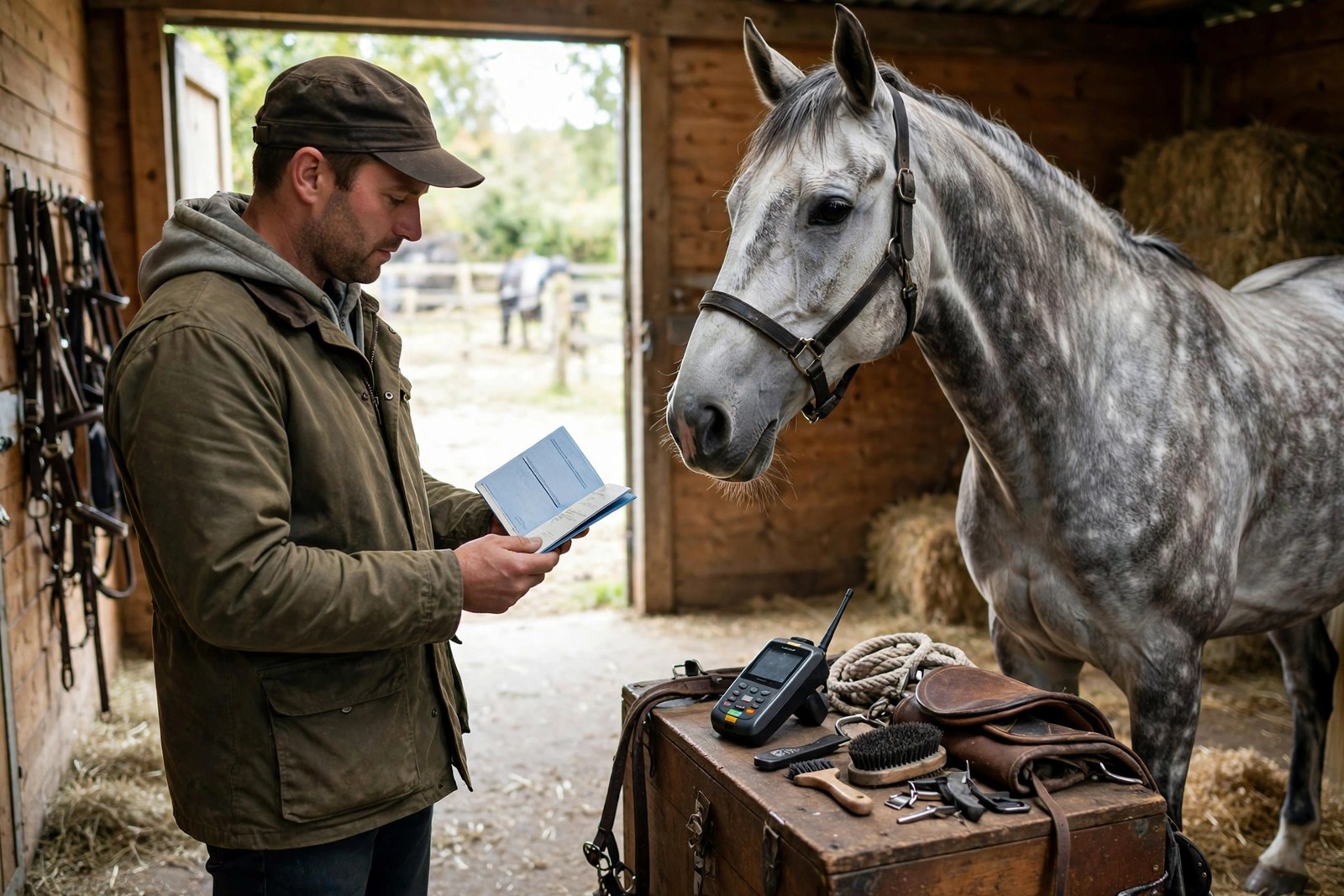
A horse passport is a legal identification document, not a notebook, and its contents are set by the rules of the country that issued it, so use this as the standard structure and check your own issuing organisation for local detail. The passport links one specific horse to one document for life, and it serves two purposes at once: proving identity, and controlling which horses may enter the human food chain by recording the medicines they have received.
The sections a passport must contain
The identification section comes first. It records the horse's name, species, sex, colour, breed or type, date and country of birth where known, and a written description of markings, whorls, and distinguishing features. Alongside the words sits the silhouette: an outline diagram of a horse on which the markings are drawn in, completed and signed by a vet or authorised official, so the document can be matched to the animal standing in front of an inspector. The passport also carries the horse's unique life number and, where fitted, the microchip number that ties the paper identity to a scannable one.
Ownership pages record the keeper and owner details for the horse. The veterinary sections record vaccinations and other treatments, signed and stamped by the attending vet. The most legally significant pages are the medication record and its declaration: a signed statement of whether the horse is intended, or is permanently not intended, for slaughter for human consumption. Signing the horse out of the food chain is irreversible, and it is what allows a vet to use the full range of medicines, including common ones that may never be given to a food-chain horse.
What you, as keeper, must keep up to date
Your core duty is custody: the passport stays with the horse, not in a drawer at home. It should travel when the horse travels, be available at the yard where the horse is kept, and be presented on request to a vet, an inspector, a buyer, or a transporter. A vet treating your horse will ask for it before giving certain medicines, and treatment may be limited if the passport cannot be produced.
Changes must be reported to the issuing organisation within the deadline it sets. The changes that matter are a change of ownership, when you buy or sell the horse; a change of keeper or address where your rules require it; castration of a colt or stallion; a change of name where permitted; and the horse's death, after which the passport is normally returned to the issuing organisation rather than kept or passed on. If a passport is lost or damaged, apply for a replacement or duplicate promptly, and expect a replacement to be marked as such and, in many systems, to sign the horse out of the food chain automatically. Never alter entries yourself, never hold two passports for one horse, and never lend the document to another horse: corrections are made by the issuing organisation or a vet, not with a pen at the yard.
Keeping the legal document and daily records straight
Because the original must stay with the horse and be handed over on sale, keep your own copies of key pages and keep everyday information, such as feeding, farrier visits, worming dates, and behaviour notes, in your own records rather than writing in the passport. When you buy a horse, check before money changes hands that the passport matches the animal: read the silhouette against the horse, scan the microchip, and confirm the food-chain declaration is present and understood, because it affects what medicines your vet can use from day one.
Rules and deadlines differ between countries, so confirm the specifics with your issuing organisation or a vet if anything is unclear. KinsLe Pet Passport helps on the everyday side of that duty by holding copies of your horse's identification details, treatment history, and keeper contacts in one portable packet, so the information you need at a vet visit or a yard move is to hand while the legal passport stays exactly where the law expects it: with your horse.