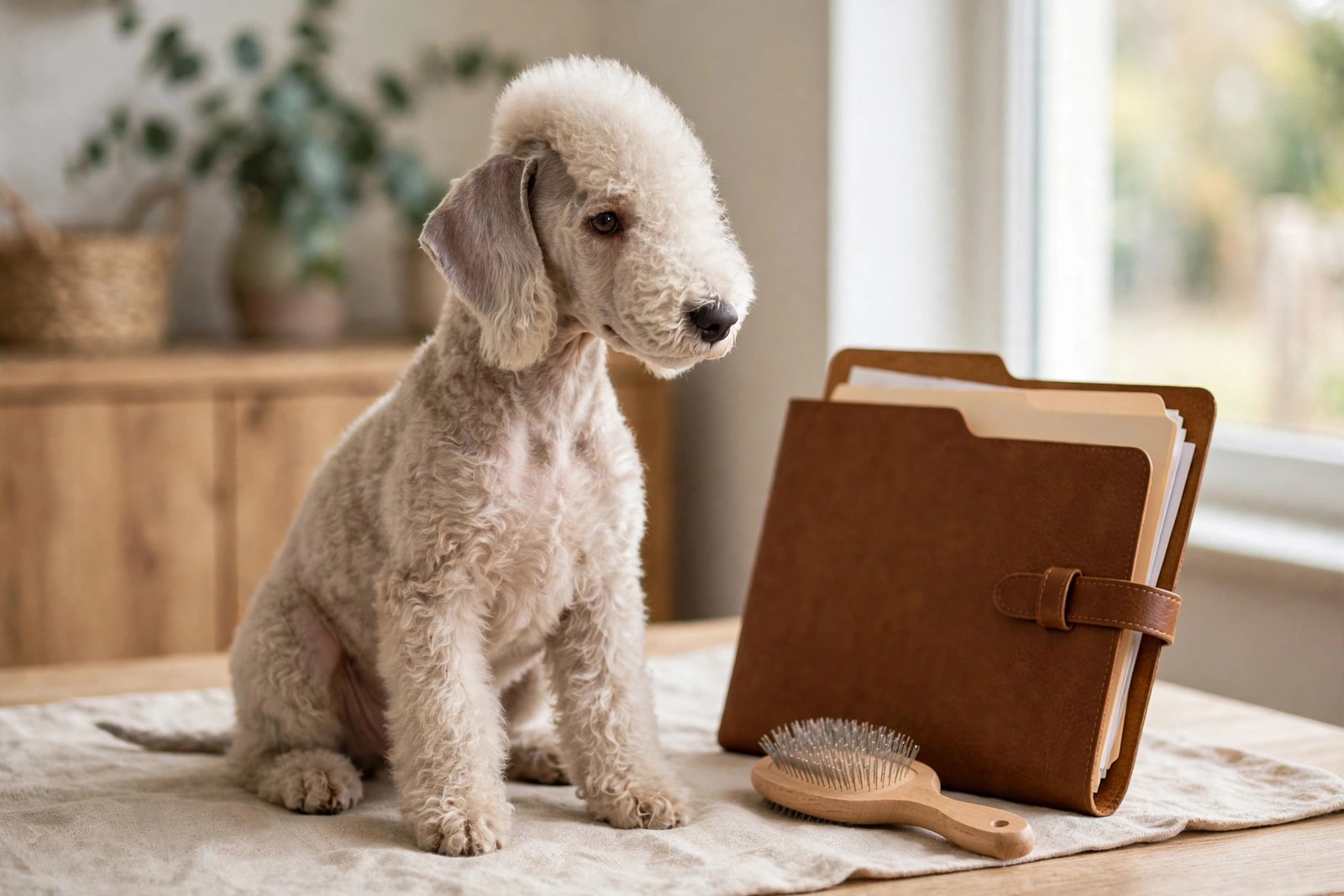
The Ownership and Registration Basics
Begin with the standard trio: registration paperwork or an application you submit yourself, a lineage record showing several generations of the puppy's family, and a written contract. The contract should identify the breeder and you, describe this specific puppy by sex, colour, and markings, and state the health guarantee, the purchase terms, and the breeder's expectation that the dog returns to them if you ever cannot keep it.
Bedlington puppies change colour dramatically as they mature, born dark and fading to the pale blue, sandy, or liver shades of adults. A good contract records the puppy's colour as it stands on the day, and the breeder should explain the expected adult shade noted in the family records, so later colour change never raises a pointless question about whether you received the right puppy.
Veterinary Records for the First Weeks
The puppy should leave with a clinic record of examinations, vaccinations with dates, and deworming treatments, detailed enough for your veterinarian to pick up the schedule cleanly. If the puppy is microchipped, expect the chip number documented and the transfer instructions included, and confirm the number matches across every page it appears on.
Keep any litter weight or health notes the breeder recorded as well. Bedlingtons are a small, lightly built breed beneath the sculpted coat, and an early weight trail gives your vet a useful baseline for judging growth at the puppy checks that follow, especially if the puppy is a slow or fussy eater in the first weeks at home.
Genetic and Screening Records for the Parents
This is where Bedlington paperwork deserves extra attention. Ask for copies of both parents' genetic test results and any other screening the breeder has completed, and expect the breeder to walk you through what each result means for the litter in plain language. Documented testing, openly shared, is one of the strongest signs of a careful breeder in a breed with a small gene pool.
Also ask how the pairing was chosen and whether records for grandparents or earlier generations are available. In a breed this distinctive and numerically small, depth of family health records is real information, not decoration, and a breeder who keeps generations of results can answer questions a single page cannot.
Grooming and Feeding Notes in Writing
A Bedlington's curled, lint-like coat needs a grooming routine from puppyhood, so ask for written notes on how the litter has been handled: brushing, bathing, early clipper and scissor familiarization, and the grooming schedule the breeder recommends. A puppy already comfortable being handled on a table is worth knowing about in the records, because it shapes your first grooming appointments.
Feeding notes should name the current food, amounts, and meal times precisely enough to continue without an abrupt change. Add the puppy's sleep routine, house-training progress, and any quirks the breeder has noticed, and keep those pages with the formal documents rather than treating them as throwaway advice.
Checking Everything Before the Journey Home
Match the contract description to the puppy, the chip number to the chip paperwork, vaccination dates to the puppy's age, and your own details everywhere they appear. If registration or any test copy is to follow, get the timeline in writing before you leave. Small corrections are simple on collection day and tedious later, particularly where microchip records are concerned.
At home, treat the folder as the start of a lifelong file rather than a souvenir, adding your vet's records, grooming notes, and weight entries as they accumulate.
KinsLe keeps that growing file in your Bedlington Terrier's Pet Passport, with the breeder's genetic results, lineage record, and vet pages stored together in one packet you can produce at any appointment.