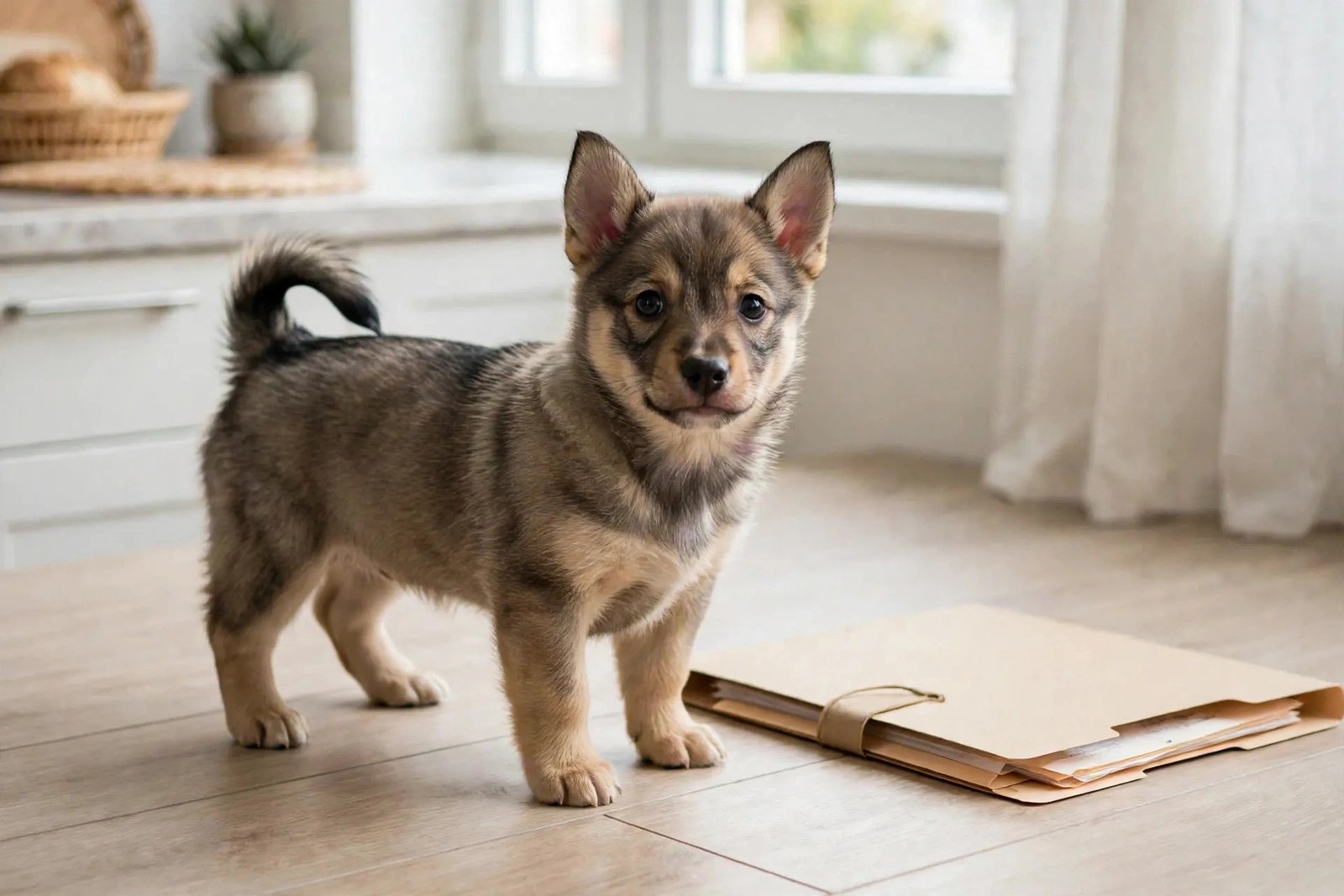
A Swedish Vallhund puppy should come with records shaped by this breed's identity as an ancient Viking-era herding dog, short-legged and long-bodied but unrelated in origin to the Welsh corgis it resembles. The paperwork that matters most goes beyond the standard registration form: Vallhund buyers need to pay particular attention to eye documentation, because this small breed carries a distinctive retinal condition that does not appear on a generic puppy checklist for other herding breeds.
Registration, lineage, and the Vallhund contract
Ask for the litter registration, the form to register the puppy in your own name, and a lineage of at least three generations. Note the tail information if the lineage or litter record captures it, since Vallhunds are born with anything from a full curly tail to no tail at all, and that variation is a normal breed feature worth having recorded accurately. The purchase contract should cover the health guarantee, the breeder's position on taking the dog back at any age, and any expectations about hip or eye checks if the dog is later bred. Because Vallhunds are still uncommon in many countries, confirm which registry the papers come from and that the names and microchip number on every document match the puppy in front of you before you leave.
Eye and hip screening specific to the Vallhund
The defining health document for this breed concerns Swedish Vallhund retinopathy, a progressive retinal disease identified in Vallhunds. Ask for both parents' recent eye examination certificates from a veterinary ophthalmologist and ask directly whether any available testing or documented family history supports those results, keeping copies of whatever exists. A breeder who can explain the difference between a clear examination on one date and a guarantee for life is being straight with you. Alongside the eyes, expect hip evaluation results for both parents, as hip dysplasia occurs in the breed despite its small size. If a result is described only verbally, request the certificate itself. These eye and hip papers are the documents your veterinarian will ask about first, so treat any reluctance to share them as a serious reason to pause.
Vaccinations, microchip, and early care notes
The puppy's personal record should show each vaccination with its date, each deworming treatment, a veterinary health check before placement, and the microchip number with transfer instructions completed in your presence where possible. Ask for a written feeding and growth note as well: Vallhunds gain weight readily for their frame, and knowing what and how much the litter has been fed helps you continue sensibly. Breeders who have begun house training or introduced the puppies to household sounds sometimes include a short socialization note describing what each puppy has experienced. That note is genuinely useful for a bright herding breed that notices everything, because it tells you which experiences are already familiar and which you still need to introduce gradually at home.
Building a lifelong Vallhund health file
Add every future eye examination to the puppy packet rather than filing it separately, because a sequence of eye results over time is far more valuable in this breed than any single certificate. Keep the hip paperwork and lineage with it, and update the microchip contact details whenever you move. If you later share your dog's information with a breed health survey, complete records make that contribution accurate. Back up paper originals with photographs stored separately. Holding the Vallhund's lineage, eye history, and vaccination record together in KinsLe via Pet Passport ensures the full packet is ready whenever a new veterinarian needs the breed-specific background.