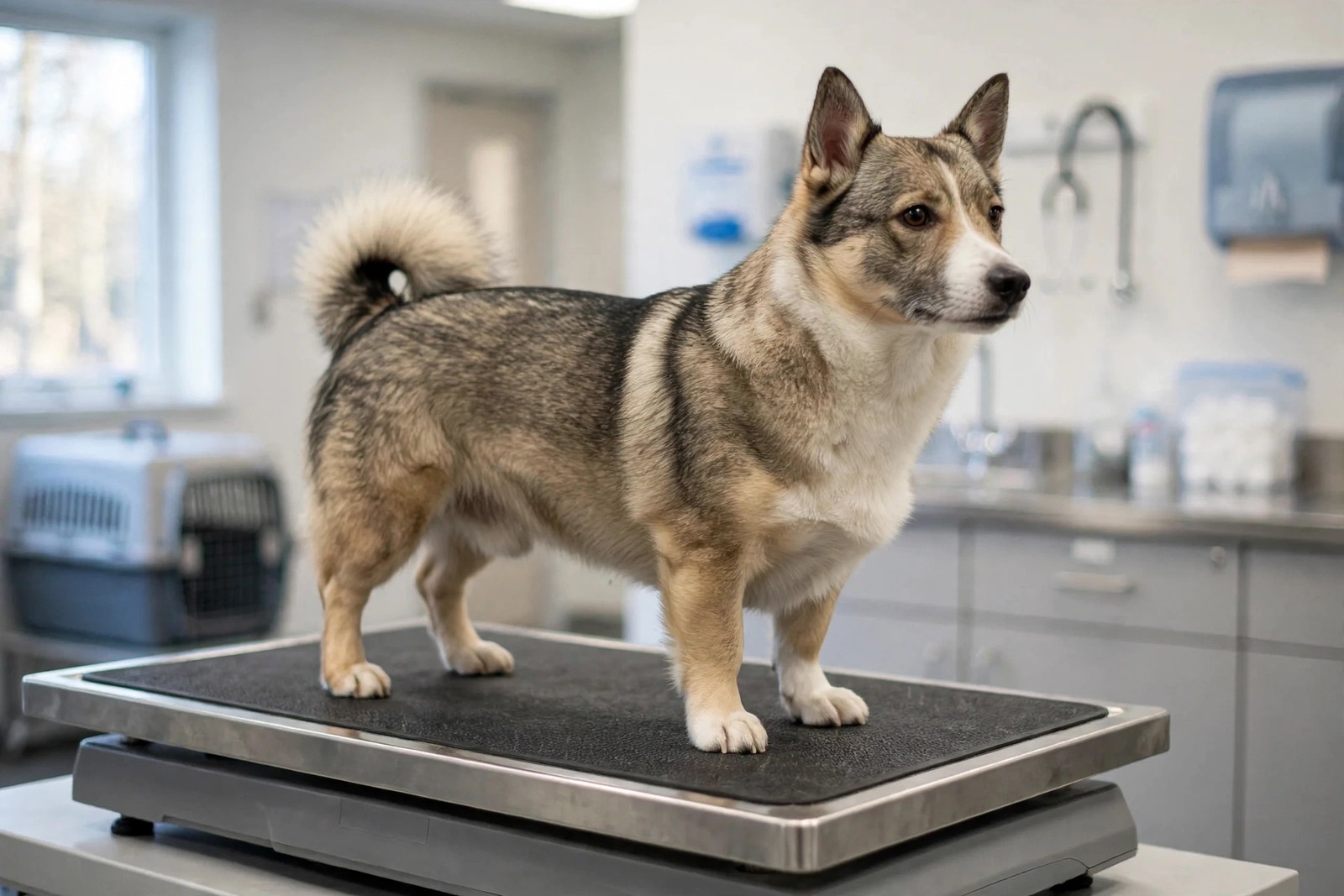
Why Vallhund Shape Makes a Log Worth Keeping
Yes, and the Swedish Vallhund's outline is the argument. This is a herding dog built long and low, with a full-length body supported by distinctly short legs. Weight that spreads along that frame does not just change how the dog looks; it changes the load carried by the back and by small, hard-working joints on every step, jump, and turn at heel.
Vallhunds are also bright, busy, and enthusiastic about food, a combination that produces a dog who earns many training rewards while convincing the household he is still hungry. A written log cuts through that persuasion. It shows whether the rewards are showing up on the ribs, and it does so before the dog's outline changes enough for anyone to notice across a thick double coat.
What Belongs in a Vallhund Entry
Weigh on the same scale, at a similar time of day, and write down the date, weight, and a hands-on condition check. Part the dense coat and feel for ribs under a light covering, then look from above for a defined waist behind the ribcage and from the side for a belly that lifts rather than hangs level with the chest.
Beside the number, record the working details of a Vallhund's week: herding, agility, or obedience sessions, ordinary walks, food amount, and how many training treats were earned. This breed can have a heavy training week followed by a quiet one, and the log explains a wobble in weight far better when the activity column sits right next to it.
A Sensible Rhythm From Puppyhood Onward
Weigh a growing Vallhund every two to four weeks. Puppies add length early and substance later, so note height and chest feel as well as weight, and ask your veterinarian at puppy visits whether the curve looks right for a dwarf-proportioned herding breed rather than comparing with taller puppies of similar age.
In adulthood, a monthly entry is enough to catch drift. Keep logging through the senior years too, when activity often drops before appetite does. That mismatch is where many long-backed dogs quietly gain, and a monthly number exposes it while a small food adjustment can still correct the course.
Turning Entries Into Decisions
Look for trends across three or more entries. A steady climb plus ribs that feel increasingly buried means it is time to measure meals precisely, swap some training rewards for tiny pieces or part of the daily ration, and check that every family member is not feeding a full extra round of treats.
A downward surprise matters as well. Bring the log to your veterinarian if weight falls without a food change, if your Vallhund's back looks newly roached or swayed, or if he hesitates at jumps and stairs he used to take confidently. Presented with dated entries, a vet can judge how fast a change happened instead of guessing from one visit's scale reading.
One Record for Everyone Who Handles the Dog
A Vallhund may train with one person, walk with another, and stay with a sitter on weekends. If the weight history lives only in the trainer's notebook, the person feeding on Saturday never sees it. Keeping the log with the rest of the dog's records makes the current target and recent trend obvious to the whole team at once.
Through KinsLe, the Pet Passport travels with your Swedish Vallhund as a single packet of records, so his weight trail is on hand whether the next stop is the vet, a training weekend, or a stay with friends.