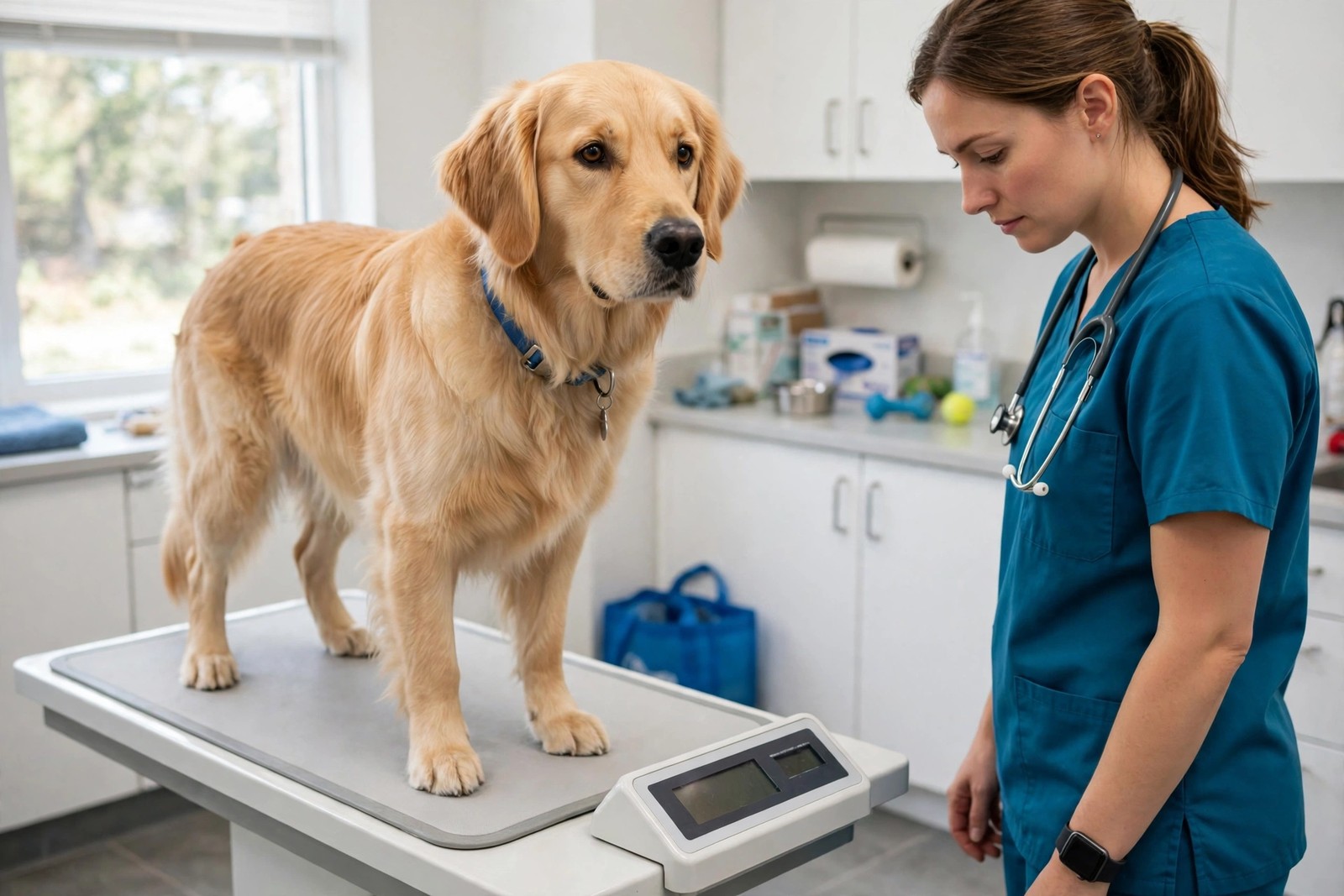
A single weigh in tells you almost nothing. Dogs gain after a rich week, lose on a hot one, and step on the scale with a full bladder or an empty one. What helps a veterinarian is the trend: a line of honest readings, taken the same way, with a note about body condition beside each number, so slow gain or slow loss shows up months before it would be obvious to the eye. Building that history takes two minutes at a time, as long as every reading is taken and written the same way.
Weigh the Same Way Every Time
Use the same scale, on the same hard floor, at roughly the same point in the day, and ideally before feeding rather than after a meal. At the veterinarian's office, ask for the reading from the same scale each visit when you can, and use that consistent series as your main line rather than mixing in readings from different machines. At home, weigh yourself holding the dog and then alone if the dog is small enough to lift calmly; for a large dog, a home platform scale beats repeated stressful trips just for a number. A reading taken in different conditions is not useless, but it must carry a note saying so, or it will bend the trend and send you chasing a change that never happened.
The Log Beside the Number
Log the same fields every time, in the same order: date, weight, who weighed, and a body condition note beside the number. The date works well as an entry label with the weekday, such as Monday weigh in, so the rhythm is visible at a glance. The body condition note is a few honest words: ribs felt easily under a thin fat cover, waist visible from above, or coat hiding the ribs more than last month. An example entry reads Monday weigh in, weight noted from the clinic scale, weighed by Sam, ribs harder to feel than in spring. That note is what turns a rising number into useful information, because muscle loss with steady weight and fat gain with steady weight need different conversations, and only the note separates them.
Keep a Steady Rhythm
For most dogs a steady monthly rhythm at home, plus the reading at each vet visit, builds a line dense enough to read and light enough to keep up. Some dogs need a different rhythm, and the veterinarian's set rhythm wins whenever the two differ: a growing puppy, a dog on a weight loss plan, or a senior losing condition may be weighed more often because the veterinarian is watching a specific change. Write the rhythm at the top of the log and keep to it even when readings look boring; boring, steady readings are the baseline that makes a real change stand out. Miss a month and simply resume, noting the gap, rather than backfilling a guess that would sit in the line pretending to be a measurement.
Bring the Trend, Not Just the Last Number
The record lives in the dog's own records packet, the Pet Passport, as a weight page that travels to every visit. Hand it over whole at the appointment and let the veterinarian read the line: months of same-scale readings, each with its body condition note, say more about appetite, food changes, and activity than any single visit can. Add the clinic's own reading to the page before you leave, while who weighed and which scale are still certain, and note any food or routine change on the date it started, so a bend in the line has its explanation sitting beside it. Over a year, that page becomes the most useful single sheet in the packet, because it shows direction, speed, and response to every change you tried. Months of steady entries gain meaning when your Pet Passport pages inside KinsLe line up dates, weights, and who weighed beside one another.