
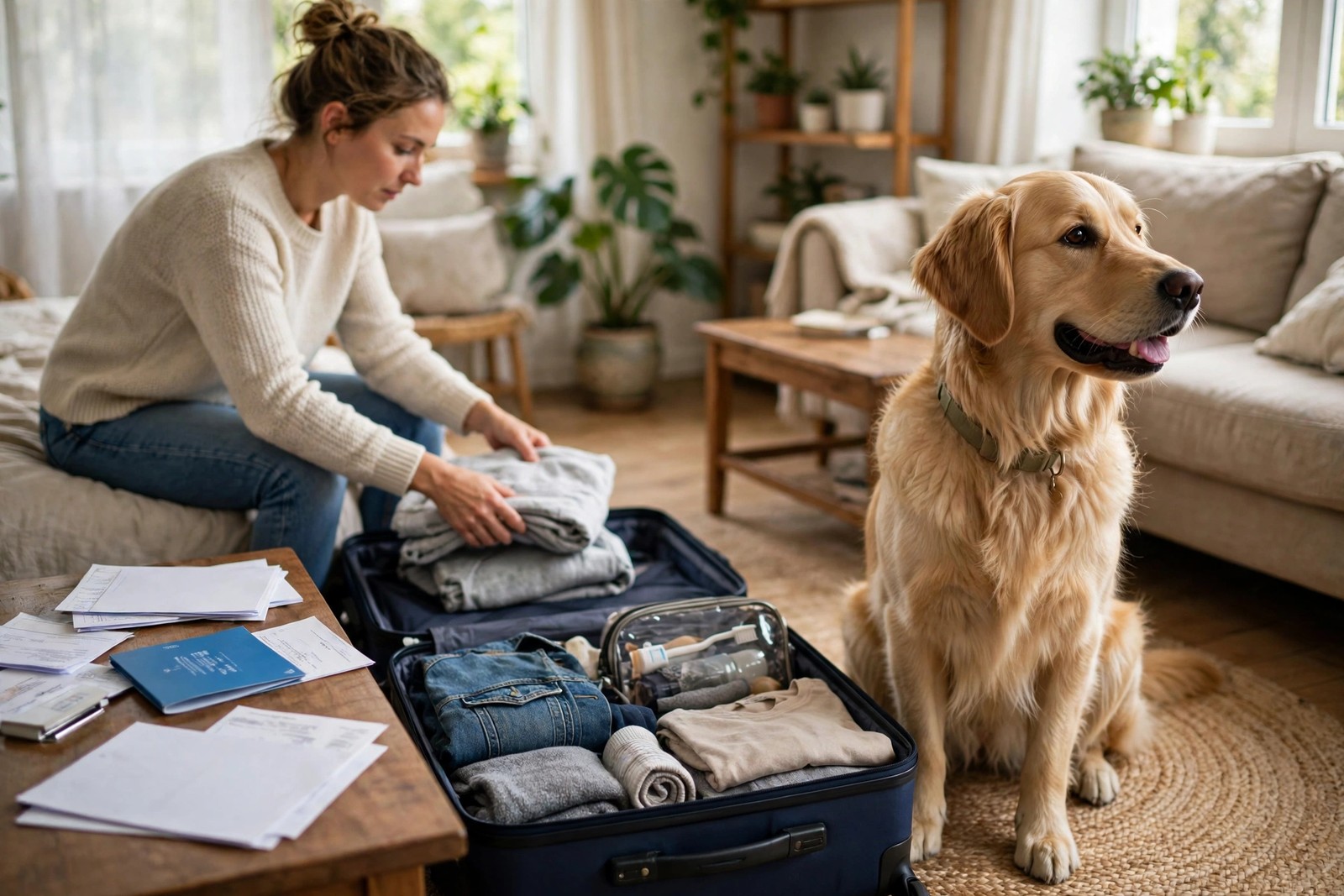
For most international trips, your dog will need an up-to-date rabies vaccination certificate and an official health certificate issued by an accredited veterinarian within a set window before you travel — but the exact list varies enormously by destination, and some countries add microchip rules, extra vaccinations, blood tests, or import permits. The golden rule is to start months early, because several requirements have waiting periods that cannot be shortened for any amount of money.
The documents almost every country wants
- Rabies certificate showing the vaccine date, expiry, and your dog's microchip number, with vaccination given after the chip was implanted.
- Microchip meeting international standards, implanted before (or on the same day as) the rabies vaccination it supports. Have your vet scan it at every appointment — chips occasionally migrate or fail.
- Official health certificate completed by a USDA-accredited (or your country's equivalent) veterinarian and, for many destinations, endorsed by the government veterinary authority afterward.
- Vaccination and health records covering other required vaccines for your destination, plus any parasite treatments given within a specified window before entry.
How destinations differ
An island nation with no rabies — think places like Australia, New Zealand, or Hawaii's special program — sits at the strict end: expect blood titre tests months in advance, quarantine possibilities, and import permits applied for well ahead. Travel between neighboring countries with harmonized rules is usually far simpler, sometimes little more than the standard certificate and proof of vaccination. Breed restrictions, maximum pet weights for cabin travel, and seasonal airline heat embargoes add further wrinkles that have nothing to do with the destination's veterinary rules, so check your airline's pet policy separately and early — cargo holds fill up on popular routes.
A realistic timeline
Work backwards from your departure date. Three to six months out: confirm the destination's current official requirements through its government or embassy sources, and book an appointment with an accredited vet to map the sequence. Some steps must happen in order — chip before rabies vaccine, vaccine before blood test, blood test before a waiting period even begins. In the final ten days or so (the exact window varies), the health certificate is completed and endorsed; this is the tightest deadline in the process and the one where a paperwork error can strand you, so review every name spelling, date, and chip number digit by digit.
Rules genuinely change, and airline staff at check-in will follow the current ones, not the blog post you read. Verify close to departure as well as at the planning stage.
On travel day
Carry originals plus printed copies in your hand luggage, keep digital photos of everything on your phone, and attach your contact details to your dog's collar and crate. Feed lightly before travel, offer water up to departure, and line any crate with an absorbent layer and a worn t-shirt that smells like you.
One card that ties his identity together
Alongside the official paperwork, KinsLe's Pet Pass gives your dog a verified ID card — a tidy, carry-with-the-documents identity for the animal all that paperwork describes, useful whenever a border official, airline agent, or foreign vet needs to match documents to dog quickly. It does not replace any official certificate, but traveling with verified ID plus complete records is the combination that makes check-ins boring, and boring is exactly what you want. Pet Pass on KinsLe identifies your dog at a document check and names you as his keeper, while the official certificates in your hand luggage do the separate entry work.