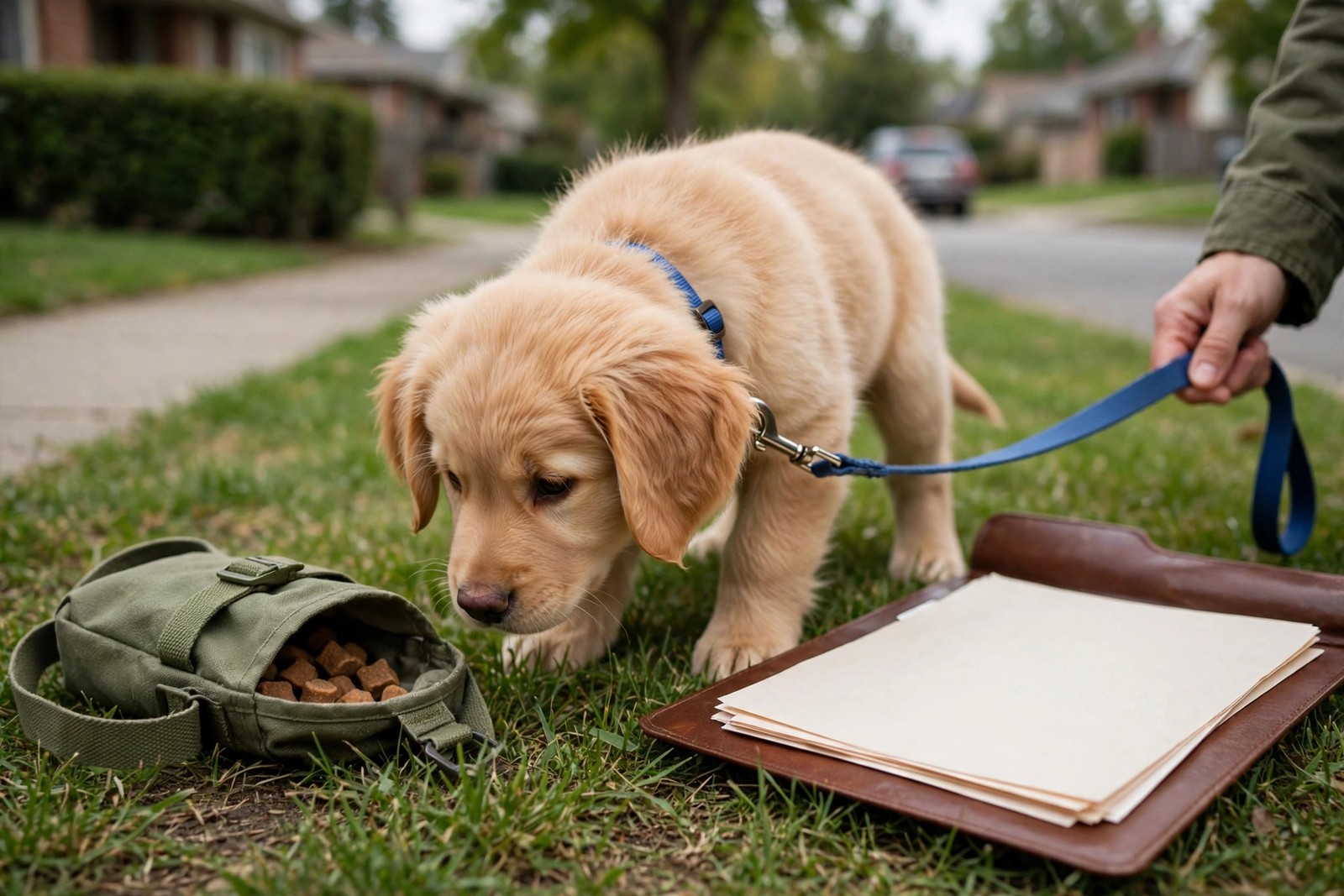
The paperwork is how a puppy's first weeks stay visible after she leaves the breeder. Registration and lineage papers record who she is and where she comes from; the health side of the bundle records what has already been done for her. Together they let your vet plan her care from evidence, prove she is yours, and give any future owner the same starting point if her home ever changes. A breeder who produces the bundle without being asked is showing you how the litter was raised.
The identity papers: registration and lineage
Her registration certificate and lineage record name her parents and her registered identity, and they should match the puppy in front of you: check her microchip number against the documents before you leave. Where the breed carries known inherited conditions, ask for the parents' health-test results as documents, not just assurances — hip scores, eye certificates, or DNA test reports relevant to her breed. Verbal claims about tested parents are common; paperwork is what makes them checkable later, by you or by your vet.
The health and ownership records
Alongside the identity papers, expect a vaccination and health-check record signed or stamped by the breeder's vet, a worming history with actual dates, and the microchip paperwork with instructions for transferring the registration into your name. A written contract or receipt completes the set: it names the puppy, the breeder, you, and the date, and often sets out what happens if a serious health problem appears in the first weeks. Feeding information — what she eats, how much, and a starter supply — belongs in the bundle too, because her stomach should not have to change diets on the same day she changes homes.
A collection-day checklist
- Registration and lineage papers that match her microchip number
- Vaccination and health-check record, with dates
- Worming history and the next treatment due
- Microchip transfer details, ready to move into your name
- Parents' health-test documents for breed-relevant conditions
- Written contract or receipt, plus her feeding notes and starter food
Check the bundle against the puppy at the breeder's, while anything missing can still be printed, photographed, or explained. A gap found at home a week later is much harder to close.
Keeping the story continuous
File the bundle whole rather than scattering it across drawers and inboxes, and add to it as she grows: each vaccination, weight check, and vet visit extends the same record the breeder started. That continuity is what makes the paperwork valuable rather than ceremonial. And if she is ever rehomed, her KinsLe Transferrable Profiles record can move with her — profile, history and documents passing to the new owner so nothing about her care starts from a blank page.